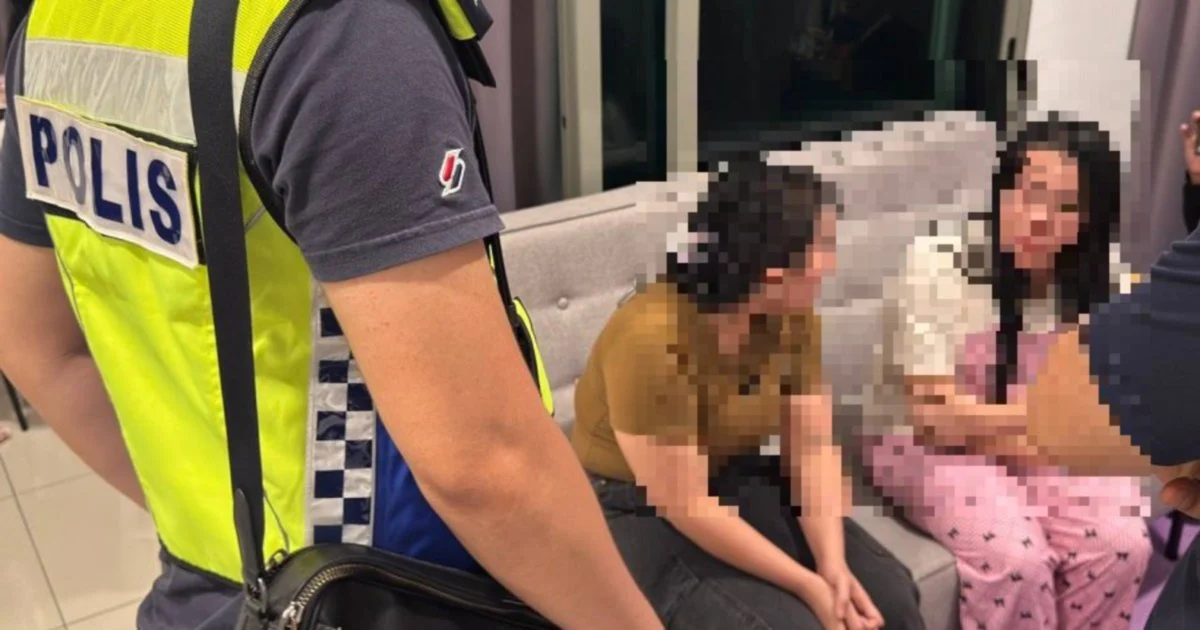
A university student's attempt to generate supplementary income during her semester recess came to an abrupt end when federal police conducted an enforcement operation targeting vice activities at a residential unit in Cyberjaya yesterday. The arrest marks another incident in ongoing efforts by authorities to clamp down on illegal prostitution networks operating across the Klang Valley region, particularly in commercial and residential zones that have increasingly become focal points for such operations.
The raid, conducted by police personnel at the apartment complex, resulted in the apprehension of the student, who has since been detained for further investigation. Details surrounding the specific charges and the exact nature of the allegations remain unclear at this stage, though law enforcement officials have indicated that the operation was part of a wider campaign to dismantle vice operations that have proliferated in the area.
Cyberjaya, as a purpose-built administrative and technology hub located in the Klang Valley, has not been immune to such activities despite its status as a government-designated smart city. The incident underscores a troubling trend whereby apartment complexes and residential units in suburban and commercial centres have become utilised for illicit purposes, a challenge that law enforcement agencies have struggled to contain effectively.
The student's predicament reflects a broader socioeconomic reality affecting Malaysian university populations. Financial pressures during periods when institutional financial aid may be insufficient, combined with reduced employment opportunities during semester breaks, have driven some students to seek unconventional and illegal income sources. This vulnerability has made students increasingly susceptible to exploitation or involvement in illicit activities, whether by choice or coercion.
Police operations targeting vice activities have intensified in recent years as authorities respond to public complaints and concerns about the proliferation of illegal sex work in residential areas. These raids often focus on apartment complexes and serviced residences in urban and suburban locations, where operational costs are lower and enforcement detection is sometimes perceived as less stringent compared to conventional brothel establishments.
The implications of such arrests extend beyond immediate legal consequences for individuals involved. Students facing criminal charges related to prostitution encounters face severe repercussions including potential expulsion from their institutions, criminal records that severely impact future employment prospects, and lasting social stigmatisation within their communities. These consequences often trap affected individuals in cycles of economic disadvantage, potentially forcing them further into illicit work as legitimate opportunities become unavailable.
Law enforcement agencies in the Cyberjaya area, coordinated under the Selangor police command structure, have emphasised that their approach encompasses both supply-side interventions targeting operators and demand-side enforcement against customers. However, critics argue that prosecuting individuals engaged in sex work—particularly vulnerable populations like students—rather than focusing enforcement resources on organised crime networks that coordinate and profit from these operations, does little to address root causes of the phenomenon.
Universities across Malaysia have expressed concern about student involvement in vice-related activities, which has prompted some institutions to enhance financial support mechanisms and counselling services. Many academic observers note that improving access to legitimate part-time employment opportunities during semester breaks, combined with more robust financial aid frameworks, could reduce incentives for students to engage in illicit income-generating activities.
The wider context of this incident involves the evolution of vice networks in Malaysia, which have increasingly shifted from traditional centralised establishments to decentralised apartment-based operations. This transformation presents enforcement challenges, as small-scale residential operations are harder to identify and monitor than larger, more visible establishments, and can be disguised as legitimate short-term rental properties or shared accommodation.
Cyberjaya authorities and Selangor law enforcement have pledged continued vigilance against illegal prostitution activities within their jurisdictions. However, sustainable solutions to this challenge likely require coordinated approaches involving not only police enforcement but also community reporting mechanisms, landlord compliance education, and systematic efforts to address the socioeconomic factors that drive vulnerable populations toward participation in sex work.

