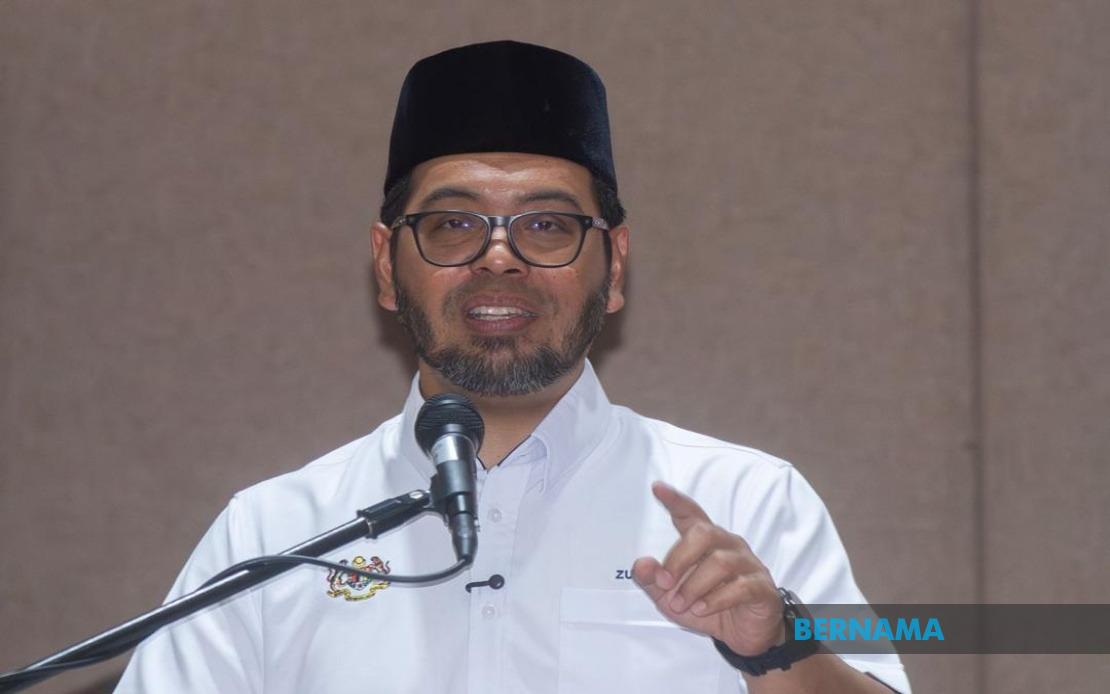
Dr Zulkifli Hasan, the Minister in the Prime Minister's Department (Religious Affairs), has sounded an urgent alert about the far-reaching consequences of unregistered marriages for vulnerable families and children across Malaysia. Speaking at the launch of the 2026 Federal Territories Syariah Law Literacy Programme in Labuan, he emphasised that the administrative act of marriage registration represents far more than mere bureaucratic procedure—it forms the legal foundation protecting the rights and futures of spouses and their offspring.
The minister revealed a persistent problem within Malaysian society: couples who have maintained marital relationships for decades without formally registering their unions, effectively placing themselves and their families outside the legal framework. Some individuals have compounded this issue by solemnising marriages in jurisdictions outside their residence or through unauthorised marriage registrars, thereby bypassing the requirements outlined in the Islamic Family Law (Federal Territories) Act 1984. This pattern suggests that despite decades of legal frameworks and public awareness campaigns, significant gaps remain in registration compliance and public understanding of marriage laws.
Children born to unregistered marriages face the most severe and immediate consequences of their parents' failure to complete formal registration. The absence of an official marriage record creates substantial obstacles in obtaining birth certificates, a foundational document required for school enrollment, healthcare access, and establishing legal identity. Without proper birth registration linked to legitimately registered parents, children encounter barriers in accessing education services and healthcare facilities that often require verified identity documentation. Beyond these immediate practical challenges, the legal ambiguity surrounding their parentage creates enduring complications affecting their sense of belonging and their access to social protections throughout their lives.
The legal ramifications extend into deeply personal and emotionally significant matters. Unregistered marriages create uncertainty regarding a child's lineage status in Islamic law, potentially affecting their inheritance rights and spiritual standing within the community. Wives in such unions face their own acute vulnerabilities, particularly regarding claims to maintenance allowances (nafkah) or consolatory gifts (mutaah) that Islamic law provides to divorced or widowed women. Without official marriage documentation, enforcing these spousal rights becomes extraordinarily difficult, leaving women economically exposed if relationships dissolve through death or separation.
When deaths occur within families bound by unregistered marriages, the complications multiply dramatically. Inheritance disputes become inevitable when the Islamic law of succession (faraid) cannot be properly applied without established marital records. Family members find themselves entangled in protracted legal contests over succession rights, with some claiming inheritance as spouses or legitimate children and others challenging those assertions. These inheritance battles frequently fracture family relationships permanently and drain resources through legal proceedings that could have been avoided through timely registration.
Recognising these systemic challenges, the government has adopted a collaborative approach to address the backlog of unregistered marriages and related documentation issues. The Religious Affairs Ministry, working alongside various state and federal religious authorities, has shifted away from a punitive enforcement model toward a facilitative and supportive framework. Rather than pursuing sanctions against those who failed to register marriages, the approach emphasises assistance and resolution, acknowledging that many affected individuals may not have deliberately breached regulations but rather lacked awareness or faced administrative barriers. This pragmatic reorientation reflects an understanding that comprehensive solutions require cooperation rather than confrontation.
The 2026 Federal Territories Syariah Law Literacy Programme represents a concrete manifestation of this collaborative strategy. The initiative brings together an impressive coalition of stakeholders, including the Federal Territories Syariah Prosecution Department, the Labuan Member of Parliament's Office, the Federal Territories Syariah Court, JAWI (the Islamic Religious Department), MAIWP (the Islamic Religious Council), the Legal Aid Department, the Federal Territories Mufti Department, Tabung Haji, and YAPEIM. This multi-agency approach creates accessible points of contact where individuals can clarify their legal status and receive guidance on resolving outstanding registration matters without fear of prosecution.
Dr Zulkifli reframed religious and legal compliance not as burdensome obligation but as protective mechanism benefiting families. He argued that fulfilling the requirements of Islamic family law safeguards the interests of all family members by establishing clear legal status, reducing future disputes, and ensuring that vulnerable dependents—particularly children—enjoy proper documentation and rights recognition. This reframing attempts to shift public perception from viewing registration as bureaucratic imposition toward understanding it as foundational protection analogous to insurance.
The implications of this phenomenon extend beyond individual families to affect broader social policy and administrative efficiency. Healthcare systems struggle to serve populations with unclear legal identity; educational institutions face difficulties verifying student eligibility and parental authority; and social welfare programmes cannot effectively target assistance to vulnerable families when marital and parental status remain undocumented. The existence of large populations without proper marriage registration represents a gap in national data infrastructure and governance capacity that complicates long-term planning and resource allocation.
For Malaysian families and particularly for children growing up in unregistered marital unions, the consequences accumulate across multiple life domains simultaneously. A child might face simultaneous barriers in obtaining a birth certificate, enrolling in school, and securing healthcare, creating compounding disadvantage that limits future opportunities. These practical obstacles combine with the psychological and social costs of ambiguous family status, potentially affecting educational outcomes, mental health, and social integration. The failure to register marriages thus perpetuates cycles of marginalisation affecting the most vulnerable generation.
The government's expanded literacy and registration programme addresses these multifaceted challenges through direct engagement and accessible support mechanisms. By positioning the initiative as service delivery rather than enforcement action, authorities aim to encourage voluntary compliance and resolution of outstanding cases. Interactive counters staffed during the programme provide opportunities for residents to seek clarification on marriage laws, report outstanding registration issues, and receive assistance navigating legal requirements. This direct service model recognises that many affected individuals possess genuine confusion about their legal obligations or lack practical knowledge about registration procedures.
The case of the Federal Territories demonstrates how administrative clarity and supportive service provision can address systemic legal registration gaps. However, similar initiatives may prove necessary across other Malaysian states with different Islamic family law jurisdictions. Each state maintains separate Islamic family law provisions, potentially creating variation in registration requirements and procedures. Standardising information and ensuring coordinated efforts across state lines would strengthen the national response to unregistered marriage issues and create more uniform protection for children across Malaysia's diverse jurisdictions.
Looking forward, the challenge extends beyond addressing existing registration backlogs toward preventing future non-compliance through public education and awareness-building. Integrating Islamic family law fundamentals into school curricula, conducting community outreach in diverse languages, and simplifying registration procedures would establish preventive foundations. Particularly important would be targeted engagement with communities where low registration rates persist, potentially reflecting cultural practices, linguistic barriers, or systematic access problems rather than deliberate non-compliance. By combining administrative solutions with longer-term cultural and educational initiatives, Malaysia can work toward universal marriage registration that genuinely protects all families and children.

