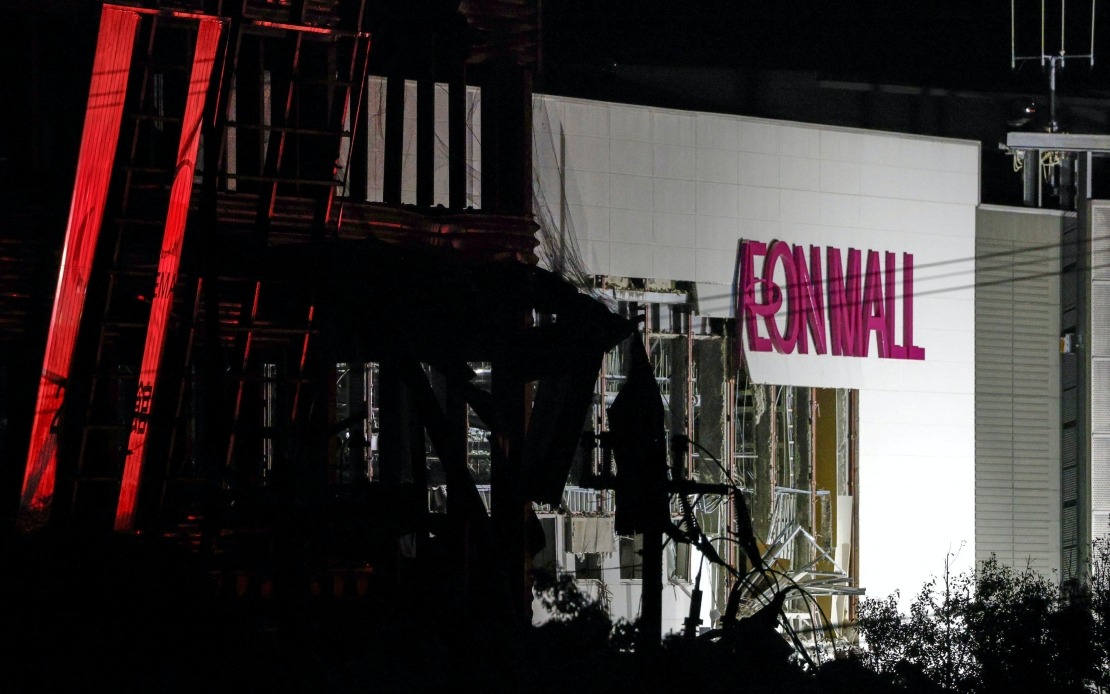
Rescue operations intensified in southwestern Japan on Tuesday following a catastrophic explosion at Aeon Mall Kumamoto, which left between 20 and 30 employees unable to be reached by authorities. The incident unfolded in Kashima Town in Kumamoto Prefecture, compounding the devastation wreaked by a powerful magnitude-7.1 earthquake that struck the region earlier that afternoon at 4.27 pm local time.
The explosion occurred at approximately 6 pm local time, roughly 90 minutes after the initial seismic event had shaken the prefecture. According to statements from the National Police Agency, multiple individuals employed at the major shopping complex could not be contacted in the hours following the blast. The uncertainty surrounding the exact number and location of the missing employees has posed significant challenges for rescue personnel attempting to determine whether those unaccounted for remain trapped within the damaged structure.
Police and firefighting teams have launched coordinated search and rescue operations focused on locating any individuals still caught inside the devastated building. The primary concern centres on whether the missing employees were inside the mall when the explosion occurred, though investigators have not yet established the precise circumstances that triggered the blast or definitively identified all those who may have been present at the time of impact.
While most customers present in the shopping complex managed to evacuate to outdoor areas in the immediate aftermath of the explosion, authorities acknowledge ongoing uncertainty regarding whether any of the missing 20 to 30 individuals are patrons rather than staff members. The rapid evacuation of customers suggests that emergency protocols may have been activated quickly, but the situation among employees—who may have been in back-office areas or other locations less accessible to emergency exits—remains unclear.
Beyond the mall incident, the broader crisis extends across Kumamoto Prefecture, where the powerful 7.1 magnitude earthquake triggered cascading incidents. Authorities reported that fewer than 10 additional people were missing elsewhere in the prefecture as a direct result of seismic damage, suggesting that the shopping mall explosion represented the single most significant casualty event arising from the natural disaster.
Japanese public broadcaster NHK reported that Kumamoto Prefectural Police anticipated "many fatalities" as a consequence of the mall explosion, though exact death tolls remained unconfirmed as rescue operations continued. The scale of the disaster has prompted authorities to prepare for a prolonged and complex recovery effort, with police officials acknowledging that confirming the precise number of victims would require considerable time given the extent of structural damage and the ongoing search for missing persons.
For Malaysian readers and the broader Southeast Asian region, this incident underscores the catastrophic potential of secondary disasters following major seismic events. Japan's sophisticated earthquake preparedness infrastructure, while robust, has again demonstrated how a natural disaster can trigger unexpected secondary hazards—in this case, an explosion at a critical infrastructure point that compounds the initial destruction. This pattern carries direct relevance for Malaysia and the region, particularly as neighbouring areas experience varying levels of seismic risk and rely on similar commercial infrastructure.
The presence of Aeon, a major Japanese retail chain with significant operations throughout Southeast Asia including Malaysia, further emphasises the regional dimensions of this disaster. Shopping malls and similar commercial complexes operate across Malaysian cities, and this incident raises important questions about evacuation procedures, structural safety standards, and emergency response protocols in high-occupancy facilities during and after natural disasters.
Kumamoto Prefecture has experienced substantial seismic activity in recent years, and this latest incident reflects the ongoing geological volatility of the region. The proximity between the magnitude-7.1 earthquake and the mall explosion—separated by less than two hours—suggests that aftershock activity or structural instability caused by the initial quake may have contributed to the explosion, though authorities have not yet confirmed the precise trigger mechanism.
As rescue teams continue their painstaking work searching the damaged Aeon Mall Kumamoto for survivors and additional victims, Japanese authorities have activated regional disaster response mechanisms. The incident demonstrates how natural disasters can catalyse secondary emergencies that may ultimately prove more destructive than the initial event, a sobering reminder for all nations in seismically active regions to maintain and regularly test their emergency response capabilities.

