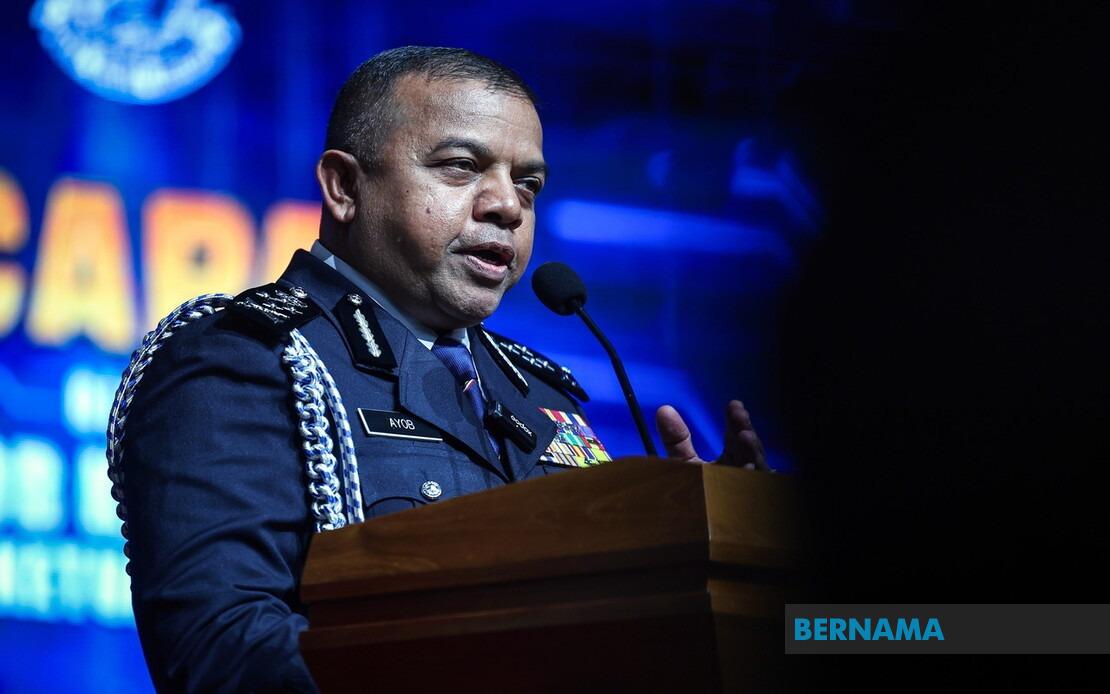
Tan Sri Ayob Khan Mydin Pitchay delivered a parting call to the Royal Malaysia Police on his final day in office, stressing that officers must protect the reputation of an institution forged through the dedication and sacrifice of countless personnel. The Deputy Inspector-General, who formally retired today after nearly 35 years of service, made the appeal during a handover ceremony at the Police Training Centre (PULAPOL) in Kuala Lumpur, where he transferred responsibilities to Datuk Seri Ibrahim Darus, the Bukit Aman Special Branch Director now serving as Acting Deputy Inspector-General. Inspector-General Tan Sri Mohd Khalid Ismail attended the ceremony, underscoring the significance of the transition within the force's senior leadership.
In his remarks, Ayob Khan articulated a vision of policing grounded in ethical conduct and unwavering principle. He cautioned officers against allowing personal ambitions to compromise their professional standing, warning specifically against trading personal integrity for financial gain or misusing authority to victimise vulnerable communities. The message resonated with a broader concern about institutional accountability—emphasising that every officer carries the weight of public trust with each badge worn. This framing positioned ethical behaviour not as an individual choice but as a collective responsibility owed to citizens seeking justice and fair treatment from the force.
The outgoing deputy inspector-general placed particular emphasis on the concept of integrity practised beyond the gaze of oversight. He highlighted the distinction between conduct shaped by external scrutiny and authentic moral character revealed when accountability mechanisms are absent. This distinction proves particularly relevant in policing, where officers frequently operate with considerable discretionary power in situations where supervision is limited. Ayob Khan's invocation of divine accountability—referencing the Islamic principle that God observes all actions—introduced a spiritual dimension to institutional ethics, appealing to officers' personal faith as an internal motivator for proper conduct.
Ayob Khan's nearly 35-year career in the PDRM traced a path through several consequential postings that positioned him to understand the force from multiple operational angles. He served in the Special Branch Counter-Terrorism Division during a period of significant security challenges in Malaysia, later ascending to become Johor Police Chief overseeing one of the nation's most commercially important and demographically diverse states. His tenure as Director of the Narcotics Crime Investigation Department coincided with Malaysia's sustained commitment to drug enforcement, a persistent national priority. Subsequently, he directed the Bukit Aman Criminal Investigation Department before ascending to the deputy inspector-general position in June 2023, a role that gave him visibility across the entire operational landscape of the force.
The specific language of Ayob Khan's farewell reflects broader institutional concerns about public confidence in Malaysian policing. References to avoiding abuse of power and maintaining justice-centred operations suggest awareness of persistent public criticism regarding police conduct and accountability. In recent years, Malaysia has witnessed public discourse about police professionalism, with civil society organisations and media scrutinising incidents of alleged misconduct. By framing integrity as the cornerstone of legitimacy, the outgoing deputy inspector-general aligned himself with reform-minded voices within and outside the institution.
Ayob Khan's acknowledgment of the personal costs of police service—sacrificing family time for operational demands, enduring workplace pressure, and potentially experiencing inadequate recognition—recognised the human dimension often overlooked in institutional messaging. This vulnerability humanised his leadership message, suggesting that maintaining ethical standards becomes more challenging precisely because of the genuine hardships officers face. By validating these struggles whilst simultaneously insisting on principled conduct regardless of recognition, he offered an implicit model of servant leadership grounded in duty rather than reward.
The appointment of Ibrahim Darus as Acting Deputy Inspector-General represents continuity within the force's senior command structure. As Bukit Aman Special Branch Director, Ibrahim brought expertise in intelligence and counterintelligence operations, domains critical to national security. The formal handover ceremony signalled institutional respect for established succession protocols and demonstrated an orderly transition of authority within the senior ranks.
For Malaysian policing, Ayob Khan's departure marks the conclusion of an era within the force's contemporary leadership. His message serves as a benchmark against which the institution and its members will be measured—a reminder that institutional reputation depends upon individual choices made by officers from constable to commissioner. The emphasis on integrity without external oversight proves especially resonant given the force's role in investigating economic crimes, managing public order, and protecting national security—domains where ethical lapses carry disproportionate consequences for public welfare.
The timing and tone of the farewell message, delivered during a formal ceremony witnessed by senior leadership, invested the call for integrity with official weight. Ayob Khan's invocation of fallen comrades whose sacrifice built the institution framed ethical conduct as a debt owed to those who came before—a powerful appeal to institutional loyalty and collective identity. Whether his message catalyses substantive cultural change within the force or recedes into ceremonial rhetoric will depend upon how successive leaders reinforce these principles through personnel decisions, investigative standards, and disciplinary actions.

