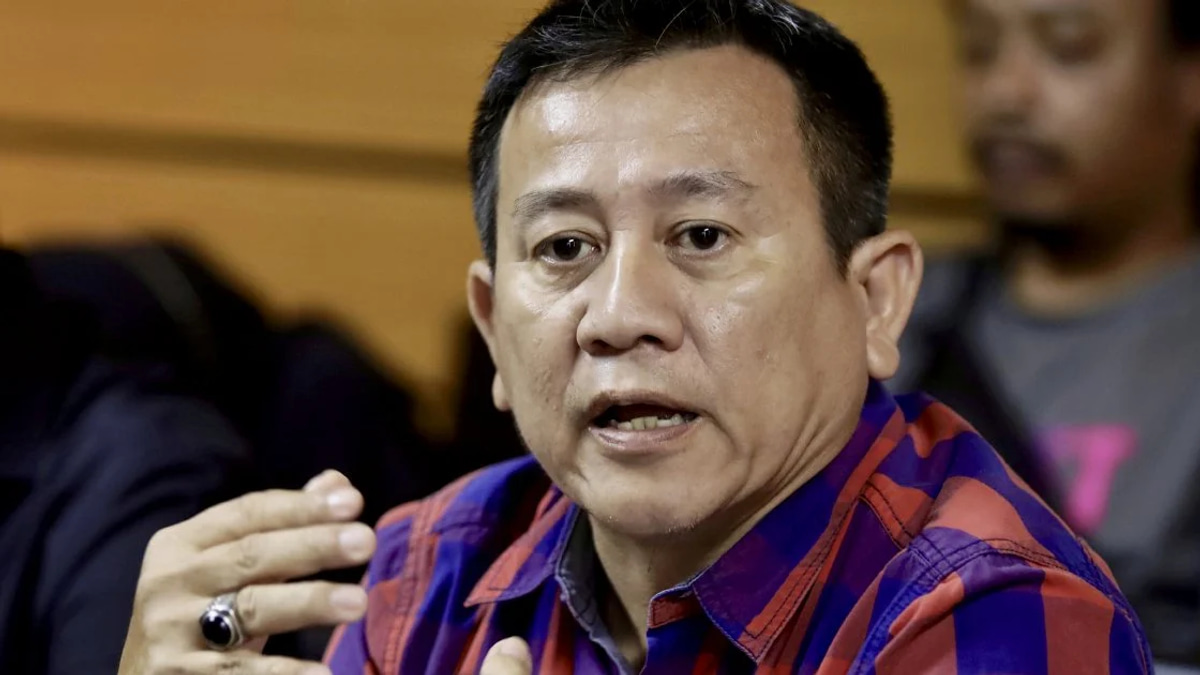
The political landscape in Sabah has shifted with the United Kinabalu Progressive Organisation's formal entry into Gabungan Rakyat Sabah, a development that signals deepening consolidation among the state's locally-rooted parties. UPKO's acceptance as a coalition member came after its application was officially processed, bringing together a broader base of support under Chief Minister Datuk Seri Hajiji Noor's administration.
UPKO president Datuk Ewon Benedick, who also serves as Sabah Deputy Chief Minister, underscored his party's determination to contribute substantively to GRS's mission of steering the state through inclusive leadership and advancement. The timing of this expansion reflects the coalition's ongoing efforts to consolidate political support amid the complex dynamics of Malaysian federalism and Sabah's distinctive constitutional position.
Ewon's remarks emphasised a critical distinction in Sabah's political ecosystem: the coalition operates exclusively with local parties rather than incorporating peninsular-based organisations. This positioning carries strategic importance, given Sabah's historical relationship with the federation as outlined in the Malaysia Agreement 1963. According to Ewon, only homegrown Sabah political movements possess the requisite understanding of the state's unique identity and developmental aspirations rooted in that foundational agreement.
The coalition's expanded membership now encompasses six distinct parties, representing a significant portion of Sabah's political landscape. Alongside UPKO, the alliance comprises Parti Gagasan Rakyat Sabah, Parti Bersatu Sabah, Parti Liberal Demokratik, Parti Harapan Rakyat Sabah, and Parti Cinta Sabah. This breadth of representation across different party formations demonstrates GRS's capacity to serve as a unifying platform for diverse political interests within the state.
The framework of "Sabah First, Sabah Prosper, Sabah United" articulated by Ewon reflects an overarching vision that attempts to transcend parochial political divisions in favour of collective state advancement. This messaging strategy resonates with a significant constituency of Sabahans who prioritise developmental outcomes and stability over partisan competition. The slogan implicitly acknowledges regional aspirations for greater autonomy and prosperity within Malaysia's federal structure.
UPKO's integration into GRS carries implications beyond mere numerical expansion of the coalition. As a mid-tier political entity with roots in Sabah's complex ethnic and cultural mosaic, UPKO brings organisational capacity and localised networks that strengthen GRS's grassroots presence. The party's decision to formalise its membership suggests confidence in the coalition's direction under Hajiji's stewardship and reflects calculations about maximising political influence through collective action.
Ewon's public appreciation for Hajiji, both as GRS chairman and as a member of the Supreme Council, underscores the hierarchical structure through which decision-making flows within the coalition. The acceptance of UPKO as a component party required explicit endorsement from these apex bodies, indicating that coalition expansion follows deliberate rather than ad-hoc processes. Such institutionalised procedures lend legitimacy to the process while constraining the speed at which the alliance can absorb new members.
The exclusive character of GRS as a local Sabah coalition distinguishes it from broader multi-state formations that dominate peninsular Malaysian politics. This autonomy from national party structures affords both advantages and constraints. While it permits responsiveness to distinctly Sabahan concerns and preserves room for state-level political manoeuvre, it also limits access to federal resources and machinery that larger peninsular-based coalitions command. UPKO's entry into this locally-defined alliance reflects a strategic choice to operate within Sabah's political economy rather than seek external partnerships.
The Malaysia Agreement 1963 reference invoked by Ewon carries constitutional and symbolic weight. This agreement, which brought Sabah into the Malaysian federation, granted the state certain constitutional protections and devolved authority structures. Any coalition claiming to represent authentic Sabahan interests must demonstrate alignment with the developmental trajectory and constitutional safeguards that agreement established. Framing GRS's mission in relation to that historical compact lends deeper legitimacy to the alliance's claim to represent state interests comprehensively.
For Malaysian observers monitoring Sabah's political trajectory, this development suggests that the state's party system continues to operate with considerable independence from peninsular dynamics. Rather than fragmenting around competing national narratives, Sabah's parties consolidate around distinctly regional platforms and coalitions. UPKO's decision to join GRS rather than pursue alternative alignments indicates that state-level consolidation remains the dominant political logic in Sabah's electoral and institutional environment.
The six-party structure of GRS now reflects a maturation of coalition politics in Sabah, moving beyond the ephemeral alliances that characterised some earlier periods. Whether this expanded coalition can sustain cohesion while managing the competing interests of its constituent parties will prove critical to its longevity and effectiveness in delivering on its development mandates. The expansion also sets parameters for future coalition dynamics, potentially signalling that GRS has reached an equilibrium point in terms of absorbing additional members, though this remains subject to evolving political circumstances.

%22%2F%3E%3C%2Fpattern%3E%3C%2Fdefs%3E%3Crect%20width%3D%22100%25%22%20height%3D%22100%25%22%20fill%3D%22url(%23ph28ik2g)%22%2F%3E%3Crect%20width%3D%22100%25%22%20height%3D%22100%25%22%20fill%3D%22url(%23ph28ik2p)%22%2F%3E%3Ctext%20x%3D%2250%25%22%20y%3D%2250%25%22%20text-anchor%3D%22middle%22%20dominant-baseline%3D%22central%22%20fill%3D%22rgba(255%2C255%2C255%2C0.95)%22%20font-family%3D%22Georgia%2C%20'Times%20New%20Roman'%2C%20serif%22%20font-weight%3D%22700%22%20font-size%3D%22272%22%20letter-spacing%3D%22-0.02em%22%3EAnwar%3C%2Ftext%3E%3C%2Fsvg%3E)