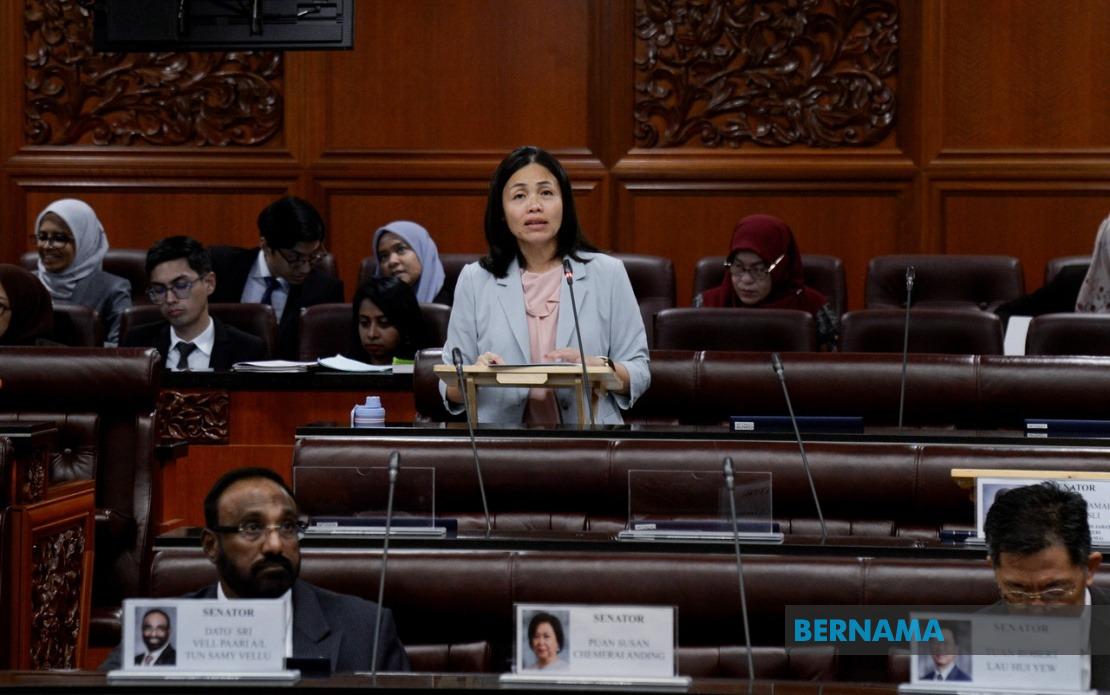
Malaysia's upper chamber has given its stamp of approval to the Communications and Multimedia Commission (Amendment) Bill 2026, marking a significant step toward overhauling how the nation's digital communications landscape is overseen. The Dewan Negara passed the legislation following deliberations involving 11 Senators, with the measure winning majority support across the chamber. The amendments represent a concerted effort to modernise the regulatory framework governing an increasingly complex and strategically vital sector that spans telecommunications, media, and digital platforms.
Deputy Minister of Communications Teo Nie Ching emphasised during the parliamentary wind-up that the reforms arrive at a critical juncture when Malaysia confronts mounting challenges in online content moderation and digital crime prevention. She highlighted impressive recent performance metrics from the Malaysian Communications and Multimedia Commission, noting that the agency had successfully removed more than 222,000 pieces of gambling-related content during the first seven months of 2026. This acceleration in enforcement activity underscores the regulator's increasingly assertive approach to policing harmful digital content, a responsibility that has grown exponentially as online spaces expand across society.
The trajectory of content removal efforts reveals the intensifying scale of MCMC's digital governance mandate. Content takedown requests processed by social media operators numbered just two in 2022, a figure that ballooned dramatically to 18,814 in 2023, jumped to 189,484 by 2024, and reached 289,486 throughout 2025. With 222,257 removals achieved by the end of July this year, the trend suggests enforcement capacity has reached unprecedented levels. Complementing these content-based interventions, MCMC has coordinated the blockage of 6,982 gambling websites collectively across the period from 2022 through mid-2026, demonstrating the agency's growing technical sophistication in controlling access to prohibited digital services.
Crucially, the amendment clarifies the institutional boundaries between MCMC's regulatory authority and other enforcement agencies. Gambling investigations and prosecutions remain squarely within the Royal Malaysia Police's remit, while MCMC functions as a technical enabler, providing digital forensic capabilities and implementing access blocks at the formal request of law enforcement partners. This delineation prevents regulatory overreach while ensuring coordinated action against digital criminality—a model that reflects international best practice in separating investigative functions from technical regulation.
A cornerstone of the reforms concerns governance independence, an issue that resonates deeply with concerns about regulatory capture and political interference. The amendment explicitly prohibits Members of Parliament and state assemblymen from serving as MCMC chairman, a provision designed to insulate the regulator from political pressure and ensure leadership selection prioritises expertise over factional allegiance. Deputy Minister Teo framed this safeguard as essential for maintaining public confidence, noting that the reforms constrain ministerial appointment discretion by imposing qualification thresholds on prospective commissioners. For Malaysian citizens and businesses navigating an increasingly regulated digital environment, such structural protections offer reassurance that agency decisions reflect technical merit rather than political calculation.
Senator Datuk Abdul Halim Suleiman contextualised the amendment within a broader strategic recognition that communications and multimedia infrastructure has transcended its traditional classification as merely an economic sector. Modern digital networks now function as critical national infrastructure comparable in importance to physical utilities like electricity or water systems. Malaysia's development aspirations—from digital economy ambitions to national cybersecurity resilience—depend fundamentally on the robustness, integrity, and independence of these regulatory structures. Halim's intervention suggested that legislative empowerment alone proves insufficient without corresponding institutional capacity, necessitating that MCMC simultaneously strengthen its technical expertise, transparency protocols, and accountability mechanisms.
Senator Muhammad Hasbie Muda amplified concerns about the appointment process itself, advocating that merit and professional expertise must become paramount criteria for commission membership. He cautioned against treating the bill's passage as an endpoint for reform, warning instead that granting MCMC expanded powers demands concurrent improvements in how those powers are exercised. Meaningful regulatory reform, from Hasbie's perspective, requires demonstrable commitment to professional administration, transparent decision-making, and genuine public accountability rather than simply expanding an agency's formal authority. This articulation captures a fundamental tension in regulatory reform: laws establish frameworks, but institutional cultures and leadership quality determine whether those frameworks actually deliver public benefit.
The legislation itself comprises 17 clauses, with a key amendment revising Section 16 of Act 589 to explicitly codify MCMC's responsibilities in developing and regulating digital infrastructure and platform technical standards. This textual clarification prevents future ambiguity about the agency's mandate while providing legal foundation for increasingly sophisticated technical interventions as digital technologies evolve. Previous regulatory uncertainty occasionally constrained MCMC's ability to address emerging challenges like new forms of online gambling platforms or unregulated digital communication services that operate in jurisdictional grey zones.
The bill's passage through the Dewan Negara completes the legislative process, having previously cleared the Dewan Rakyat on July 15 this year. For Malaysia's digital ecosystem—encompassing telecommunications operators, technology companies, content platforms, and ordinary users—these reforms signal a regulatory environment in transition. Enhanced MCMC independence and expanded technical capabilities should theoretically produce more consistent, professionally grounded regulation less susceptible to political fluctuation. However, success ultimately depends on implementation quality, adequacy of resources, and whether Malaysia's political culture genuinely respects the institutional boundaries the amendment establishes. The coming years will reveal whether structural reforms translate into substantive governance improvements or remain largely symbolic adjustments to an agency's formal charter.
The regional dimension also merits consideration as Malaysia positions itself amid Southeast Asian digital governance trends. Several neighbouring countries grapple with comparable challenges regarding online content moderation, digital crime prevention, and regulatory independence. Malaysia's legislative approach—explicitly prioritising professional expertise over political control while clarifying agency mandates—offers a model potentially instructive for regional peers contemplating their own regulatory modernisation efforts. As digital commerce, cross-border data flows, and online service delivery accelerate across Southeast Asia, the institutional architectures individual nations establish now will significantly influence the regional digital economy's competitive trajectory and character.

