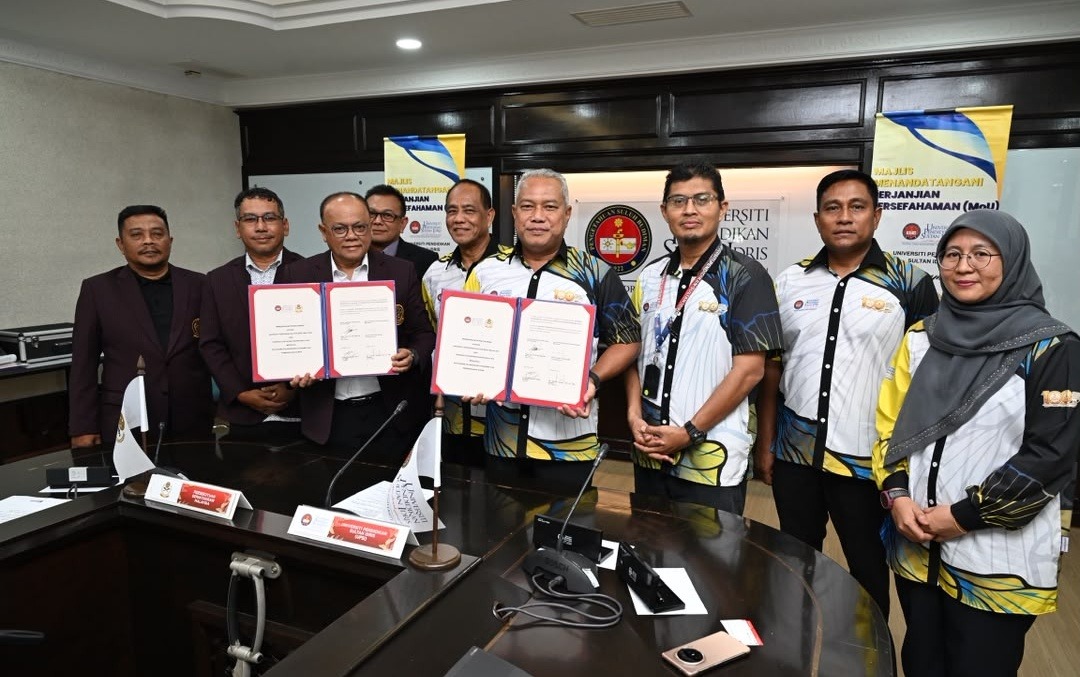
Universiti Pendidikan Sultan Idris (UPSI) and the Malaysian Sepaktakraw Federation (PSM) have formalized a strategic partnership designed to strengthen the nation's capacity to develop world-class athletes while ensuring they maintain educational progress. The Memorandum of Understanding, signed at the Chancellery Building on Sultan Abdul Jalil Shah Campus in Tanjong Malim, represents a deliberate attempt to address a persistent challenge in Malaysian sports: bridging the gap between competitive excellence and academic achievement.
The collaboration reflects growing recognition among Malaysian educational institutions and sports bodies that elite athletes require structured support systems that do not force a choice between their sporting ambitions and educational advancement. By creating formal mechanisms for cooperation, both organizations signal commitment to building a sustainable talent pipeline in sepak takraw, a traditional sport that carries significant cultural importance across Southeast Asia and remains a source of national pride.
UPSI Vice-Chancellor Prof Datuk Dr Md Amin Md Taff emphasized that the initiative transcends ceremonial gestures, stressing instead that concrete action plans would drive implementation. The university has committed to enrolling PSM athletes at all academic levels while offering flexible scheduling arrangements that accommodate intensive training regimens and competition calendars. This flexibility proves essential for serious athletes who must balance demanding physical preparation with coursework requirements.
The three-year agreement establishes a framework for UPSI to leverage its substantial expertise in sports science, coaching methodology, officiating standards, and sports technology infrastructure. These specialized capabilities extend beyond what most universities provide, positioning UPSI as a specialized facility capable of supporting high-performance athlete development. The university will also make available its training infrastructure and monitoring systems to ensure collaboration goals translate into measurable outcomes rather than remaining aspirational.
A critical component involves establishing a dedicated national training centre for sepak takraw. This facility would consolidate resources currently dispersed across multiple locations, creating an integrated environment where athletes benefit from coordinated coaching, sports science support, and medical supervision. Such centralization typically accelerates improvement by enabling coaches to share best practices and technical specialists to monitor athlete progression systematically across cohorts.
PSM Vice-President Tengku Zaihan Che Ku Abdul Rahman highlighted how the partnership addresses a longstanding concern among national sports administrators: providing formal educational security for athletes from Malaysian Sports Schools and State Sports Schools. Young competitors often worry about life prospects should injuries or performance plateaus end their athletic careers prematurely. By securing guaranteed educational pathways at UPSI, the federation removes a significant source of athlete anxiety and family resistance to full-time sports pursuits.
The synergy between UPSI's sports science capabilities and PSM's accumulated technical knowledge creates potential for innovation in coaching methods and athlete development protocols. Malaysian sports organizations have increasingly recognized that data-driven approaches to training—informed by biomechanics, physiology, and psychology research—deliver superior results compared to experience-based methods alone. This partnership institutionalizes that evidence-based approach within the sepak takraw development system.
Talent identification and development represents another dimension of this initiative. By working closely with sports schools that feed athletes into national programs, UPSI and PSM can establish earlier screening mechanisms, identify athletes with developmental potential earlier, and provide structured progression pathways from school level through elite competition. Such systematic approaches address a historical weakness in Malaysian sports development, where talented individuals sometimes slip through gaps between institutional frameworks.
The arrangement also contemplates development of qualified technical officials and coaching staff, addressing chronic shortages that have constrained competition standards and athlete welfare protections. By embedding coaching education within a university framework, the partnership ensures that credential holders possess not only practical experience but also theoretical grounding in sports science and athlete management principles.
Rengkai Zaihan's hope that this model serve as a template for collaboration between other sports federations and higher education institutions carries significant implications for Malaysian sports development broadly. If successful, UPSI and PSM demonstrate that universities can function as core infrastructure within national sports systems rather than peripheral stakeholders. This reframing could unlock untapped academic resources for sports advancement across multiple disciplines.
The arrangement includes provisions for negotiating a more detailed Memorandum of Agreement following initial implementation experience. This staged approach allows both parties to identify practical obstacles, refine operational procedures, and establish realistic performance metrics before committing to longer-term formal arrangements. Such pragmatism increases likelihood that the partnership achieves its development objectives.
For Malaysian athletes in sepak takraw, the immediate benefit manifests as expanded educational choice and enhanced support infrastructure. Longer-term, the partnership aims to improve competitive performance by ensuring athletes enter international competitions with both refined technical skills and supporting knowledge in sports science principles applicable across athletic disciplines. This holistic development approach distinguishes the initiative from purely athletic training models.
The partnership also positions UPSI as a regional center of excellence in sepak takraw development, potentially attracting athletes from other Southeast Asian nations and establishing the university as a knowledge hub for a sport deeply embedded in the region's cultural identity. Such regional positioning could generate research opportunities, coaching exchanges, and academic collaborations that extend UPSI's influence beyond Malaysian borders while strengthening the university's reputation in sports science fields.

