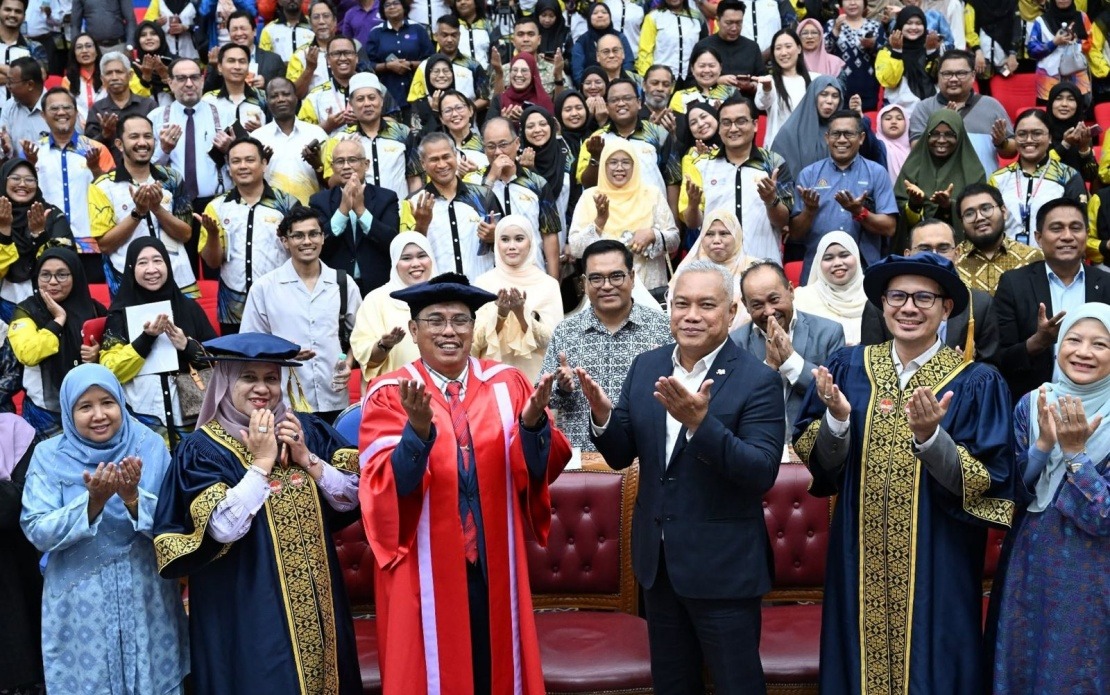
Universiti Pendidikan Sultan Idris (UPSI) is actively investigating opportunities to develop a private specialist hospital facility within Tanjong Malim, signalling a significant expansion of the institution's infrastructure ambitions beyond traditional academic spaces. Vice-Chancellor Prof Datuk Dr Md Amin Md Taff disclosed the exploratory initiative during remarks delivered at a recent campus gathering, framing the healthcare facility as a cornerstone component of the university's strategic infrastructure roadmap. The proposed hospital responds directly to mounting demand for specialist medical services among the university's growing international student cohort and expatriate workforce, reflecting how Malaysia's premier teacher training institution is positioning itself as an increasingly self-contained knowledge community.
The healthcare initiative stems from UPSI's conviction that comprehensive campus amenities remain essential to attracting and retaining global academic talent in an increasingly competitive higher education landscape. Dr Md Amin articulated this logic during the Budiman Lecture Series event held at the Main Auditorium of Sultan Abdul Jalil Shah UPSI Campus, emphasising that robust support infrastructure directly correlates with institutional competitiveness and community wellbeing. The hospital development aligns with broader aspirations to transform Tanjong Malim into a thriving educational hub where students and staff experience seamless access to world-class facilities without requiring lengthy travel to distant urban centres. By anchoring medical services within the campus environment, UPSI aims to reduce the friction that currently necessitates external healthcare navigation for its international population.
Currently, UPSI is in exploratory discussions with potential private hospital operators, examining various partnership structures and operational business models that could viably establish specialist healthcare delivery on university land or through collaborative arrangements with existing private healthcare providers. The university is not committed to a singular pathway but instead evaluating multiple scenarios encompassing direct operational control, joint ventures, or management contracts with established hospital networks. This flexibility reflects pragmatic recognition that successful healthcare facility development requires careful alignment between the university's academic mission, financial sustainability considerations, and the sophisticated operational demands inherent in running a modern specialist hospital. Dr Md Amin indicated that the university remains open to proposals from qualified private healthcare organisations capable of meeting stringent quality and service standards appropriate to an international academic setting.
The hospital proposal represents merely one dimension of UPSI's expansive vision for Tanjong Malim's future. Complementing the healthcare initiative is an equally ambitious long-term initiative to establish retirement facilities designed to foster community amongst former university employees transitioning into their post-career years. This retirement resort concept acknowledges the university's responsibility toward its legacy workforce whilst simultaneously creating additional economic activity and population concentration within the broader Tanjong Malim ecosystem. By maintaining meaningful connections between retirees and the campus through proximity and integrated community facilities, UPSI recognises how such arrangements generate mutual benefits: retirees enjoy intellectual stimulation and social belonging whilst the institution retains proximity to experienced colleagues who can mentor younger generations and contribute wisdom to institutional discussions.
These infrastructure initiatives must be understood within Malaysia's broader education sector dynamics, where universities increasingly function as anchors for comprehensive regional development rather than merely academic enclaves. The transformation of Tanjong Malim into a knowledge city represents a deliberate strategy to establish competitive advantage in attracting international students who increasingly prioritise comprehensive lifestyle ecosystems rather than educational facilities alone. By integrating healthcare and retirement services with academic offerings, UPSI positions itself within the growing global competition for global talent, where universities like those in Singapore, Australia, and leading British institutions provide comprehensive campus experiences that extend far beyond classroom instruction.
The timing of this announcement reflects UPSI's maturing financial capacity and strategic confidence in its institutional trajectory. As Malaysia's dedicated teacher education university, UPSI occupies a singular institutional niche within the Malaysian higher education ecosystem, providing it unique positioning to develop integrated campus communities that serve multiple demographic constituencies. The international student population, increasingly drawn from across Southeast Asia and the broader Asian region, particularly values the combination of academic excellence and quality-of-life amenities that comprehensive campus planning delivers. Healthcare accessibility stands amongst the uppermost concerns for international families evaluating educational destinations, and UPSI's proactive response to this consideration signals serious commitment to creating an attractive alternative to established international university destinations.
Dr Md Amin's remarks also honoured the retiring Dean of the Faculty of Human Development, Prof Dr Abdul Talib Mohamed Hashim, whose two-decade tenure contributed substantially to institutional development across multiple domains. The vice-chancellor's recognition of Abdul Talib's diplomatic capabilities and collaborative approach underscores how the proposed hospital initiative represents continuity with the institution's existing culture of infrastructure innovation and stakeholder partnership. The retirement facility proposal similarly reflects institutional values prioritising loyalty and community care that extend beyond transactional employment relationships. These underlying cultural commitments position UPSI advantageously to execute complex multi-stakeholder projects requiring sustained collaboration across governmental, private sector, and community constituencies.
The specialist hospital proposal carries broader implications for healthcare accessibility across Perak's central region. Currently, residents and visitors to the Tanjong Malim area requiring specialist medical intervention typically require travel to Kuala Lumpur or other major urban centres, creating significant inconvenience and potential clinical delays. A UPSI-anchored private specialist hospital would substantially enhance regional healthcare capacity whilst generating economic multiplier effects through employment creation and service sector development. This development would complement existing public healthcare infrastructure without duplicating capacity, instead filling a recognised gap in private specialist provision within the district. The facility's proximity to the North-South Expressway enhances accessibility for patients from surrounding regions, positioning Tanjong Malim as an emerging healthcare services destination.
Successful execution of these ambitious plans requires careful navigation of regulatory, financial, and operational complexities. Establishing a private specialist hospital demands compliance with complex healthcare licensing frameworks, medical professional credentialing requirements, and clinical governance standards administered through the Ministry of Health and various professional regulatory bodies. UPSI's engagement with private healthcare operators should facilitate navigation of these regulatory pathways whilst ensuring clinical quality standards appropriate to an academic institution's reputation and international profile. The university's substantial land holdings and financial capacity provide necessary foundations, though sustained senior leadership engagement and strategic patience remain essential given typical timelines for healthcare facility development spanning multiple years from initial planning through operational launch.
The initiatives announced by Dr Md Amin represent strategic positioning of UPSI as an institution increasingly focused on comprehensive ecosystem development rather than narrowly defined educational service provision. This evolution parallels global trends whereby leading universities function simultaneously as educational institutions, research engines, healthcare providers, and community anchors. For Malaysian higher education more broadly, UPSI's initiatives suggest growing recognition that sustained institutional competitiveness in globalised education markets requires comprehensive infrastructure extending beyond academic facilities. The proposed developments should stimulate consideration amongst other major Malaysian universities regarding comparable ecosystem initiatives that enhance institutional attractiveness whilst contributing positively to regional development trajectories and community wellbeing.

