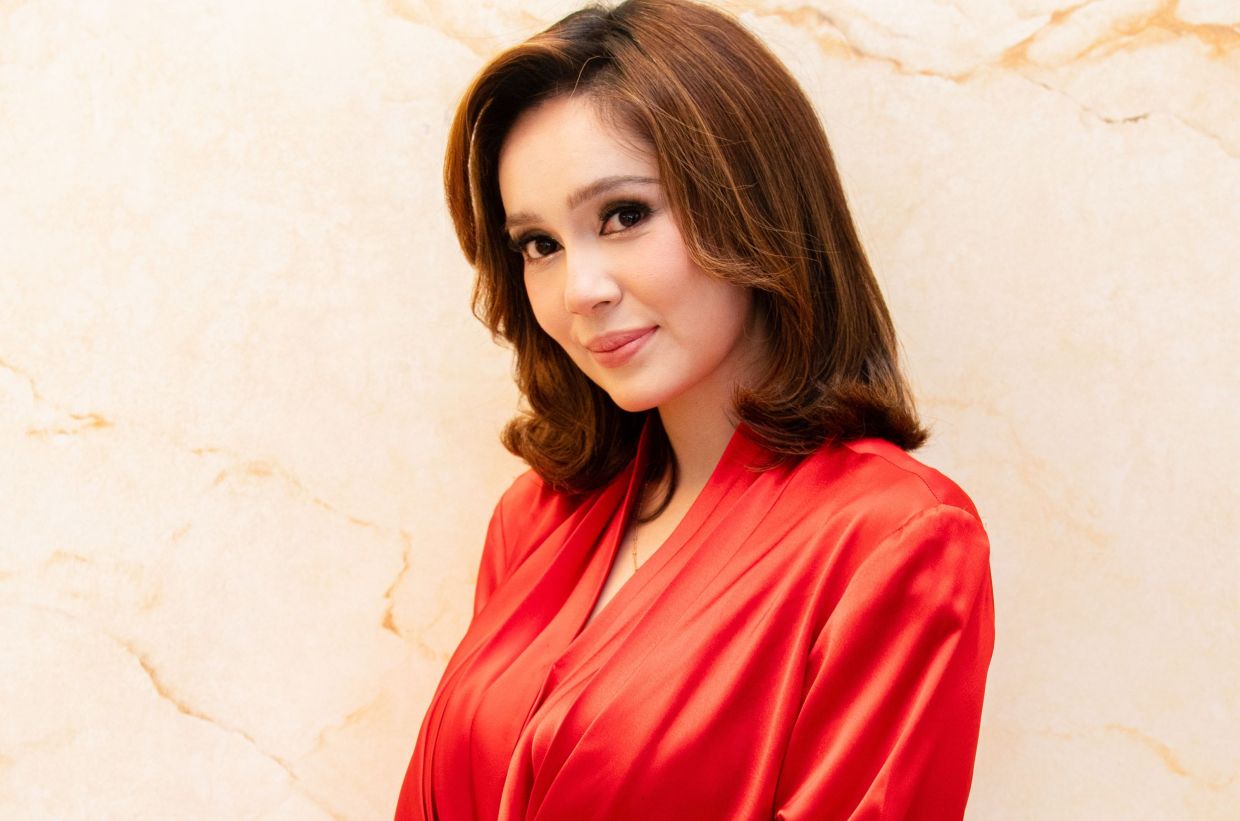
Actress Uqasha Senrose has chosen to focus on professional commitment rather than personal judgment in her latest project with co-star Aliff Aziz, whose marriage ended publicly in 2024 following a khalwat incident. The collaboration on the new drama series demonstrates a pragmatic approach to filmmaking amid personal upheaval for both actors, raising questions about how the Malaysian entertainment industry navigates scandal and reconciliation.
Aliff Aziz became the subject of significant public scrutiny in March 2024 when he was implicated in a khalwat case, ultimately leading to a highly publicized divorce from Malaysian singer-actress Bella Astillah. The former couple shares two children, and the breakdown of their marriage played out extensively in media coverage and social commentary. The incident represented a watershed moment in Malaysian celebrity culture, where religious and moral dimensions of personal conduct intersect with public perception and professional consequences.
Uqasha's perspective on the matter reflects a measured approach to redemption and workplace ethics. Speaking about her decision to proceed with the collaboration, she articulated a philosophy centred on non-judgment and mutual respect for professional obligations. "Who am I to judge someone else's personal life? I'm a sinner too and I've made mistakes too," she stated, acknowledging the complexity of human fallibility and the distinction between personal failings and professional capability. This stance challenges cultural narratives that often demand career punishment as moral reckoning.
Throughout the filming process, Uqasha reports that no complications emerged from their working relationship. She emphasized that Aliff maintained professional standards consistently, arriving on set and executing his responsibilities without incident. The actress noted that she never experienced apprehension or discomfort in his presence, framing the collaboration as a straightforward exchange of labour and creative effort. "I don't believe in rejecting someone's rezeki," she explained, invoking the Islamic concept of livelihood and sustenance to justify her position.
The timing of this project is particularly significant given that Uqasha herself navigated personal crisis during the filming period. She filed for divorce from actor Kamal Adli in October 2025, with the proceedings concluding officially in January 2026. During these contentious divorce proceedings, Uqasha alleged domestic abuse—a claim her ex-husband contested. The coincidence of both actors processing major personal and legal challenges while working together on material exploring marital discord adds a layer of complexity to their professional interaction.
The 12-episode series itself centres on a polygamous marriage involving three principal characters: Adli (portrayed by Aliff), Azura (played by Uqasha), and Nikita (Elisya Sandha). The narrative structure places considerable emotional weight on Uqasha's character, requiring her to navigate complicated relationship dynamics and internal conflict. Notably, Uqasha made a deliberate artistic choice to prevent her real-life experiences from contaminating her character development. She acknowledged the risk of importing personal anguish into the role but determined that such an approach would compromise her portrayal of Azura as a distinct individual with her own narrative arc.
Despite this professional compartmentalization, Uqasha admitted that embodying Azura's emotional journey exacted psychological and physical costs. The character experiences multiple traumatic moments, including scenes involving violence and degradation. She described instances where she genuinely accessed her character's suffering, particularly when depicting Azura's cyclical patterns of hope and disappointment. "There were times when I really felt Azura's pain," Uqasha reflected, noting how the character's struggle to overcome past mistakes and seize redemption only to face fresh tribulation created authentic emotional resonance.
What emerges from the series, according to Uqasha, is a deliberate moral ambiguity that rejects simplistic categorization of characters as wholly virtuous or entirely culpable. She praised the writing for its nuanced exploration of human behaviour, acknowledging that individuals who present as benevolent may harbour hidden intentions, while those appearing harsh or villainous often operate from comprehensible motivations. This thematic complexity mirrors the real-world dynamics of judgment and forgiveness that her own professional choice embodied.
In reflecting on her personal trajectory, Uqasha emphasized that her current priorities centre on self-directed happiness and parental responsibility. She described her difficult experiences as formative, teaching resilience and fostering emotional maturity. The transition to motherhood, she noted, fundamentally reoriented her values away from external validation toward concrete responsibilities and family welfare. This perspective positions her both as an artist navigating industry expectations and as a person reassessing life direction following disruption.
The broader implications of Uqasha's stance merit consideration within Malaysian media and cultural contexts. Her willingness to work alongside someone experiencing public disgrace signals a potential departure from reflexive cancellation and suggests space for professional rehabilitation distinct from moral judgment. Whether this represents an emerging industry norm or remains an individualized choice remains unclear, but it reflects a more sophisticated understanding of how personal conduct and professional capacity represent separate domains requiring distinct evaluation criteria.

