The Upper Rajang Development Agency (URDA) is embarking on an ambitious agenda to reshape rural economic development in Sarawak by deepening alliances with universities, government agencies, and grassroots communities. The strategic pivot aims to transition the region from dependence on primary commodities toward a knowledge-intensive economy underpinned by technological advancement and sophisticated value chains. This reorientation reflects broader recognition across Southeast Asia that traditional agrarian models alone cannot sustain rising living standards or provide competitive advantages in increasingly globalised markets.
Chairman Datuk Seri Alexander Nanta Linggi articulated a fundamental shift in development philosophy during recent remarks in Sibu on July 16. He emphasised that rural prosperity cannot be constructed on extraction and export of unprocessed raw materials. Instead, communities must cultivate the capacity to capture greater margins by processing, branding, and distributing finished or semi-finished goods directly to end consumers. This approach aligns with contemporary development economics, which demonstrates that value creation occurs primarily in upstream research, product design, packaging, marketing, and retail functions rather than in commodity production itself.
The Minister of Works and Member of Parliament for Kapit pointed to concrete evidence supporting this vision. The High Impact Community Projects (HICP) initiative has delivered measurable results, with participating households reporting income gains exceeding 25 per cent. These outcomes underscore the proposition that strategic investments in research capacity, knowledge transfer mechanisms, and technological adoption can generate immediate household benefits rather than remaining abstract academic pursuits. For Malaysian policymakers monitoring rural development outcomes, such results offer empirical validation that innovation-focused interventions merit sustained funding and political commitment.
Nanta positioned universities as critical institutional actors in this transformation. Rather than viewing higher education as disconnected from community needs, he reframed academic institutions as strategic partners capable of translating research findings into commercially viable products and services. This perspective addresses a longstanding gap in many developing economies, where university research often proceeds independently from market realities and community circumstances. When research agendas genuinely reflect local priorities and implementation agencies coordinate effectively with academic teams, the potential emerges to convert laboratory discoveries into income-generating activities that materially improve household welfare.
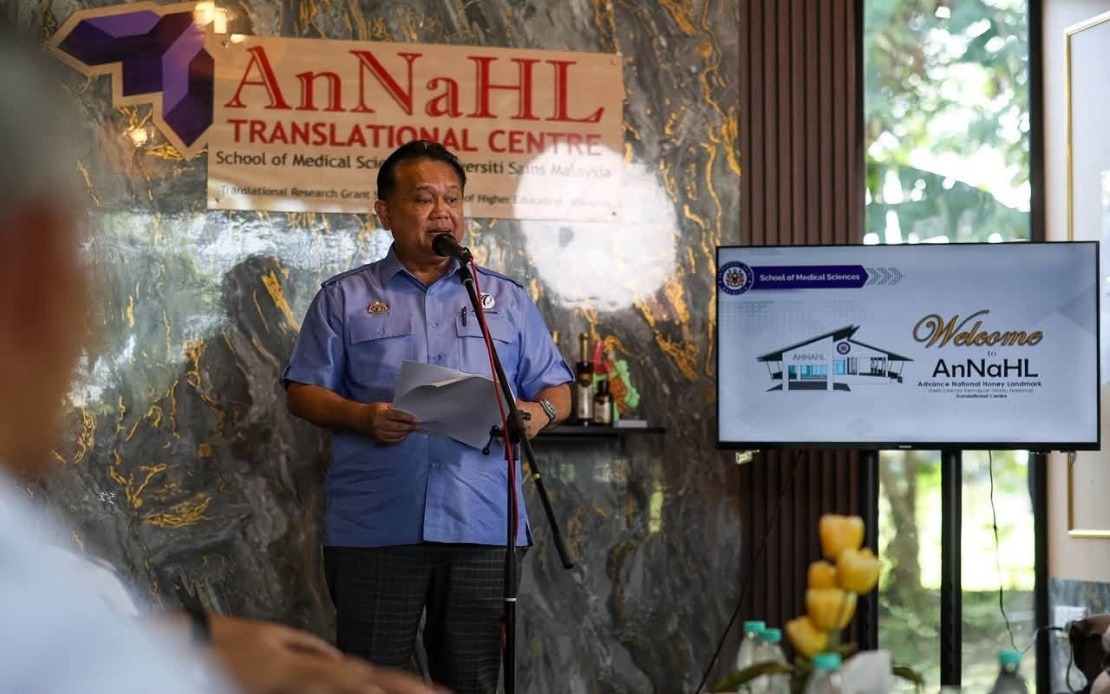
The visit by joint delegations from URDA and the Regional Corridor Development Authority (RECODA) to the Advanced National Honey Landmark (AnNaHL) Translational Centre at Universiti Sains Malaysia's Health Campus in Kubang Kerian, Kelantan, exemplifies this partnership model in practice. The facility serves as a concrete manifestation of how university infrastructure can support rural economic initiatives. By housing processing equipment, training facilities, marketing resources, and research capabilities under a single management structure, such centres reduce barriers that historically prevented rural producers from moving beyond primary production into value-added processing and distribution.
Stingless bee cultivation emerges as a prominent focus within URDA's strategic portfolio. The Kapit parliamentary constituency has been identified as particularly suitable for developing high-impact community projects centred on apiculture and honey production. Stingless bees present an especially promising opportunity for Southeast Asian rural communities, as they require modest land investments compared to conventional agriculture, generate multiple income streams through honey, pollen, and propolis sales, and align naturally with forest conservation objectives. The AnNaHL centre's involvement signals that commercial viability is being grounded in rigorous research regarding optimal breeding practices, product quality assurance, and market positioning.
Nanta articulated a comprehensive development framework emphasising community capacity building as foundational to sustainable rural prosperity. This approach recognises that infrastructure alone—processing facilities, transport networks, or technology—cannot generate durable progress without corresponding human capital development. Training programmes must equip community members with technical skills required for modern production processes, business management competencies necessary for enterprise operation, and market intelligence enabling strategic positioning against competitors. Market access represents an equally critical component, as even superior products struggle commercially without reliable distribution channels and buyer relationships.
The coordination between URDA and RECODA reflects recognition that rural development transcends individual agency mandates and requires cross-institutional collaboration. RECODA's involvement brings expertise in corridor-level economic planning and infrastructure development, perspectives that complement URDA's community-focused implementation capacity. This institutional coordination model offers lessons for other Malaysian states pursuing rural transformation, particularly those with geographically dispersed populations and limited existing processing infrastructure. Effective development demands that agencies specialising in different scales and functions operate according to coherent strategies rather than pursuing parallel initiatives.
For Malaysian readers, particularly those in rural constituencies or engaged in agricultural production, URDA's evolving strategy carries implications extending beyond Upper Rajang. The emphasis on moving beyond commodity production addresses challenges confronting rural economies nationwide, from rubber smallholders to palm oil producers to traditional fisheries. As global commodity prices remain volatile and markets become increasingly competitive, communities that successfully integrate research capacity, value-addition processes, and market linkages will emerge as winners. Conversely, regions that remain locked into primary production risk economic stagnation as cheaper producers elsewhere capture commodity markets.
The AnNaHL centre model also suggests templates potentially applicable across Malaysia's rural regions. Universities in Sabah, Terengganu, Pahang, and other states possess research capacity that could similarly support community-based enterprises if institutional bridges were systematically constructed. The Kelantan facility demonstrates that translational research centres can function as genuine economic development instruments rather than purely academic appendages. Replicating such models requires sustained funding commitments and genuine institutional collaboration, but the returns—measured in household income improvements and sustainable livelihoods—justify the investment.
Looking forward, URDA's partnership-building agenda will require careful attention to ensuring that knowledge actually transfers to community practitioners and that market linkages materialise beyond initial pilot phases. History reveals numerous rural development initiatives that achieved impressive results during pilot periods before faltering upon scaling. Sustained success will demand that training programmes translate into ongoing technical support, that market relationships develop genuine commercial sustainability rather than depending on government procurement, and that communities develop ownership of enterprises rather than viewing initiatives as externally imposed interventions. These challenges are not unique to Upper Rajang but represent universal obstacles to rural development across the region.

