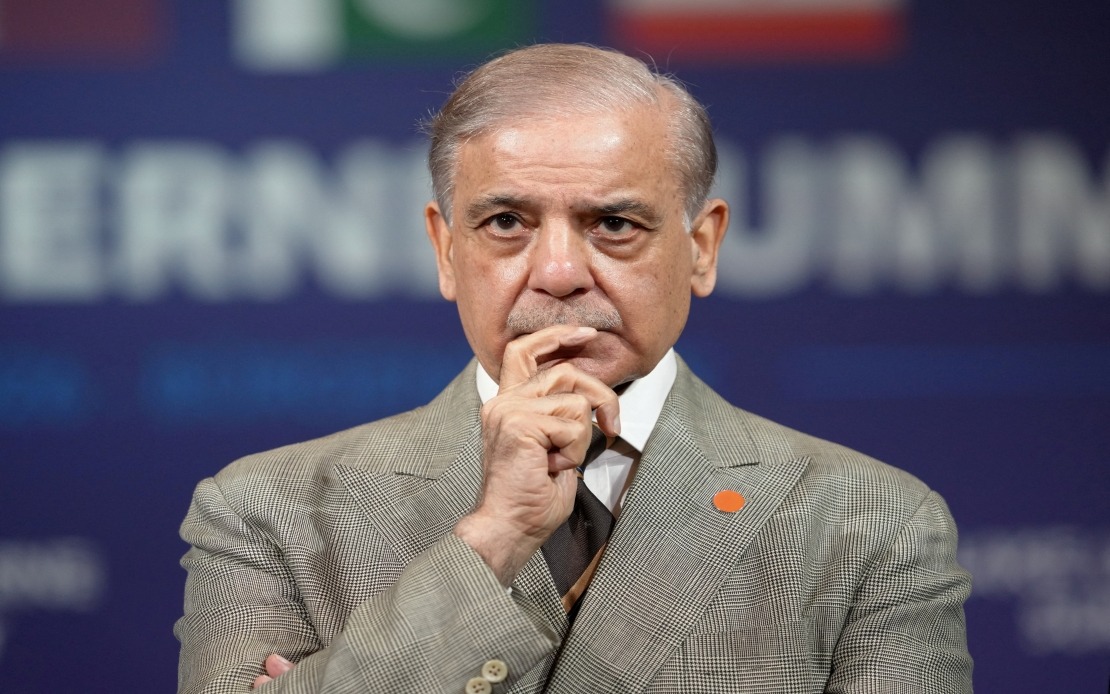
Pakistan's Prime Minister Shehbaz Sharif has disclosed that the United States and Iran have committed to a compressed negotiating schedule, with substantive talks on nuclear matters, ballistic missile capabilities, and Iran's frozen international assets expected to unfold over the coming two months. Speaking to lawmakers in the National Assembly on Tuesday, Sharif framed this development as a critical follow-up to what he characterised as "successful" negotiations that concluded in Switzerland, signalling optimism that the foundation laid in Europe could lead to a comprehensive settlement within the timeframe.
The announcement reflects the activation of the Islamabad Memorandum of Understanding, a trilateral accord signed on June 17 by the United States, Iran, and Pakistan. By positioning itself as a mediator in this high-stakes diplomatic initiative, Islamabad has sought to reinforce its role as a bridge between Washington and Tehran—a positioning that carries significant implications for Pakistan's own strategic interests and its relationships with both powers. Sharif's remarks to parliament underscore how his government views this mediation effort as a foreign policy achievement of consequence, particularly as Pakistan navigates complex regional dynamics.
The Prime Minister's statement outlined an ambitious agenda for the forthcoming discussions. Beyond the nuclear issue, which has been the centrepiece of international concern regarding Iran, the talks will address the question of Iranian assets that have been frozen overseas due to sanctions—a matter that directly affects Iran's ability to finance its economy and access international markets. The inclusion of ballistic missile development in this negotiating framework reflects Western pressure to constrain Iran's missile arsenal, a component of Iran's strategic doctrine that has long concerned the United States, Israel, and Gulf Arab states.
However, Iran's Foreign Ministry has already begun circumscribing the scope of these negotiations. Spokesman Esmaeil Baghaei stated on Tuesday that Tehran's ballistic missile programme was never part of the discussions held in Burgenstock, Switzerland, effectively challenging the premise that missiles would feature prominently in the upcoming technical-level talks. This contradiction between Sharif's characterisation of the agenda and Iran's public position suggests underlying tensions about what topics are actually on the table, potentially foreshadowing obstacles during the 60-day window.
Iran has also drawn a firm red line regarding International Atomic Energy Agency inspections. Baghaei declared that Tehran would not grant IAEA inspectors access to nuclear facilities that were damaged during military strikes—an apparent reference to attacks attributed to Israel during recent escalations. This position presents a significant obstacle to verification mechanisms that Western powers would likely demand in any comprehensive nuclear agreement, highlighting how disagreements over transparency and inspection regimes remain fundamental stumbling blocks.
The recent Switzerland talks, held in Burgenstock under joint mediation by Pakistan and Qatar, appear to have generated sufficient momentum for both sides to commit to further engagement. The conclusion of those discussions early Monday involved agreement on several procedural mechanisms intended to facilitate progress toward a final accord. The participation of Qatar alongside Pakistan in this mediation effort reflects the diplomatic investments that regional states are making to prevent further escalation between the United States and Iran.
For Southeast Asian readers, this diplomatic initiative carries indirect but meaningful consequences. A breakthrough between Washington and Tehran could reduce global oil price volatility and ease shipping risks in the Persian Gulf, factors that significantly influence regional economies dependent on Middle Eastern energy and trade routes. Conversely, a collapse in negotiations could precipitate military confrontation, with severe repercussions for global commerce and regional stability that would reverberate across Asia.
Pakistan's mediatory role also positions it as a potential beneficiary if negotiations succeed. A reduction in US-Iran tensions could facilitate Pakistan's own efforts to stabilise Afghanistan, improve its relationship with the United States, and navigate its complex relationship with Iran. Conversely, Pakistan could face reputational damage if the diplomatic process fails, potentially undermining its credibility as a neutral broker in regional disputes.
Sharif's framing of the 60-day period as an opportunity for the Islamabad Memorandum to transform into a "long-lasting agreement" reflects aspirational language typical of diplomatic announcements. The reality is that resolving issues as contentious as nuclear enrichment, missile development, and sanctions relief requires sustained engagement, good faith, and compromise on matters of national security. The compressed timeline may prove insufficient for achieving consensus on technical details, particularly if fundamental positions remain far apart.
The next two months will test whether the procedural agreements reached in Switzerland can translate into substantive progress on the core disputes that have defined US-Iran relations since the 1979 revolution. The technical-level talks will require both delegations to move beyond public posturing—evident in Iran's swift rebuttal regarding missiles—and engage in genuine negotiation. The outcome of these discussions will significantly influence regional security calculations and broader geopolitical alignments in ways that extend well beyond direct US-Iran relations.
Sharif's public commitment to the process demonstrates Pakistan's determination to remain engaged in this critical diplomatic exercise. Whether the next 60 days produce a breakthrough or reveal the persistent depth of disagreement between Washington and Tehran will have lasting implications not only for immediate Middle Eastern stability but also for the broader international order and how regional states like Pakistan navigate their foreign policy priorities.