The United States has taken a formal step toward backing President Donald Trump's ambitious Middle East peace initiative by notifying Congress of funding support for an International Stabilisation Force intended for Gaza. The State Department announced the notification on Thursday, confirming that the declaration had been submitted to lawmakers on July 30, though officials declined to disclose the specific financial commitment at this stage. The move represents the opening phase of what Washington describes as a comprehensive effort to establish lasting stability in the Palestinian territory following years of conflict and humanitarian crisis.
Trump's peace framework, unveiled as a 21-point plan, envisions a carefully orchestrated process involving the complete disarmament of Hamas and other armed factions operating within Gaza. The proposal includes a phased Israeli military withdrawal coordinated with the deployment of the International Stabilisation Force, which would work in tandem with a reconstituted Palestinian police force to maintain order during the transition. State Department spokesman Tommy Pigott emphasized that Washington remains fully committed to realizing this vision, noting that the assembly of what officials describe as a global coalition through the Board of Peace represents a significant diplomatic achievement.
The Board of Peace, which serves as the central coordinating mechanism for this initiative, has been credited with securing the release of hostages and reaching preliminary agreements on disarmament benchmarks. On July 31, Trump announced that the board had negotiated an accord with Hamas regarding the surrender of weapons by the Palestinian organization and allied armed groups. However, the enthusiasm from the White House stands in marked contrast to the hesitation and outright rejection emanating from Israel's leadership, revealing deep fissures in the coalition behind the plan.
Israeli Prime Minister Benjamin Netanyahu has emerged as the primary obstacle to implementation, explicitly rejecting key components of the agreement during a Cabinet meeting this month. Netanyahu has drawn a firm line on the withdrawal timeline, insisting that Israeli forces will maintain their military presence in Gaza until Hamas has been demonstrably and completely disarmed. This conditional approach contradicts the phased withdrawal mechanism outlined in Trump's plan, creating a fundamental disagreement over sequencing and verification procedures that could unravel the entire framework.
The disagreement between Netanyahu and the Trump administration extends beyond structural issues to encompass ongoing military operations. Senior White House advisor Jared Kushner, who traveled to the region this week to advance negotiations, found himself in direct conflict with the Israeli prime minister over Israel's continued military strikes within Gaza. Kushner, meeting with Netanyahu in Jerusalem alongside Board of Peace envoy Nikolay Mladenov, voiced opposition to the killings, while Netanyahu remained adamant that such operations would persist regardless of the ceasefire agreement. These tensions expose a fundamental clash between the Trump administration's vision of a negotiated settlement and Israel's insistence on unilateral security measures.
Hamas has signaled its willingness to cooperate with the peace roadmap, offering a counterpoint to Netanyahu's resistance and providing Washington with leverage in negotiations. The organization has publicly committed to the framework, potentially positioning itself as a more flexible party in the talks compared to Israel's government. This rhetorical positioning, whether sincere or tactical, presents complications for regional diplomacy and raises questions about which party bears responsibility should the plan collapse.
The underlying humanitarian context makes the diplomatic stalemate increasingly urgent. A ceasefire agreement that took effect on October 10, 2025, has been plagued by documented violations according to Gaza's Health Ministry. Those breaches have resulted in 1,283 Palestinian deaths and 4,248 injuries since the cessation was supposed to begin, indicating that Israeli military operations continue at significant scale despite the nominal truce. These figures represent fresh casualties layered atop the catastrophic toll from the broader conflict that commenced on October 8, 2023.
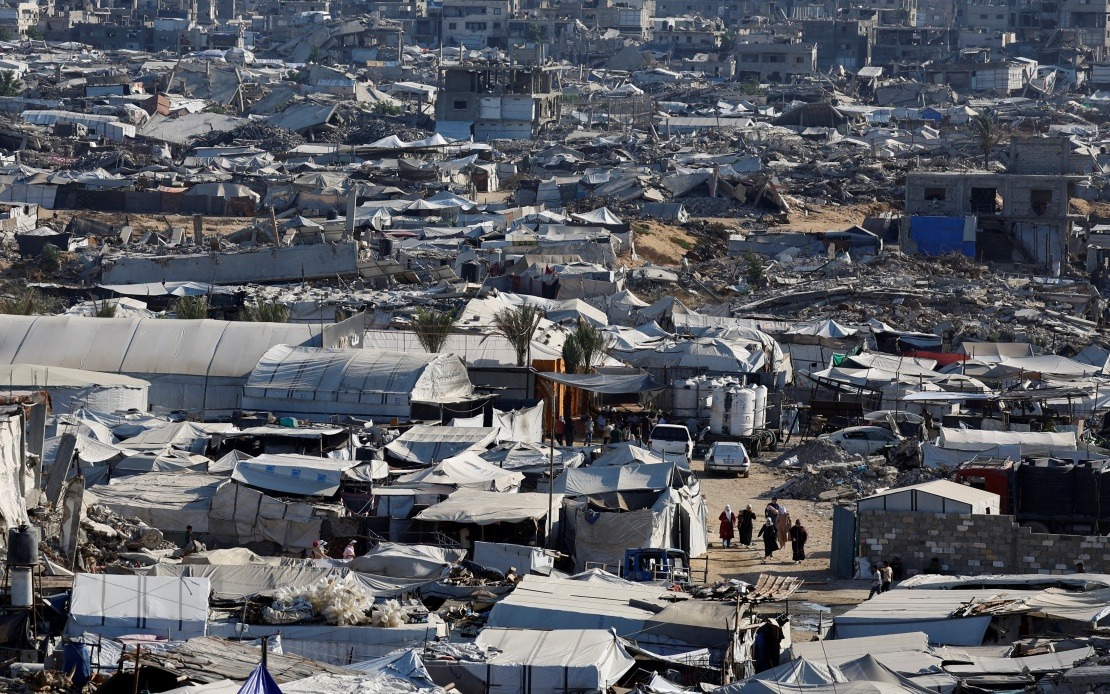
The cumulative destruction from nearly two years of intensive conflict is staggering. The official Palestinian death toll stands above 73,000, with more than 174,000 wounded, while approximately 90 percent of Gaza's infrastructure lies in ruins. This devastation encompasses hospitals, schools, residential areas, and basic utilities, creating conditions of severe humanitarian emergency that recovery efforts will require years to address. The sheer scale of destruction underscores why regional and international actors view the Trump plan as potentially transformative—yet also why implementation faces such formidable obstacles.
For Malaysia and Southeast Asian observers, this situation carries significant implications for regional stability and Middle Eastern engagement. The success or failure of Trump's peace initiative will influence the trajectory of Israeli-Palestinian relations, with consequences for geopolitics across the broader Islamic world. Malaysia, with its substantial Muslim population and historical advocacy for Palestinian causes, maintains strong interests in seeing genuine progress toward a sustainable settlement. The current impasse between Netanyahu and the Trump administration, coupled with ongoing violence, suggests that rhetorical commitments to peace frameworks may prove insufficient without binding enforcement mechanisms and clear consequences for violations.
The involvement of figures like Kushner and envoy Mladenov reflects how the Trump administration views the Gaza question as central to its broader Middle East strategy. By assembling what officials characterize as a global coalition and establishing the Board of Peace as a coordinating institution, Washington has attempted to create multilateral structures that transcend traditional bilateral negotiations. However, the fundamental disagreement between Israel and the proposed framework suggests that structural innovations in diplomacy cannot overcome power imbalances or deeply entrenched security calculations.
Looking forward, the initial funding notification to Congress represents a tentative commitment that could expand or contract depending on political developments. The fact that officials declined to specify amounts suggests either that funding remains modest at this stage or that uncertainty about implementation levels makes detailed disclosure premature. As Kushner conducts further mediation efforts and the Board of Peace presses for Hamas disarmament verification, the Trump administration will face mounting pressure to resolve the Netanyahu impasse or acknowledge that the 21-point plan requires fundamental revision.
The broader lesson for regional stability concerns the challenge of imposing negotiated solutions when one party believes it retains military superiority. Netanyahu's intransigence reflects a calculation that Israel can achieve its security objectives through military means rather than diplomatic concessions, a belief reinforced by the demonstrated ability to violate ceasefire agreements with minimal international consequence. Whether Trump can leverage American influence to alter these calculations remains the critical question determining whether his peace plan progresses from announcement to implementation.

