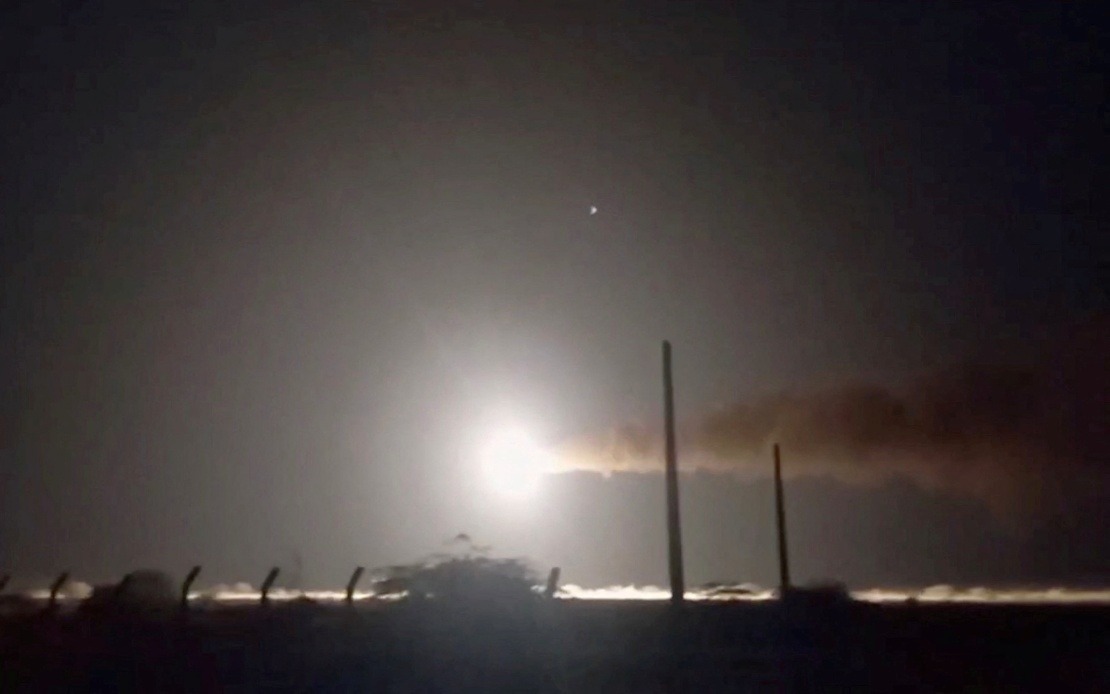
The United States military has acknowledged significant casualties following Iran's direct assault on American forces stationed in Jordan, marking an escalation in regional tensions that could have far-reaching implications for Middle Eastern stability and the international coalition's counterterrorism operations. The US Central Command disclosed on Saturday that two service members fell during fierce defensive operations against Iranian ballistic missiles and unmanned aircraft that struck the facility on July 17, while search and rescue efforts continue for a third personnel unaccounted for in the aftermath of the attack.
The strike represents one of the most direct Iranian military actions against American forces in the region in recent years, signalling a significant shift in the calculus of regional confrontation. Iran had previously relied primarily on proxy militias and informal networks to challenge US interests across the Middle East, but this explicit use of state-sponsored ballistic missiles and drones indicates a willingness to engage in more overt military engagement. The attack unfolded as US Central Command and allied coalition forces mounted active defences against the incoming Iranian weapons systems, suggesting they had advance warning or were conducting heightened threat monitoring.
For Malaysian observers and Southeast Asian policymakers, this incident underscores the volatile nature of Middle Eastern geopolitics and the risks posed to international stability by direct military confrontation between Washington and Tehran. The region remains critical to global oil supplies and international shipping routes, with disruptions potentially affecting energy prices and trade flows that impact Malaysia's economy directly. Moreover, the incident highlights how regional conflicts can draw in various state and non-state actors, creating unpredictable dynamics that ripple across continents.
The casualty count would have been higher had it not been for the base's defensive measures and personnel receiving emergency medical care. Four US service members required medical evacuation to Jordanian hospitals but have since been discharged, while several others with minor injuries returned to their duties relatively quickly. This casualty pattern suggests the base maintained operational readiness and medical infrastructure capable of rapid response, though the loss of any personnel represents a serious blow to morale and operational capability.
Central Command adhered to established protocols regarding casualty announcements, deliberately withholding the identities of the fallen service members for 24 hours following notification of their next of kin. This practice, while emotionally difficult for families, respects their privacy during an exceptionally traumatic period and ensures that information reaches loved ones through official military channels rather than public announcement. The restraint shown by CENTCOM in releasing operational details also reflects careful consideration regarding ongoing military operations and intelligence matters.
The Iranian missile and drone assault occurred within the broader context of intensifying regional hostilities, including previous attacks attributed to Iranian-backed militias and Israeli strikes against Iranian targets across borders. Jordan, a key US ally hosting American military personnel and serving as a training hub for anti-terrorism operations, suddenly found itself in the crossfire of this larger strategic competition. The kingdom's role as a moderating force in the region and its hosting of American forces places it in a delicate position as regional tensions mount.
The missing service member represents an ongoing concern for US Central Command, as search and recovery operations in a potentially contested area require careful coordination between military units, allied forces, and potentially host nation personnel. Such operations can be complicated by security concerns, terrain challenges, and the scale of destruction caused by ballistic missiles. The determination of leadership to account for all personnel reflects the military's longstanding commitment to never leaving soldiers behind, a principle deeply embedded in American military culture and operational doctrine.
This incident will likely influence broader strategic calculations regarding American military presence in the Middle East and the perceived effectiveness of Iran's weaponry. Should the Iranian attack be assessed as having achieved its objectives despite active defences, it could embolden further Iranian military action or incentivise proxy groups to accelerate their own operations. Conversely, American responses to this attack will send important signals about how the United States intends to manage direct Iranian military challenges and whether it will pursue escalatory or diplomatic approaches.
For Malaysia's foreign policy establishment, this development reinforces the importance of maintaining diplomatic channels and advocating for de-escalation in the Middle East through regional organisations and international forums. As a Muslim-majority nation with significant economic interests in Middle Eastern stability and energy security, Malaysia has a vested interest in preventing the regionalisation of Iran-US tensions. The incident also illustrates why Southeast Asian nations should carefully calibrate their relationships with various powers in the region rather than aligning too closely with any single actor.
The broader implications extend to the ongoing campaign against extremist organisations that have historically exploited regional instability to expand their reach and recruitment. Military operations in Jordan serve counterterrorism objectives that benefit international security more broadly. Any significant degradation of American and allied operational capacity in the region could create security vacuums that terrorist groups might exploit, ultimately affecting global counterterrorism efforts and regional stability well beyond the immediate conflict zone.

