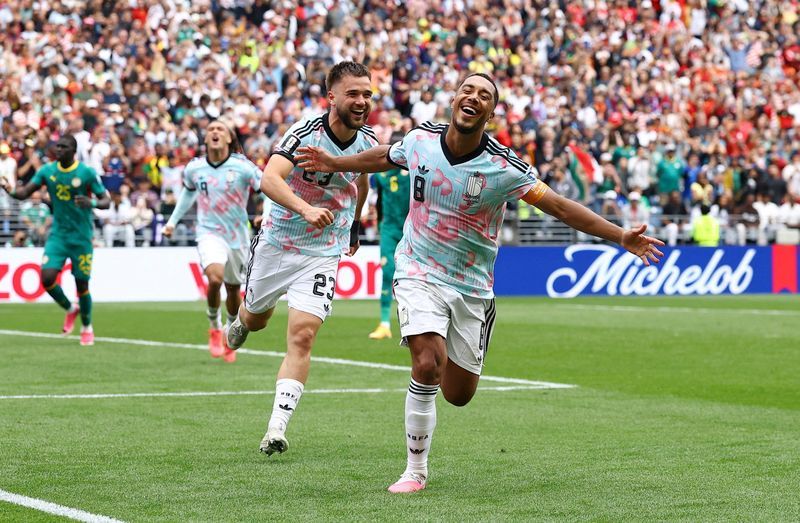
The United States will attempt to advance deeper into the World Cup than many anticipated when they face Belgium in a round-of-16 showdown in Seattle on July 4, a fixture that carries significant implications for both nations' tournament trajectories and sets up a intriguing contrast between rising American momentum and European experience at a crossroads.
The contest takes place at the home stadium of the Seattle Seahawks, a venue renowned for its intimidating atmosphere that routinely ranks among the loudest environments in professional sports. This geographical advantage could prove decisive in a match where possession shifts and tactical discipline often determine outcomes in knockout football. The electric setting provides the American team with a tangible edge as they attempt to overcome a Belgian side containing some of Europe's most accomplished players.
Pre-tournament expectations for the American contingent centered on reaching the knockout stages as a respectable achievement. However, the team's trajectory has shifted markedly following a series of commanding performances in the group phase. Victories against Paraguay and Australia established early momentum, but a particularly impressive 2-0 triumph over Bosnia, achieved despite being reduced to ten players for the final 36 minutes, demonstrated the defensive resilience and tactical maturity that has captured the imagination of American supporters and soccer analysts alike.
Manager Mauricio Pochettino has orchestrated this transformation through disciplined organisation and an apparent clarity of purpose that was absent from previous American World Cup campaigns. The collective growth evident across performances suggests a team capable of competing against established powerhouses rather than merely participating. This philosophical shift, combined with matches played on home soil, has generated expectations that a deeper tournament run remains feasible, a sentiment unthinkable merely weeks before competition commenced.
Belgium presents a fundamentally different challenge, arriving in the knockout stages with considerably less conviction than their pedigree might suggest. The European side required a dramatic late recovery against Senegal to progress, trailing for the majority of that encounter before mounting a second-half surge. A penalty decision awarded via VAR in extra time ultimately proved decisive, though the manner of their advancement left questions about defensive vulnerability and match temperament that the Americans will seek to exploit.
The Belgian team embodies a transitional phase, potentially representing the final World Cup opportunity for what has been termed the "Golden Generation." Midfield conductor Kevin De Bruyne, striker Romelu Lukaku, and goalkeeper Thibaut Courtois represent the spine of a squad that has dominated European competition for nearly a decade but has yet to convert that dominance into a World Cup triumph. The urgency surrounding this fixture for Belgian officials and supporters alike cannot be understated, as windows of opportunity for established players at the international level narrow considerably.
Among Belgium's weapons lies winger Jeremy Doku, whose tournament performance to date has been subdued despite possessing the technical gifts to inflict damage against tired defences in knockout fixtures. Doku's potential emergence as a creative force in the decisive phase could prove pivotal, particularly against an American backline that arrives with improved confidence but faces rigorous examination against European attacking quality. The defensive duties assigned to American fullbacks will require sustained concentration and positioning discipline throughout the 90 minutes.
The historical precedent between these nations adds narrative dimension to proceedings. In 2014, Belgium eliminated the United States in Brazil during a round-of-16 encounter that extended into extra time, a match immortalised by American goalkeeper Tim Howard's extraordinary performance encompassing 16 saves. That contest showcased American resilience against superior technical quality, though ultimately the weight of Belgian experience proved decisive. Nine years of development, tactical evolution, and player maturation on both sides suggest this encounter may unfold differently.
Complications for the American setup emerge through the absence of striker Folarin Balogun, suspended following a red card received during the Bosnia match. Balogun had contributed a goal earlier in that encounter, highlighting his importance to Pochettino's attacking structure. The managerial decision regarding Balogun's replacement carries substantial consequences for tactical shape and attacking balance, representing perhaps the most significant in-game variable for the American technical staff.
Midfielder Tyler Adams articulated the broader sentiment animating the American contingent when discussing ambitions to establish a lasting legacy within the tournament. The recognition that advancing further amplifies the visibility and cultural resonance of soccer within the United States underscores the stakes transcending mere sporting achievement. A substantial run into the latter stages would substantially elevate soccer's profile domestically, creating pathways for enhanced investment, youth participation, and elite player development pathways that currently lag behind traditional American sports.
The Belgian perspective encompasses simultaneously diminishing windows and unfinished business from multiple World Cup campaigns. The squad's accumulated experience should theoretically provide composure and tactical intelligence, yet the unconvincing nature of their group-stage performance and narrow qualification from the round-of-16 suggests vulnerability to an American team arriving with tactical clarity and psychological momentum. The convergence of American improvement and Belgian uncertainty creates a genuinely competitive fixture between nations occupying fundamentally different trajectories within international football.

