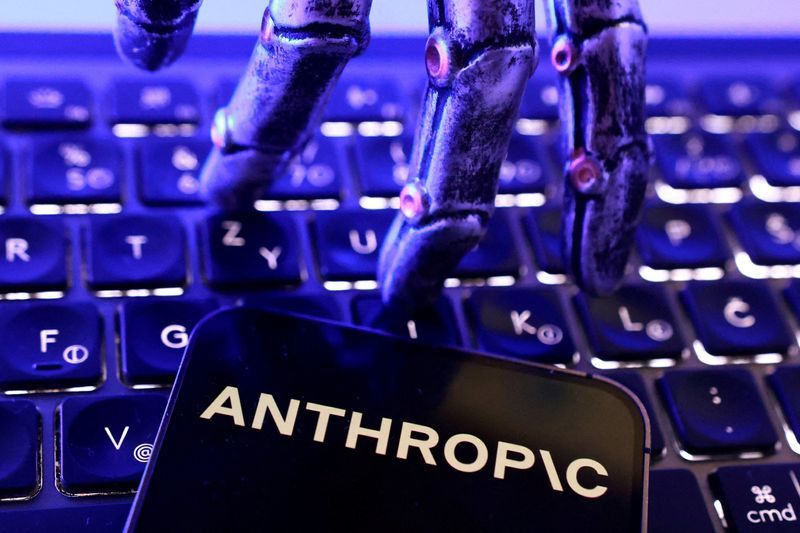
A California federal court has delivered a significant rebuff to the Pentagon's attempt to blacklist Anthropic, the artificial intelligence company behind the Claude chatbot, marking a pivotal moment in the escalating tensions between the U.S. military and technology firms over the militarisation of advanced AI systems. U.S. District Judge Rita Lin, who was appointed during the Biden administration, issued a sweeping 59-page decision on Thursday that found the Defence Department's designation of Anthropic as a supply-chain security risk to be fundamentally unlawful and without factual foundation. The ruling prevents the Pentagon from restricting Anthropic's access to military contracts, a move that the company had warned could cost it billions of dollars in lost revenue and damage to its market reputation.
The case represents an extraordinary clash of principles between national security interests and corporate autonomy in the rapidly evolving artificial intelligence sector. Anthropic filed its lawsuit in March after Defence Secretary Pete Hegseth designated the company as a national security threat under an obscure military procurement statute designed to protect defence systems from foreign infiltration and sabotage. The designation was unprecedented, marking the first time a U.S. company has been publicly tagged as a supply-chain risk through this particular legal mechanism. The underlying trigger for Hegseth's decision was Anthropic's steadfast refusal to modify its AI safety protocols to permit military use of Claude in surveillance operations or in the development of autonomous weapons systems, a boundary the company has maintained as core to its corporate values.
Anthropc's position on this matter reflects a broader philosophical dispute within the tech industry about the responsible development of increasingly powerful AI systems. The company has argued consistently that current artificial intelligence models lack the reliability and predictability necessary to be deployed safely in weapons applications or surveillance programmes without unacceptable risks of error, malfunction, or misuse. This position fundamentally contradicts the Pentagon's view that private sector companies should not be permitted to restrict or dictate the parameters of military capability development. The dispute touches on foundational questions about whether corporations have the right to impose ethical constraints on government procurement, or whether national security imperatives should override such objections.
In her decision, Judge Lin articulated a forceful defence of constitutional principles and the limits of executive power. She found that the Pentagon's invocation of national security considerations amounted to what she characterised as an empty rhetorical flourish rather than a legitimate basis for government action. The judge wrote that such broad appeals to security cannot serve as blanket authorisation for the government to punish companies that criticise its policies or refuse contractual terms on principle. This language carries particular weight given the heightened security environment surrounding emerging technologies and the government's typically expansive interpretation of defence-related authority.
The constitutional dimensions of the case proved decisive in the court's analysis. Anthropic had mounted its challenge on two primary constitutional grounds: that the Pentagon's action violated its First Amendment rights to free speech by retaliating against the company's publicly stated positions on AI safety, and that it breached Fifth Amendment due process protections by imposing the designation without providing the company any opportunity to challenge the decision or present evidence in its defence. Judge Lin found merit in both arguments, determining that the government's conduct crossed constitutional boundaries that exist even in the national security context.
The Justice Department had attempted to frame the matter quite differently in its legal filings to the court. Government lawyers argued that Anthropic's refusal to accept military contractual terms created genuine operational uncertainty within the Pentagon regarding how Claude could be lawfully deployed, and that this uncertainty itself posed a risk to military readiness and system reliability during active operations. The government further contended that the supply-chain risk designation flowed from Anthropic's contractual non-compliance rather than from any retaliation against the company's ideological positions on weaponised AI. This distinction proved unconvincing to the judge, who found the government's reasoning fundamentally pretextual.
The judge's decision also took note of apparent contradictions in the Pentagon's treatment of Anthropic and its historical relationship with Claude. Military and defence officials had previously praised Claude's capabilities and had expressed interest in utilising it for various applications, a fact that undermined the government's assertion that the company posed a legitimate national security threat to defence systems. The sudden reversal in the Pentagon's posture once Anthropic declined to lift its restrictions on weapons applications suggested to the judge that the designation was driven by punitive rather than security motivations.
For technology companies operating in Southeast Asia and globally, this ruling carries important implications regarding their relationship with government security apparatus and their ability to establish ethical boundaries around product deployment. The decision establishes that even in the context of military procurement and national security, U.S. courts will scrutinise government actions that appear designed to punish companies for exercising their constitutional rights or maintaining principled positions on technology ethics. This precedent may embolden other AI developers and technology firms to resist government demands that conflict with their operational philosophies, knowing that judicial review remains available.
However, the legal battle between Anthropic and the Pentagon is far from concluded. The company is simultaneously pursuing a second lawsuit in Washington, D.C., challenging a separate supply-chain risk designation that could exclude it from access to broader civilian government contracts beyond just military procurement. This parallel proceeding suggests that the Pentagon may be pursuing multiple administrative pathways to restrict Anthropic's government business, with the secondary designation potentially offering a workaround if the primary blacklisting ultimately fails. The outcome of both cases will likely shape how technology companies navigate the intersection of corporate ethics, national security demands, and regulatory authority in coming years.
The broader significance of Judge Lin's ruling extends beyond the immediate circumstances of Anthropic's dispute with the Defence Department. It establishes meaningful limits on the government's ability to weaponise security designations against companies that resist pressure to support military objectives. In an era where artificial intelligence capabilities are advancing rapidly and military applications are expanding accordingly, the question of who controls the pace and scope of AI weaponisation—governments or technology companies—remains contested. This ruling suggests that courts will not automatically defer to government assertions of security necessity when constitutional rights and individual liberties hang in the balance, even in the sensitive domain of military procurement and defence policy.

