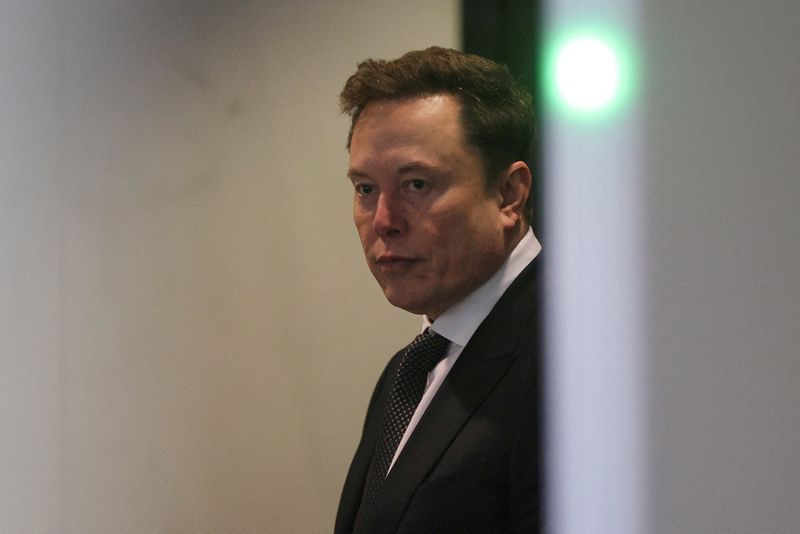
A United States federal judge has signed off on the Securities and Exchange Commission's settlement with Elon Musk regarding his acquisition of Twitter shares, yet her approval came wrapped in pointed criticism of the agreement's leniency and potential irregularities. U.S. District Judge Sparkle Sooknanan in Washington, D.C., granted the settlement on Wednesday despite openly questioning whether the Trump administration's securities regulator had adequately held Musk accountable for his alleged violations or instead allowed him to escape with an unusually favourable arrangement.
The settlement mandates that a trust established in Musk's name pay $1.5 million to resolve SEC allegations that the billionaire entrepreneur delayed disclosure of his early Twitter share purchases for eleven days during March and April 2022. According to the SEC's investigation, this postponement in revealing his accumulating stake enabled Musk to acquire shares at depressed prices before the broader investment market recognised his involvement, thereby generating approximately $150 million in unearned gains. Musk has consistently maintained that the disclosure delay was unintentional rather than a calculated strategy to maximise his financial advantage.
In her written decision, Judge Sooknanan articulated fundamental reservations about the enforcement approach taken by the SEC. She questioned why the regulator abandoned its pursuit of disgorgement—the recovery of ill-gotten profits—which would have compensated investors harmed by the delayed disclosure. The judge noted that while the SEC's historical practice in comparable cases might support its position, such precedent did not necessarily validate settling with Musk under these particular terms. Her scepticism extended to the SEC's justifications, suggesting that accepting historical patterns without examining their appropriateness could itself undermine the integrity of regulatory settlements.
A particularly troubling aspect of the case, from the judge's perspective, centred on the unusual structure whereby the SEC negotiated with Musk's trust rather than with Musk directly. This arrangement allowed the technology executive to publicly claim vindication and assert that he had been exonerated of wrongdoing—a distinction that would carry significant reputational consequences in investor circles and business communities worldwide. Judge Sooknanan expressed astonishment at this departure from typical enforcement outcomes, noting the incongruity between settling with the trust structure and permitting Musk to maintain plausible deniability regarding personal culpability.
The judge's concerns gained additional weight when considering the timeline of the SEC's enforcement effort. The settlement announcement in May followed the departure of the agency's enforcement chief, Margaret Ryan, who had exited her position in March after merely six months in the role. Ryan's tenure had been marked by internal disagreements with other SEC leadership regarding the strategic direction and priorities of the enforcement division. The proximity of her departure to the settlement announcement raised implicit questions about whether leadership changes had influenced the agency's negotiating posture toward Musk.
Further complicating the matter was Judge Sooknanan's recollection of a May hearing where SEC lawyers appeared visibly surprised when Musk's legal representatives disclosed that settlement discussions had occurred with the regulator. This apparent disconnect between the litigation team and settlement negotiators suggested possible coordination problems within the SEC itself—a fragmentation that could have advantages one party over another in negotiations. The judge explicitly wondered whether the SEC would extend comparable leniency to other defendants accused of securities violations or whether Musk had received a singular, bespoke arrangement negotiated outside normal enforcement procedures.
Despite these reservations, Judge Sooknanan acknowledged the limited scope of judicial review in consent decree situations. She recognised that courts examining such settlements cannot function as rubber stamps, mindlessly approving whatever regulators and defendants present, yet neither should judges assume the role of ombudsman, micromanaging regulatory decisions that ultimately rest with executive branch agencies and the democratic process. This delicate balance led the judge to conclude that citizens themselves, through voting and electoral accountability, must determine whether the Trump administration had adequately pursued violations against the world's wealthiest individual.
The settlement itself carries substantial implications for Musk's sprawling business empire. The billionaire, valued at $927.2 billion according to Forbes magazine, ultimately completed his $44 billion acquisition of Twitter in October 2022, subsequently rebranding the platform as X. This social media company now operates under the corporate umbrella of his SpaceX rocket and satellite venture, alongside his electric vehicle manufacturer Tesla. The settlement's injunction effectively constrains Musk's investment activities through the trust structure, creating ongoing regulatory oversight of a significant portion of his wealth management arrangements.
The SEC attempted to defend its settlement in subsequent court filings, asserting that the arrangement did not result from any collusion or improper influence. The agency characterised the $1.5 million penalty as the largest of its category and emphasised that the injunction provides substantial public benefit by constraining Musk's future conduct when operating through the trust vehicle. The SEC further noted that the trust represents an important mechanism through which Musk manages substantial portions of his portfolio, suggesting that regulatory authority over trust activities provides meaningful accountability.
For Malaysian and Southeast Asian observers, this case illuminates broader questions about how wealthy executives navigate regulatory frameworks and whether enforcement agencies maintain equivalent standards across all defendants regardless of their economic or political status. The controversy surrounding Musk's settlement reflects international concerns about regulatory capture—the phenomenon whereby powerful business figures secure preferential treatment from government agencies—that resonates across developing and developed economies alike. As Malaysia and other regional nations strengthen their own capital markets regulation, the American experience offers cautionary lessons about maintaining consistent enforcement standards and preventing high-profile figures from receiving special consideration unavailable to ordinary market participants.
The settlement's ultimate approval, despite judicial misgivings, underscores the complicated reality of securities enforcement in contemporary globalised markets. Judge Sooknanan's written opinion preserves a critical record of concerns about fairness and consistency, even as she granted the settlement's approval. This documented scepticism may influence future enforcement decisions and provides a foundation for continued scrutiny of regulatory actions involving prominent billionaires and their business arrangements. Whether her reservations will spur meaningful reforms in SEC enforcement practices remains an open question for both American regulators and international observers monitoring how democracies balance wealth concentration against regulatory accountability.

