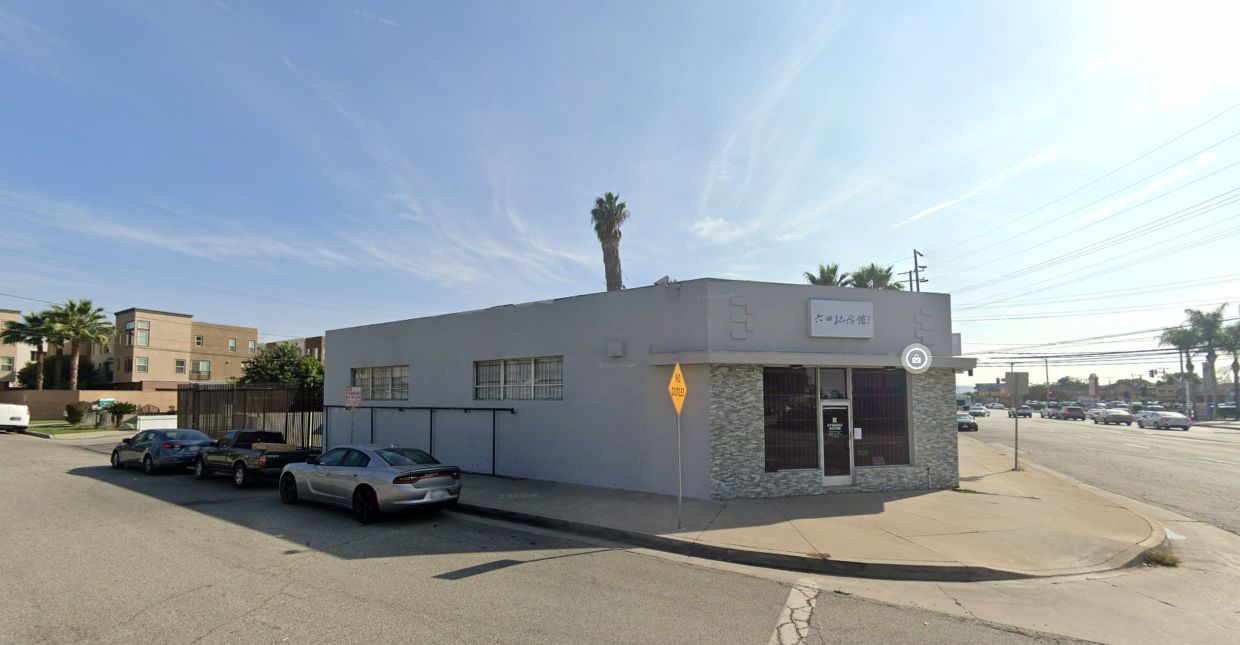
Two influential Republican lawmakers have written to the US Justice Department demanding a thorough federal investigation into a break-in and vandalism incident at the June 4th Memorial Museum in El Monte, California. The letter, delivered on Thursday, reflects deepening concern among American legislators about potential coordinated intimidation of the Chinese diaspora community within the United States, signalling an escalation in how Washington treats such matters relating to sensitive historical events in mainland China.
The signatories—John Moolenaar, chairman of the House Select Committee on China from Michigan, and Christopher Smith, co-chairman of the Congressional-Executive Commission on China from New Jersey—have explicitly called for involvement from the FBI and the Justice Department's National Security Division. Their three-page missive emphasises protecting what they describe as the inalienable rights of Chinese diaspora members engaged in freedom advocacy within American territory, framing the incident as potentially more sinister than ordinary criminal vandalism.
According to the museum's own statement, intruders breached the facility on May 31st, just days before the sensitive anniversary commemorating the 1989 Tiananmen Square crackdown. The perpetrators reportedly spray-painted walls and exhibit surfaces, destroyed property, and deliberately disabled the museum's security apparatus, inflicting what officials characterise as serious damage to the institution's assets and operational capacity. The deliberate targeting of surveillance systems particularly suggests a calculated effort to obscure perpetrators' identities and methods.
The museum's official response demonstrates remarkable resolve despite the assault. Operators stated unequivocally that although the incident contained unmistakable elements of intimidation and psychological pressure, they would neither capitulate to threats nor abandon their commemorative mission. The facility management has pledged full cooperation with El Monte police authorities and indicated they would pursue all available legal remedies against those responsible, whilst simultaneously flagging suspicions that the vandalism represents transnational repression—suggesting potential orchestration originating beyond American borders.
Photographic evidence circulated online depicted single lines of orange paint deliberately defacing framed newspaper clippings and related historical materials, creating a visually distinctive pattern of damage that could potentially serve as a signature or warning. This artistic element raises questions about whether the vandalism conveyed a specific message to the broader diaspora community, functioning simultaneously as both destruction and communication.
The June 4th Memorial Museum represents a particularly meaningful institutional presence for overseas Chinese communities seeking to preserve and honour historical memory. Established in 2023, the non-profit organisation initially operated from New York before relocating to the Los Angeles area to reduce operating expenses and access a larger concentration of Chinese diaspora supporters. The museum's funding model relies entirely upon independent fundraising, grassroots crowdsourced donations, and civil society contributions rather than government backing, underscoring its independence and vulnerability to financial disruption through intimidation.
Funding figures reveal the institution's modest but ambitious scope. According to statements from Art Dealer Street, an online artist collective involved in initial fundraising efforts during 2023, the museum had raised approximately US$500,000 toward an ultimate target of US$2 million, suggesting significant expansion aspirations contingent upon sustained community support. The vandalism incident threatens not merely physical assets but donor confidence and operational continuity.
In their letter to federal authorities, Moolenaar and Smith explicitly request investigation into whether the attack was planned, encouraged, supported, or carried out by individuals acting on behalf of, under direction from, or in sympathy with the People's Republic of China or the Communist Party. This formulation casts a deliberately wide investigative net, acknowledging that state-orchestrated pressure can operate through proxies, sympathisers, or indirect channels rather than exclusively through official actors. The involvement of the FBI's Los Angeles Field Office and the National Security Division indicates federal assessment that national security dimensions may be present.
Beijing's anticipated response reflects its established diplomatic posture toward such institutions and their supporters. Chinese authorities have historically denounced both the House Select Committee on China and the Congressional-Executive Commission as politically motivated entities lacking credibility, characterising them as instruments of Cold War ideology and anti-China bias. The Chinese embassy in Washington has not yet responded directly to inquiries regarding this specific incident, though official positions suggest dismissal of the vandalism as either insignificant or mischaracterised by hostile elements.
The House Select Committee on China, established in January 2023, functions as a bipartisan investigative body examining American economic and security competition with Beijing. The Congressional-Executive Commission on China, created two decades earlier in 2000 following China's World Trade Organization accession, operates as an independent agency monitoring human rights and rule-of-law conditions. While neither body possesses legislative authority, both can conduct investigations, submit policy recommendations, and advise Congressional leadership, positioning them as influential shapers of American China policy discourse.
This incident exemplifies broader tensions between Washington's commitment to protecting freedom of expression and assembly for diaspora communities, and Beijing's apparent determination to suppress overseas commemoration of events it deems politically sensitive. For Southeast Asian observers, the episode highlights how great power competition increasingly manifests not through conventional military or economic channels alone, but through targeted intimidation of civilian populations and cultural institutions operating within the rules-based liberal international order. The vandalism serves as a test case for whether American law enforcement will robustly investigate and prosecute potential state-directed transnational repression, ultimately determining the safety and freedom of diaspora activists throughout North America and potentially influencing diaspora security considerations across the wider region.

