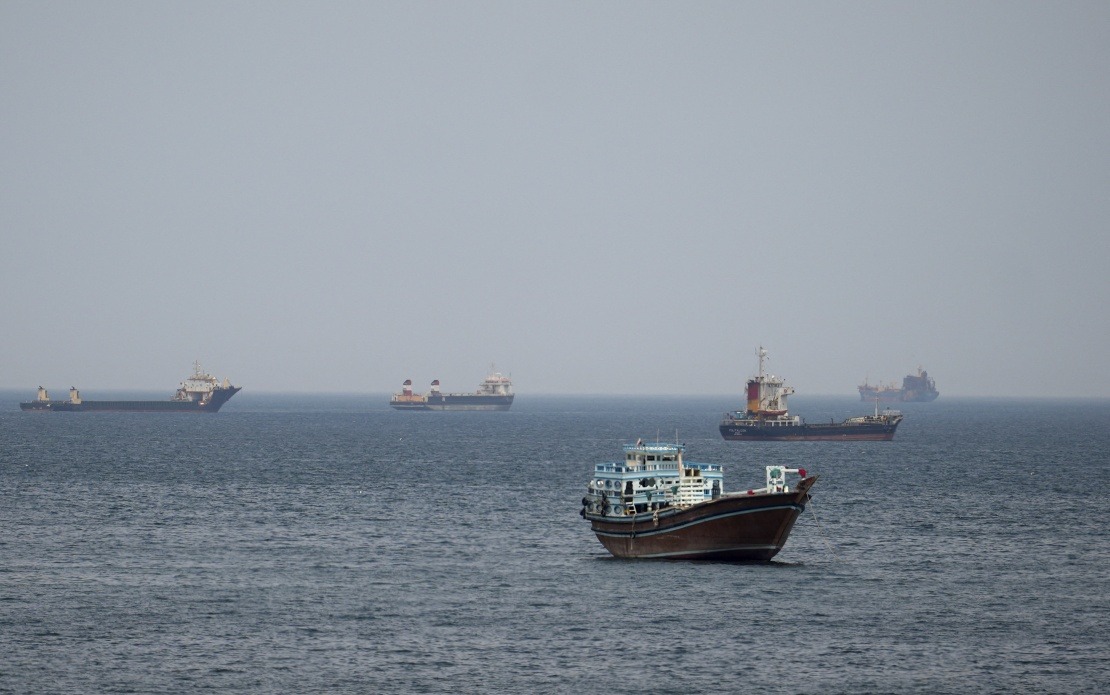
The United States Central Command has disclosed that American military personnel have successfully shepherded more than 800 commercial vessels through the Strait of Hormuz over the past two months, underscoring Washington's commitment to maintaining freedom of navigation in one of the world's most strategically vital maritime chokepoints. The escort operations, which have also facilitated the transit of 380 million barrels of crude oil, represent an ongoing effort to guarantee safe passage for international commerce despite the region's volatile geopolitical environment and recurring security threats.
For Malaysian readers and Southeast Asian observers, the maintenance of shipping lanes through the Strait of Hormuz carries profound economic implications. The waterway serves as a critical artery through which roughly one-third of global seaborne traded crude oil flows each year, making disruptions to traffic patterns immediately consequential for energy prices, supply chains, and economic growth across Asia-Pacific nations that depend heavily on Middle Eastern oil imports. Malaysia, as a maritime trading hub with substantial petroleum sector interests, stands to benefit from the stabilization efforts represented by American naval presence in these waters.
The timing of CENTCOM's announcement carries particular significance given the deteriorating relationship between Washington and Tehran. The region has witnessed a sharp escalation in military posturing over recent days, with Iranian forces targeting American military installations across multiple countries in the Gulf region. Thursday's Iranian strikes against US military infrastructure in Bahrain, Kuwait, Qatar, and Jordan represent a dramatic escalation from the earlier attacks on three commercial vessels that prompted the initial American response, creating a dangerous spiral of tit-for-tat military operations that threatens to destabilize the entire corridor.
What renders the current situation especially precarious is the fragility of the broader US-Iran relationship. Despite Washington and Tehran maintaining official channels of communication and various diplomatic protocols, mutual suspicions and competing strategic interests continue to generate friction. The exchange of military strikes between the two powers demonstrates how quickly perceived provocations can translate into direct confrontation, a pattern that Southeast Asian governments watch with considerable anxiety given the region's economic dependence on uninterrupted shipping through Middle Eastern waters.
The continued flow of commercial traffic through the Strait of Hormuz despite these tensions reflects both the economic necessity of maintaining trade routes and the effectiveness, thus far, of American military operations in deterring wholesale disruption. The sheer volume of vessels transiting—more than 800 in roughly three months—illustrates the magnitude of daily commercial activity that depends upon stability in this corridor. Shipping companies, insurers, and trading operations have adjusted to operating in this higher-threat environment, but such adaptations inevitably increase costs and reduce efficiency, ultimately affecting global prices for oil and goods dependent on Middle Eastern supply chains.
The American naval presence itself serves multiple functions beyond simple escort duties. By maintaining surface combatants, submarines, and aircraft in the region, the United States projects power in a manner calculated to dissuade Iranian interference with commercial shipping. This deterrent posture has proven reasonably effective at preventing wholesale blockade attempts, though isolated incidents targeting individual vessels continue to occur with troubling regularity. For regional shipping operators and international energy companies, the presence of American military assets provides a measure of reassurance, though it cannot eliminate all risks associated with operating in contested waters.
Iran's repeated targeting of commercial vessels raises questions about its strategic objectives and tolerance thresholds. Some analysts suggest that Iranian actions reflect frustration with international sanctions regimes and perceived American hostility, while others view such operations as calculated attempts to impose costs on adversaries and complicate American military operations. Regardless of motivation, the targeting of civilian commercial vessels—acts that risk harming innocent merchant crews and disrupting global commerce—represents a serious escalation that violates established norms of maritime conduct and international law.
For Malaysia and other Southeast Asian maritime nations, the stability of the Strait of Hormuz directly influences shipping insurance premiums, energy costs, and investment decisions across the region's economies. When tensions rise in the Gulf, Asian purchasers of crude oil face higher premiums for insuring cargoes transiting these waters, and energy companies adjust their procurement strategies accordingly. These incremental cost increases accumulate across supply chains, ultimately affecting consumer prices and economic competitiveness throughout the region. Understanding these mechanisms helps explain why Southeast Asian governments maintain careful diplomatic balancing acts regarding both American and Iranian interests.
The presence of American military forces guaranteeing commercial passage also reflects broader geopolitical realities about power projection and great power competition in strategically critical regions. Washington's ability and willingness to maintain naval forces sufficient to protect international commerce demonstrates American commitment to the rules-based international order, even as other powers—particularly China—advance alternative visions for regional ordering. For maritime trading nations throughout Southeast Asia, the current American posture provides a counterweight to potential future attempts at regional hegemony or forced realignment of strategic alignments.
Looking forward, the trajectory of US-Iran relations will substantially determine whether the current escort operations continue successfully or whether more dramatic escalation becomes inevitable. Diplomatic off-ramps remain theoretically available, but mutual distrust and domestic political considerations within both countries complicate negotiations. The international community, including Southeast Asian nations with interests in Gulf stability, maintains hope that further military escalation can be avoided through dialogue and de-escalatory measures. However, absent meaningful progress on underlying disputes, the cycle of provocation and response appears likely to continue indefinitely.
The security situation in the Strait of Hormuz ultimately reflects broader tensions in the Middle East and international system that extend far beyond this single waterway. Resolution would require addressing fundamental questions about regional power balances, nuclear proliferation, proxy conflicts, and the role of outside powers in Gulf affairs. In the interim, American military operations protecting commercial shipping represent necessary efforts to sustain global trade flows and prevent economic dislocation, with particular importance for energy-dependent Asian economies that cannot easily source petroleum from alternative suppliers.

