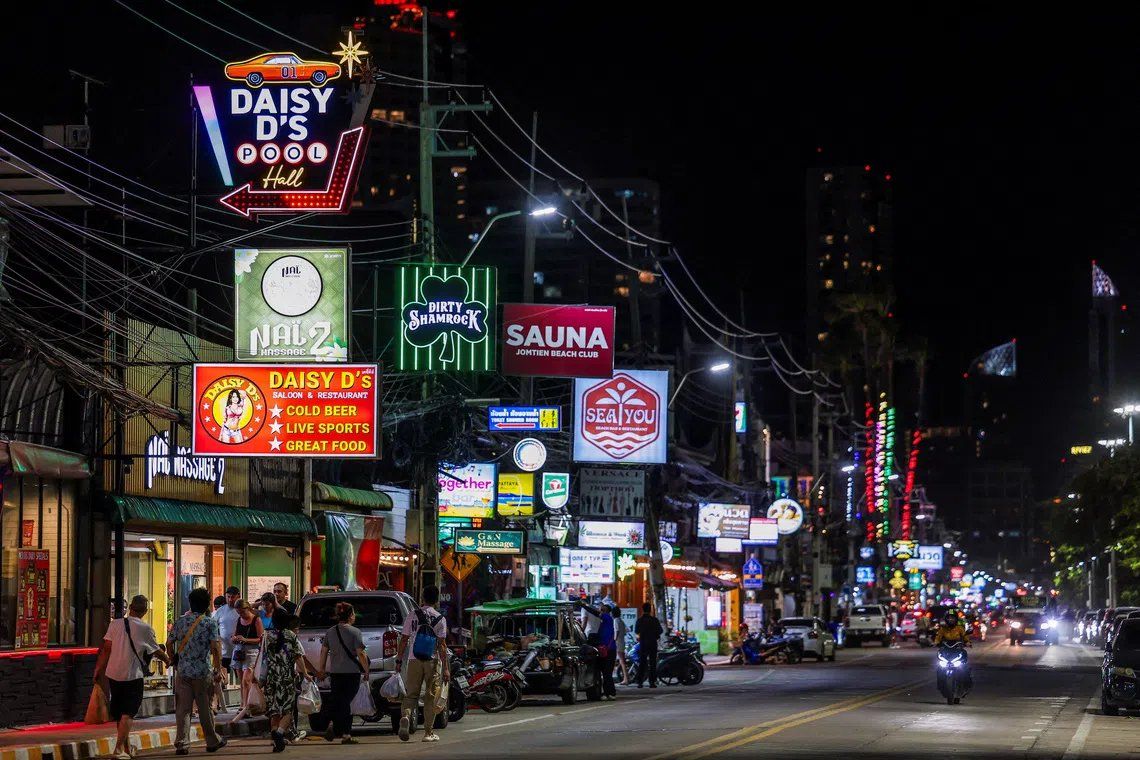
Thailand's beachside city of Pattaya is bracing for the arrival of the USS Abraham Lincoln this week, welcoming the American aircraft carrier and two accompanying Navy vessels as a much-needed economic stimulus after months of tourism stagnation. The deployment marks a rare opportunity for the struggling resort destination, though it simultaneously triggers fresh concerns about labour exploitation, public health risks, and the psychological state of servicemen aboard the warship following an extraordinarily extended overseas mission.
Near 5,000 sailors and Marines will disembark from the carrier group, which has completed over 200 days deployed across Middle Eastern waters in support of operations linked to the US-Israeli conflict with Iran. According to Democratic lawmakers, the Abraham Lincoln has set a modern record for consecutive days at sea following its November departure from San Diego. The vessel will dock at the nearby port of Laem Chabang, permitting crew members shore leave as they recover from the grueling deployment. Local officials project individual servicemen may spend between 1,000 and 3,000 baht (approximately USD 30 to 91) daily during their time ashore, though actual expenditure will vary based on stay duration and whether personnel opt for overnight accommodation.
Pattaya's economic foundations have weakened considerably throughout the past year, prompting stakeholders across the hospitality and entertainment sectors to view the carrier visit as a potential turning point. Lisa Hamilton, president of the Pattaya Nightlife Business Association, encapsulated the desperation underlying the welcome, noting she had witnessed no year as economically torpid during her two decades residing in the city. The Association of Chonburi Tourism Federation's Thanet Supornsahasrungsi cautioned, however, that the overall commercial benefit would hinge substantially on how widely servicemen distribute their spending—some may elect to travel onward to Bangkok or other destinations rather than remain in Pattaya proper. The city's 300,000-plus hotel rooms underpin its position as a major Southeast Asian tourism hub, yet occupancy rates have deteriorated markedly.
Pattaya carries a distinctive historical relationship with American military personnel, having transformed from a modest fishing settlement into a tourism centre largely through commerce generated by US servicemen during the Vietnam War era. That legacy remains woven into the contemporary identity of the destination, though it has simultaneously consolidated Pattaya's international reputation as what the US Federal Bureau of Investigation characterised a decade ago as "one of the world's leading sex tourism destinations." The city's entertainment infrastructure—encompassing bars, clubs, and associated services—has achieved a scale and visibility that distinguishes it even within Thailand's broader tourism landscape, where the sex industry operates despite formal illegality.
Thailand's laws formally prohibit prostitution, yet enforcement remains sporadic and inconsistent. Pattaya police chief Anek Srathongyoo acknowledged the enforcement paradox on Monday, noting that sex workers frequently solicit customers in public spaces without detection, rendering comprehensive prohibition practically unachievable. Ahead of the carrier's docking, authorities conducted weekend raids that resulted in 40 to 50 detentions on suspected prostitution charges, and police have committed to augmented patrols across beachfront and entertainment districts throughout the visit. The police response reflects official discomfort with the visibility of sex work during a high-profile international military visit, though sceptics question whether heightened enforcement can meaningfully curtail an industry operating at such scale.
The influx of thousands of young servicemen into an environment saturated with commercial sex opportunities presents documented public health risks extending beyond immediate physical safety concerns. Pipatpong Fakfare, an associate professor at Bangkok University's School of Humanities and Tourism Management, emphasised that expanded client bases within sex work environments correlate with elevated transmission risks for sexually transmitted infections, whilst simultaneously intensifying pressures toward exploitation of workers already operating within vulnerable circumstances. Sexual coercion and trafficking remain persistent problems throughout Southeast Asian sex industries, often invisible to casual observers yet structurally embedded within supply chains feeding major tourist destinations.
Additional dimensions of concern centre on the psychological state of personnel aboard the Abraham Lincoln itself. Military-focused media outlets reported in recent weeks that crew members have experienced suicide attempts and plummeting morale during the extended deployment. The record-breaking duration at sea has generated mental health deterioration across the vessel, a worrying backdrop against which shore leave becomes not merely an opportunity for recreational spending but potentially a critical respite from psychological strain. Democratic lawmakers have raised questions regarding the sustainability and wisdom of such protracted deployments, even as military planners continue deploying carrier groups to maintain regional presence.
The convergence of economic desperation, established patterns of commercial sex provision, and the psychological vulnerabilities of deployed military personnel creates a complex ethical landscape that authorities and business interests approach from fundamentally different perspectives. From Pattaya's commercial standpoint, the carrier visit represents survival—a chance to revive revenue flows supporting thousands of directly and indirectly employed workers throughout the hospitality sector. Yet from humanitarian and public health perspectives, the visit simultaneously concentrates risks of exploitation, infection, and predatory conduct within an already fragile ecosystem.
Mayor Poramase Ngampiches characterised the visit as likely providing short-term economic stimulation, an assessment grounded in the basic arithmetic of thousands of personnel with disposable income entering a destination that has experienced prolonged stagnation. Yet he acknowledged implicitly the limitations of such a stimulus—shore leave schedules stagger personnel movements to prevent all crew members disembarking simultaneously, meaning the economic boost will distribute across several days rather than concentrate in a sudden surge. The multiplier effects of military spending permeate throughout local economies, supporting not only direct entertainment and hospitality services but also supply chains, transportation, and peripheral commerce.
Southeast Asia's geopolitical significance has intensified American military engagement throughout the region, with carrier deployments serving both operational and diplomatic functions. Thailand maintains longstanding security partnerships with the United States, and the carrier visit carries symbolic weight beyond its immediate economic dimensions. Nevertheless, the persistence of this particular pattern—American military deployment followed by documented expansion in sex work and associated harms—deserves closer examination regarding whether contemporary cruise visit policies adequately balance economic, humanitarian, and public health considerations. The Abraham Lincoln's week in Pattaya will generate revenue, conversation, and almost certainly increased exploitation within networks already functioning at scale; how stakeholders integrate these simultaneous realities remains an open question for this Southeast Asian destination.

