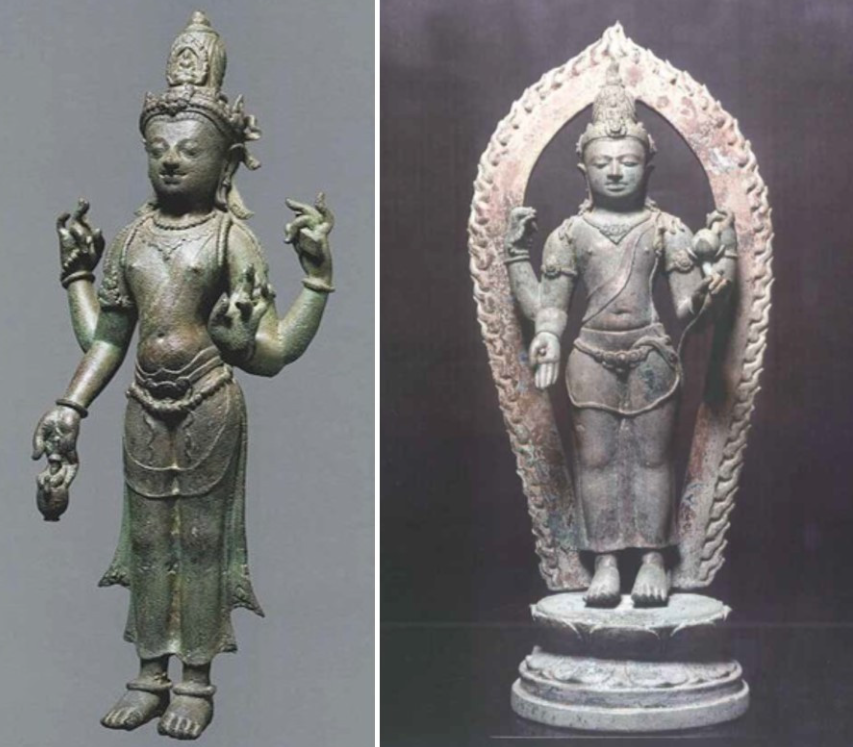
Two eighth-century bronze sculptures depicting the revered Buddhist bodhisattva Avalokiteshvara have been officially returned to Indonesia by United States authorities, capping a long journey through the international black market for stolen cultural artifacts. The four-armed statues, symbols of compassion and mercy in Buddhist tradition, were formally handed over during a repatriation ceremony at the Indonesian Consulate in New York last week, representing a significant victory in the ongoing global struggle against antiquities trafficking networks.
The statues' recovery traces back to the notorious antiquities dealer Douglas Latchford, a British collector based in Bangkok whose career became deeply entwined with the looting of Southeast Asian heritage sites. For more than four decades, Latchford operated as one of the world's most prominent dealers in Khmer and Southeast Asian artifacts, cultivating a reputation that masked a systematic pattern of trafficking looted treasures from archaeological sites across the region. In 2019, US prosecutors formally indicted Latchford on charges of orchestrating a decades-long scheme to traffic and sell stolen Cambodian and broader Southeast Asian antiquities through international art markets, though the charges were subsequently dismissed following his death in 2020.
According to federal authorities in the Southern District of New York, the two Indonesian statues were originally looted from archaeological sites in Indonesia decades ago and subsequently sold to Latchford, who trafficked them into the United States market. Between 2003 and 2007, Latchford sold the sculptures along with numerous other Southeast Asian artifacts to an American collector, deliberately concealing their illicit origins by withholding provenance information and falsely documenting their backgrounds. This sophisticated deception allowed the stolen objects to circulate through the legitimate international art marketplace, insulating them from detection and enabling wealthy collectors to unknowingly acquire looted cultural property.
The breakthrough in recovering these particular statues came through the voluntary cooperation of the US collector who had acquired them from Latchford. In 2021, recognizing the illicit nature of his purchases, the collector surrendered not only the two Indonesian bronzes but 34 Cambodian and Southeast Asian antiquities in total, demonstrating the crucial role that private individuals can play in disrupting trafficking networks. This cooperation has become increasingly significant as US authorities have intensified enforcement actions against art dealers and networks moving stolen heritage through American markets.
US Attorney Jay Clayton, addressing the repatriation ceremony, emphasized the federal government's commitment to combating cultural property crimes and praised the collector's voluntary surrender as instrumental to recovery efforts. Clayton noted that such cases require sustained partnerships between law enforcement agencies, particularly the Homeland Security Investigations unit, and international partners committed to recovering stolen cultural heritage. The message underscored Washington's recognition that Southeast Asian nations face systematic looting of archaeological sites, and that American law enforcement agencies bear responsibility for preventing their territory from serving as a marketplace for stolen artifacts.
The return of these statues must be understood within the broader context of Indonesia's struggle against archaeological looting, a practice that continues to devastate the country's historical record. Indonesian sites from various periods—from Hindu-Buddhist kingdoms to the Majapahit era—remain targets for traffickers who exploit weak site protection, corrupt officials, and limited resources available to archaeological authorities. Each stolen artifact represents not merely financial loss but erasure of cultural memory and disruption of scholarly understanding of Indonesia's past.
The Latchford investigation sparked a cascade of recoveries across multiple jurisdictions. Following his death, Latchford's daughter agreed to return his collection, valued at more than US$50 million, to Cambodia, triggering subsequent repatriations from museums and private collectors in the United States, Europe, and Australia. This domino effect demonstrated how enforcement actions against key dealers can unravel entire trafficking networks and unlock previously hidden looted artifacts.
Indonesia's experience mirrors but is distinct from Cambodia's struggle against antiquities trafficking. While Cambodian temple looting has received considerable international attention, Indonesian sites suffer from comparable predation with less public awareness. The 2024 repatriation of three Indonesian artifacts—a Majapahit stone relief, a seated bronze Buddha, and a standing bronze Vishnu statue valued at Rp6.5 billion—highlighted the involvement of different trafficking networks, including Indian-American dealer Subhash Kapoor and associate Nancy Wiener, whose Manhattan-based Art of the Past gallery distributed looted Southeast Asian antiquities.
The Kapoor network investigation revealed the scale of professional trafficking operations targeting the region. Between 2011 and 2023, investigators recovered more than 2,500 antiquities allegedly trafficked through Kapoor's channels, with combined estimated value exceeding $143 million. These statistic underscore that the problem extends far beyond individual dealers like Latchford; rather, organized criminal networks have systematized the looting and distribution of Southeast Asian heritage for decades, exploiting weak enforcement mechanisms and complicit intermediaries across multiple countries.
For Malaysia and other ASEAN nations, these cases carry particular significance. The region's shared Buddhist and Hindu heritage, combined with porous borders and limited resources dedicated to site protection and customs enforcement, creates conditions enabling trafficking. Malaysian authorities, though less frequently in international headlines than Cambodian or Indonesian counterparts, face similar challenges protecting archaeological sites and preventing looted artifacts from transiting through the country toward international markets. The success of US law enforcement in these cases depends partly on cooperation from Southeast Asian governments in documenting looted sites, authenticating artifacts, and facilitating repatriations.
The Indonesian government's collaboration with US authorities in documenting and recovering these statues reflects improving diplomatic channels for cultural heritage recovery. However, significant challenges remain. Many looted artifacts remain in private collections, undocumented and unlikely to surface unless owners voluntarily surrender them or die and heirs decide against possession. Archaeological sites continue experiencing looting despite increased awareness, as poverty in communities near sites and continued demand from collectors sustain trafficking incentives.
Moving forward, these repatriations represent partial victories in a long-term campaign requiring sustained commitment from governments, law enforcement agencies, museums, auction houses, and private collectors. The willingness of the American collector to voluntarily return the Indonesian statues, and the persistence of US prosecutors in pursuing cases across multiple jurisdictions and dealers, provides a model for international cooperation. Yet enforcement remains inconsistent, resources limited, and the financial incentives driving trafficking substantial. Success depends on simultaneously strengthening site protection, prosecuting traffickers aggressively, incentivizing voluntary returns, and maintaining international coordination in an era when digital marketplaces create new channels for illicit sales.

