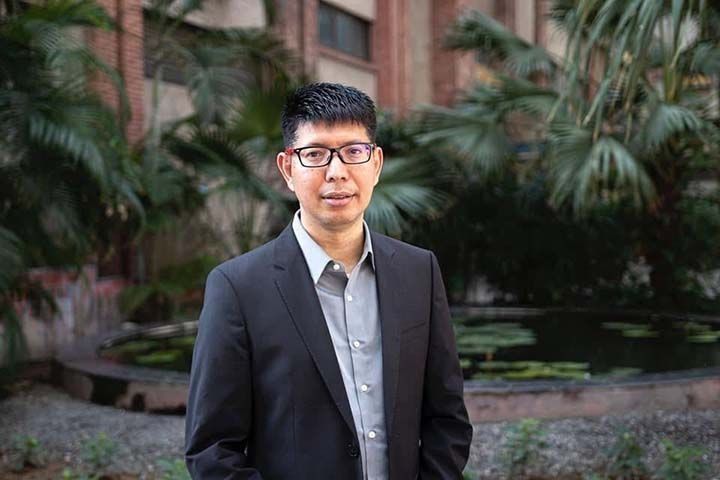
An American scholar specialising in Myanmar affairs has been held in Chinese detention since early June after travelling to attend an academic workshop, his research organisation revealed on Wednesday. Min Zin, who serves as executive director of the Institute for Strategy and Policy (ISP) - Myanmar, was apprehended in Kunming, the capital of China's southwestern Yunnan province, on June 3. His arrest came shortly after China's foreign ministry publicly confirmed his detention on suspicion of espionage and endangering national security—charges that both his organisation and the United States have firmly rejected.
The ISP-Myanmar released a statement defending Min Zin's presence in China, emphasising that his sole purpose for the trip was participation in a legitimate academic workshop. The think tank, which Min Zin founded, declared its strong opposition to what it characterised as baseless allegations against him. The statement underscored that the detention occurred while he was engaged in routine scholarly activities, questioning the credibility of China's security accusations. A spokesperson for the US State Department similarly rejected Beijing's characterisation of Min Zin's conduct, confirming that American consular officers have visited the detained scholar and that the State Department is actively engaged with Chinese authorities to provide appropriate assistance.
The timing of Min Zin's detention holds particular significance within the broader context of Myanmar-China relations. His arrest preceded a scheduled five-day state visit to Beijing by Myanmar's military leader Min Aung Hlaing, now serving as president following the February 2021 coup that overthrew the democratically elected government of Aung San Suu Kyi. This proximity raises questions about whether the detention was coordinated with high-level diplomatic movements between the two nations, though Chinese officials maintain they are handling the case according to legal procedures.
China has emerged as Myanmar's most strategically valuable international partner since the military's seizure of power nearly four years ago. The relationship encompasses significant economic, military, and infrastructural interests, making Beijing's response to Min Zin's activities particularly noteworthy. China's detention of a scholar critical of military rule in Myanmar suggests tensions beneath the surface of the official partnership, particularly regarding foreign academic scrutiny of Myanmar's political trajectory and China's strategic role within the country.
Min Zin's background as a pro-democracy activist adds another layer to his detention. He participated actively in Myanmar's historic 1988 pro-democracy uprising, a watershed moment in the country's modern political history. His educational trajectory reflects international engagement with Myanmar's political challenges—he studied political science at the University of California, Berkeley, acquiring expertise that would later define his professional contributions to understanding Myanmar's complexities. This combination of personal experience and academic training positioned him as a credible voice on Myanmar's political transitions and conflicts.
The Institute for Strategy and Policy that Min Zin established has become an influential analytical voice on Myanmar's internal dynamics. Originally based within Myanmar itself, the organisation relocated internationally following the military coup, reflecting the deteriorating conditions for independent research and commentary within the country. From its overseas base, the ISP-Myanmar has maintained focus on critical issues including the escalating armed conflict between the military and newly formed pro-democracy armed groups, Myanmar's economic deterioration, and the intricate bilateral relationship between Myanmar and China—the latter being particularly relevant to understanding regional geopolitics.
Myanmar's descent into conflict since the 2021 coup has fundamentally altered the country's political landscape. Initial mass protests against military rule evolved into widespread armed insurgency as pro-democracy organisations established armed wings and established strategic alliances with ethnic armed organisations that had long contested central military authority. This nationwide uprising has displaced hundreds of thousands and created humanitarian emergencies across multiple regions. Within this context, organisations like ISP-Myanmar that document and analyse these developments serve critical functions for international understanding of the crisis.
The think tank's emphasis on the need for academic freedom carries particular weight given regional trends. As several Southeast Asian nations have tightened restrictions on independent research and commentary, the detention of a foreign scholar engaged in legitimate academic activities sends concerning signals about the space available for objective analysis of sensitive political matters. The ISP-Myanmar's statement that "academic and research organisations should be able to conduct their work without intimidation" reflects broader anxieties among the scholarly community regarding access to countries and freedom from political harassment.
Min Zin's case also illuminates the vulnerability of international scholars studying China's sphere of influence. Foreign academics investigating sensitive topics in neighbouring countries face potential detention, accusations of espionage, or restrictions on movement. For Malaysian and Southeast Asian researchers studying regional security, political transitions, or bilateral relations, Min Zin's situation presents a cautionary example of the risks involved in conducting fieldwork or attending international academic forums in strategically sensitive zones.
The diplomatic dimensions of Min Zin's detention remain murky. Neither China nor Myanmar has provided detailed public explanations for the specific espionage accusations, and the coincidence with Min Aung Hlaing's planned visit suggests potential coordination. Whether the detention reflects genuine security concerns or constitutes pressure on independent analysts critical of military rule remains unclear. The involvement of US consular services and ongoing diplomatic engagement indicates the case has assumed significance beyond a routine legal matter.
For Malaysian observers, the incident underscores how regional geopolitics intersect with academic freedom and international relations. As ASEAN member states grapple with balancing relations with major powers while maintaining commitment to democratic principles, the treatment of foreign scholars studying sensitive regional issues carries implications for the norms governing interstate conduct. The case raises questions about whether Myanmar's military government and its Chinese patrons view independent analysis of Myanmar's trajectory as inherently threatening to their interests.