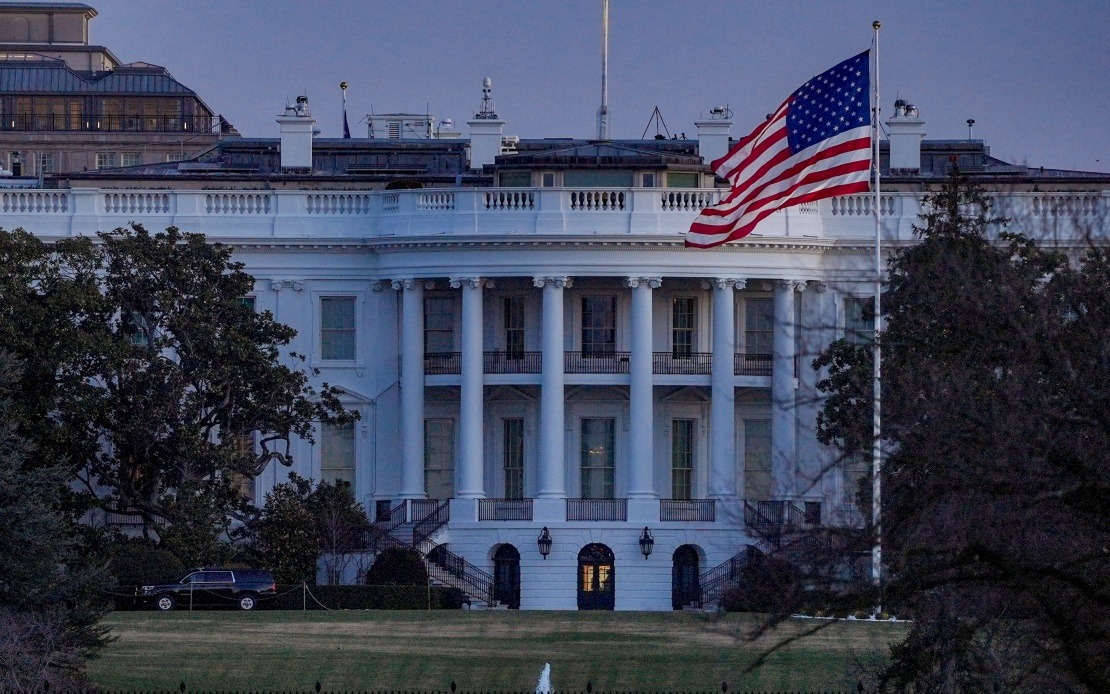
The head of the United States Secret Service acknowledged Wednesday that his agency is operating under unprecedented operational strain as it contends with what Director Sean Curran described as a "heightened level of threat environment." Speaking to media outlets ahead of the White House Correspondents' Association dinner scheduled for July 24, Curran underscored the challenging security landscape confronting the protective agency responsible for safeguarding the president, other senior government officials, and former heads of state. The frank admission from leadership signals growing concern within American law enforcement circles about the intensity and frequency of threats directed at the nation's highest office.
President Donald Trump has downplayed personal security concerns in recent public statements, insisting he sees no reason to fear for his safety despite publicly acknowledged plans by Iran to eliminate him. However, the disconnect between Trump's public posture and the security establishment's assessment reflects the serious nature of contemporary threats. The divergence between presidential confidence and institutional caution illustrates how political leadership and protective agencies sometimes operate from different threat assessments, a dynamic that has become increasingly apparent over the past two years.
The context for Curran's statement extends far beyond rhetorical positioning. Trump himself claimed in July that he occupies the top position on Iran's assassination target list, a designation he asserts carries substantial geopolitical weight. More strikingly, Trump asserted that statistical analysis suggests only a 5.2 percent likelihood of a sitting American president completing their tenure without becoming a victim of violent attack. While such precise percentages warrant scrutiny regarding their methodology and reliability, the underlying assertion reflects genuine anxiety within protective services about the vulnerability of executive leadership in contemporary America.
The historical record supporting these concerns spans roughly two years and encompasses multiple violent incidents. During a campaign rally in Pennsylvania in July 2024, Trump sustained a gunshot wound to the ear, marking the first major attack. The incident shocked the nation and immediately elevated security protocols across all protective agencies. That September, another assassination attempt occurred at Trump's private golf club in Florida, demonstrating that threats extended beyond public campaign settings into ostensibly more controlled environments.
Most significantly, April 2026 witnessed a shooting incident during the White House Correspondents' Association Dinner itself, an event attended by Trump and numerous senior government and media figures. The suspect subsequently faced multiple serious federal charges, including attempted assassination of the sitting president. This incident directly precipitated the postponement of the same event that Curran referenced in his briefing, creating an ironic situation where the dinner moved from April to July specifically due to violence that occurred at its previous iteration.
Even more recently, the Federal Bureau of Investigation uncovered what authorities characterized as an assassination plot involving a proposed Ultimate Fighting Championship event at the White House. The United States Department of Justice formally designated this conspiracy as yet another attempt against Trump, adding to the documented record of threats. The frequency and sophistication of these incidents have forced the Secret Service to implement layers of security protocols that extend far beyond traditional protective measures.
For Malaysian and Southeast Asian observers, these developments carry significance beyond American domestic politics. The United States remains a crucial security alliance partner throughout the Indo-Pacific region, and the stability and functioning of American leadership directly impacts regional security arrangements. Instability within American institutions, whether driven by external threats or internal political fracture, reverberates across defense partnerships and international agreements that shape regional geopolitics. Malaysia, as a nation with significant economic and security interests in both the Western Pacific and Indian Ocean systems, monitors American institutional resilience closely.
Furthermore, the rising incidence of assassination attempts against sitting leaders reflects a troubling global trend toward political violence. Democratic societies worldwide have witnessed escalating threats against executive leadership, driven by increasingly polarized political environments, foreign state actors pursuing destabilization objectives, and individuals motivated by extremist ideologies or personal grievance. The American experience provides a cautionary case study for nations seeking to balance open democratic governance with adequate protective security.
The Secret Service's acknowledgment of heightened threat environments raises practical questions about the sustainability of protective operations at current intensity levels. Curran's statement represents a careful calibration: frank enough to justify enhanced security measures to Congress and the public, yet restrained enough to avoid creating perception of executive paralysis or encouraging further threat escalation through media amplification. Such communications represent a delicate balance that protective agencies must maintain throughout democratic societies.
Looking forward, the scheduled White House Correspondents' Association dinner represents a symbolic moment for American institutional resilience. The event's return following an April shooting incident carries loaded significance—it demonstrates determination to maintain open democratic practices despite security challenges, yet simultaneously underscores the very threats that necessitated postponement. Curran's presence at the briefing and his candid assessment suggest the Secret Service remains confident in its protective capabilities while acknowledging the operational complexity of its mission.
The broader implications extend to how democracies maintain openness and accessibility of leadership while managing contemporary threat environments. The United States, as a mature democracy with centuries of institutional experience, struggles to balance these competing imperatives. Smaller nations and emerging democracies observe how advanced protective services and institutional resources address such challenges, often facing similar dilemmas with fewer resources and less developed protective infrastructure.
Ultimately, Curran's acknowledgment reflects institutional honesty about contemporary security realities. Rather than projecting false confidence or dismissing threats, the Secret Service director articulated the genuine operational environment confronting American protective services. This transparency, while sobering, enables informed public discourse about the actual security landscape facing democratic governance in an era of escalating political violence and foreign state engagement in destabilization efforts.

