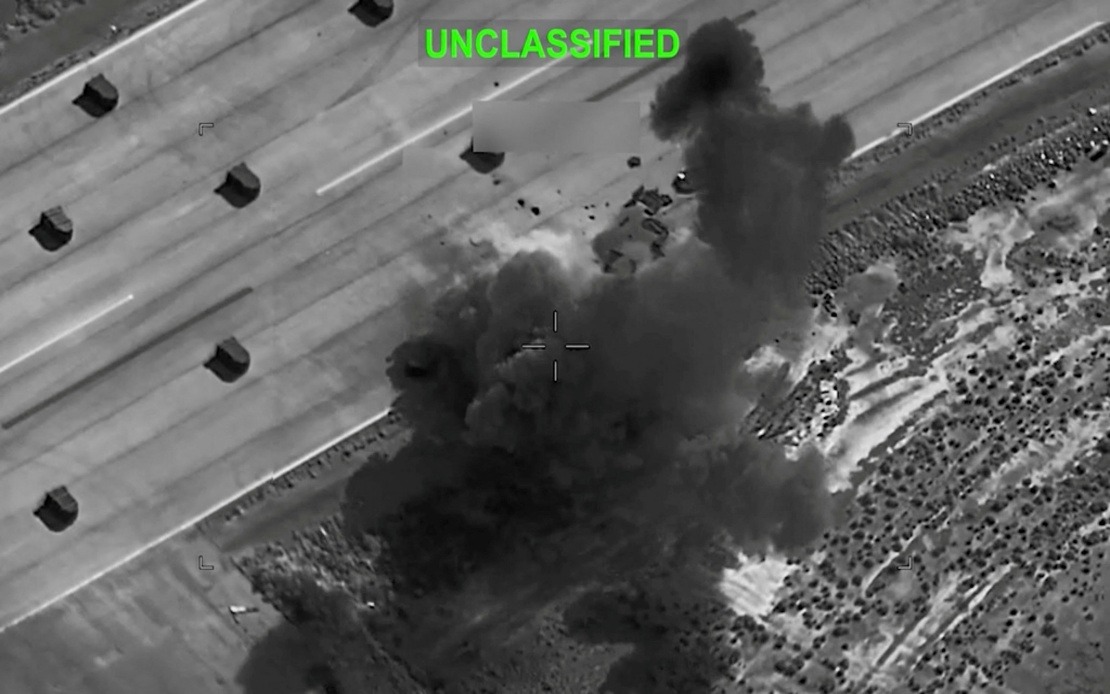
Iran's Health Ministry has reported significant casualties from what it describes as unprovoked American military strikes, with at least 14 confirmed deaths and 78 wounded across multiple provinces during what officials characterise as a period of ceasefire. The attacks, which occurred on July 8 and 9, 2026, represent a serious escalation in Middle Eastern tensions and raise questions about the stability of regional peace arrangements that have presumably been in negotiation or implementation.
According to Health Ministry spokesman Hossein Kermanpour, the coordinated strikes targeted five separate provinces throughout Iranian territory. The breadth of the attack—spanning multiple regions rather than a single military installation—suggests a comprehensive campaign rather than a precision strike against a specific strategic objective. This distribution across five provinces indicates either a widespread intelligence target list or an attempt to demonstrate military capability across Iran's geography.
The casualty figures reveal the human cost of the military action. Among those injured, 47 individuals remain hospitalised receiving ongoing medical treatment, suggesting that injuries range from moderate to severe. The fact that others have been discharged following treatment indicates that the strikes produced a spectrum of casualties, from those with minor wounds to those requiring extended hospital care. The 78 total wounded figure substantially exceeds the 14 deaths, which typically occurs when strikes affect populated areas rather than purely military targets.
The timing of these attacks is particularly significant for regional and international observers. The strikes took place during what Iran characterises as an active ceasefire period, which would ordinarily provide protection for civilian and military personnel alike. If an official ceasefire agreement was indeed in place, the American military action constitutes a violation of that arrangement and substantially undermines ongoing diplomatic efforts. Such breaches of ceasefire agreements typically trigger rapid escalation spirals, as the violated party feels justified in responding militarily.
For Malaysian and Southeast Asian observers, this incident carries implications beyond the immediate Middle Eastern context. The region remains economically dependent on stable energy supplies flowing through critical maritime chokepoints, particularly the Strait of Hormuz. Any sustained escalation between the United States and Iran threatens petroleum exports and raises insurance costs for commercial shipping, effects that ripple through global supply chains and eventually reach regional economies and consumer prices.
The incident also demonstrates the fragility of international agreements in the absence of robust enforcement mechanisms or powerful neutral arbiters. The apparent violation during an established ceasefire suggests that military interests or strategic calculations may override diplomatic commitments. This pattern has implications for other regional disputes and confidence-building measures that depend on mutual respect for agreed boundaries and periods of non-engagement.
Iran's immediate public disclosure of casualty figures through official Health Ministry channels suggests an effort to document the incident for potential international legal proceedings or to build international sympathy. By rapidly publishing specific numbers through social media platforms, Tehran aims to establish an official record that shapes the narrative around the incident before alternative accounts emerge. This communications strategy reflects modern diplomatic practice, where information control and rapid narrative-setting compete with traditional diplomatic channels.
The scale of the operation raises questions about the military planning and authorization behind these strikes. An attack targeting five provinces would require significant coordination, intelligence assessment, and high-level decision-making. The breadth suggests this was not a spontaneous or reactive measure but rather a planned operation, indicating that tensions had been escalating beneath the surface despite the ceasefire arrangement.
For the broader Middle Eastern balance of power, such incidents fundamentally alter the risk calculus for all parties. If the United States believes it can strike Iranian territory during a ceasefire without decisive retaliation, it may embolden similar operations. Conversely, Iran faces pressure to demonstrate that violations of ceasefires provoke consequences, creating a dynamic where both sides must carefully calibrate responses to avoid an uncontrolled escalation toward full-scale conflict.
The humanitarian implications are immediate and pressing. Beyond those killed and wounded, families have been displaced or traumatised, medical resources are strained, and reconstruction will require substantial resources. The involvement of multiple provinces suggests that civilian infrastructure, not merely military targets, may have been damaged, complicating recovery efforts.
Looking ahead, the trajectory of this incident will depend on how Iran responds to what it views as a ceasefire violation and how international powers, particularly those with influence in Washington and Tehran, attempt to de-escalate tensions. The next days and weeks will be critical in determining whether this represents an isolated incident or the beginning of renewed large-scale conflict in the region.

