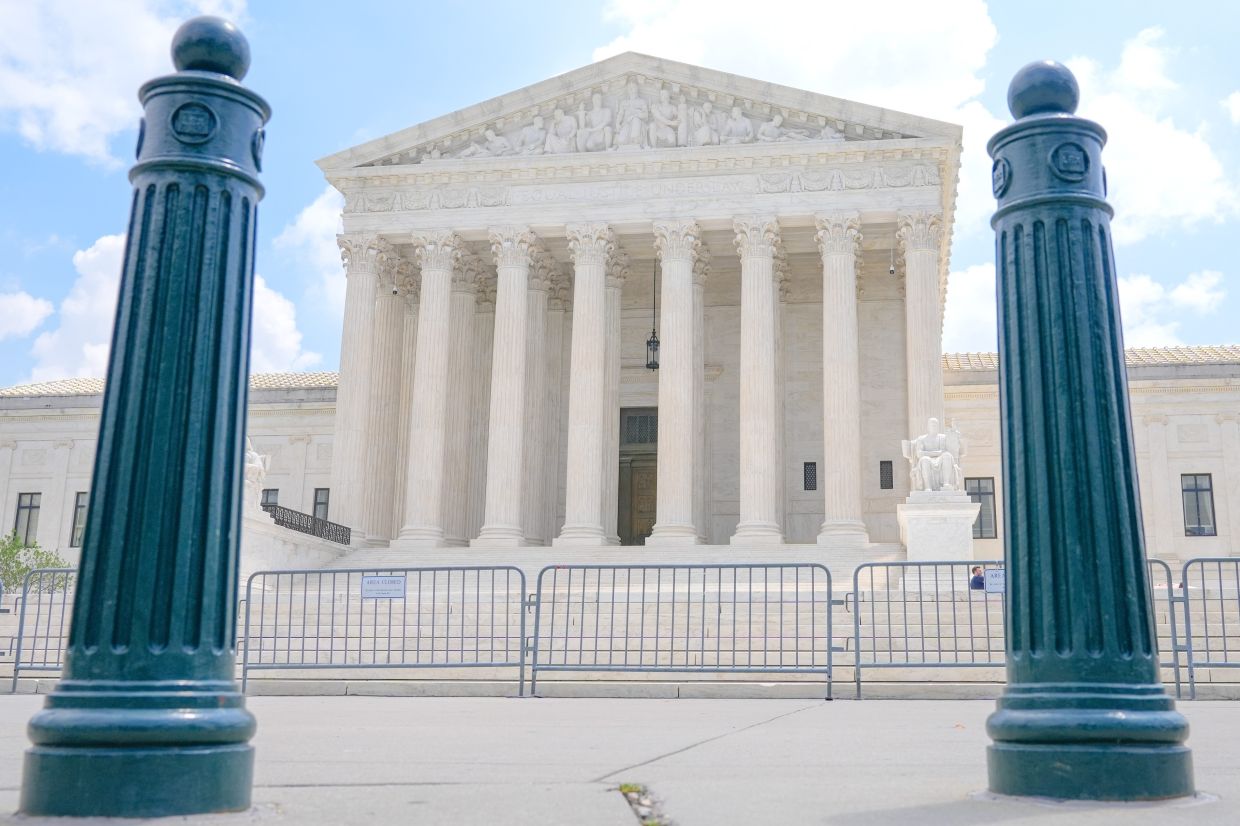
The US Supreme Court has chosen not to intervene in a contentious dispute over Texas's age verification requirements for mobile app downloads, effectively allowing the controversial measure to proceed without federal judicial obstruction. Justice Samuel Alito issued terse one-sentence rulings rejecting emergency appeals filed by challengers to the Texas App Store Accountability Act, marking a significant moment in the ongoing tension between state regulation and digital rights in America.
The legal pathway to this outcome began in Texas, where lawmakers enacted legislation designed to gate-keep certain applications from minors. A federal district court initially blocked the law last December, determining that it unconstitutionally restricted access to protected speech including journalistic content and educational materials. However, that judicial barrier crumbled when a three-judge panel from the 5th Circuit Court of Appeals intervened in June, suspending the lower court's injunction and permitting the law to take effect despite unresolved constitutional questions.
The challengers represent diverse constituencies united against the measure. The Computer & Communications Industry Association, representing major technology firms, joined Students Engaged in Advancing Texas in pursuing legal remedies to block implementation. Texas Attorney General Ken Paxton has vigorously defended the statute, appearing as the named defendant in both cases. The composition of the plaintiff coalition reveals the breadth of opposition, spanning both commercial interests concerned about operational burdens and civil liberties advocates troubled by governmental content regulation.
Central to the plaintiffs' constitutional argument is the assertion that Texas has overstepped legitimate regulatory boundaries by imposing blanket content restrictions. Their legal briefs emphasise that the law indiscriminately limits access to news sources, educational websites, and other First Amendment-protected material that adults routinely access through app platforms. The Students Engaged in Advancing Texas faction framed their opposition in particularly stark terms, contending that parental authority over children's digital exposure must derive from family choice rather than governmental prescription. Their attorneys argued that permitting the state to dictate supervisory standards fundamentally undermines the autonomy that the Constitution accords to parents navigating their children's developmental needs.
Texas authorities have constructed a fundamentally different framing of the legislative purpose. Rather than viewing the law as a content suppression mechanism, Paxton's office characterises it as essential child protection infrastructure addressing genuine modern hazards. Their legal position emphasises the vulnerability of young users to predatory data collection practices, privacy invasions, and exposure to material designed for adult audiences. The state's argument recognises that contemporary mobile devices have become portals to virtually unlimited content repositories, many operating without meaningful parental oversight or consent mechanisms.
This Supreme Court non-intervention carries substantial implications for how American federalism manages the intersection of parental rights, child protection, and constitutional free speech guarantees. By declining to grant emergency relief, the justices have effectively endorsed the 5th Circuit's judgment that the law's constitutionality remains adequately debatable and that the balance of equities did not warrant halting enforcement pending full appellate review. The decision suggests that substantial portions of the Court may harbour doubts about the robust First Amendment challenge, or alternatively, that concerns about child safety warrant allowing state experimentation even amid constitutional uncertainty.
The ruling also reflects deeper currents within American jurisprudence regarding appropriate jurisdictional boundaries between federal and state authority over digital commerce and content regulation. Texas has positioned itself as a vanguard of state-level efforts to impose content governance on technology platforms, moves that challenge the industry's traditional model of minimal parental verification friction and maximum accessibility. Other states monitoring these developments face an opening to pursue similar legislation with greater confidence that federal courts will not immediately strike them down.
For Malaysian observers, the Texas precedent illuminates ongoing international debates about regulating technology platforms and protecting minors from harmful content. Malaysia's regulatory frameworks for digital services operate within different constitutional and statutory contexts, yet this American decision demonstrates how democracies worldwide grapple with comparable challenges. The tension between parental authority, state protection mandates, free expression principles, and commercial innovation remains universal across jurisdictions.
The Supreme Court's refusal to intervene also signals that future challenges to the Texas law will proceed through ordinary appellate channels, potentially taking years to resolve finally. During this interim period, the law will remain operational, creating practical compliance burdens for technology companies and altering how users—particularly minors—access applications. Whether this enforcement window ultimately vindicates Texas's protective intentions or validates constitutional concerns about speech restriction remains fundamentally undetermined, even as the machinery of governance proceeds in the absence of judicial prohibition.

