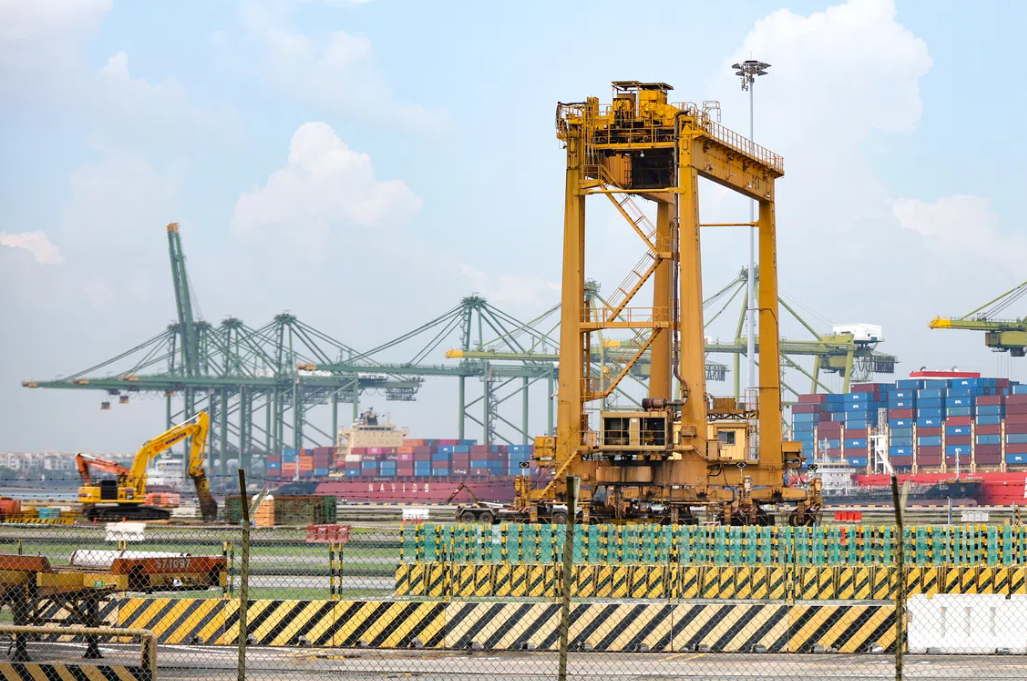
The Trump administration has escalated its trade enforcement apparatus by publicly naming Singapore and 39 other nations as conduits through which Chinese exporters are rerouting goods to evade substantial US tariffs. Released on August 13, the White House report titled "The Great Transshipment Scam" presents a comprehensive taxonomy of what it characterises as a deliberate scheme to disguise the origin of Chinese products by channelling them through intermediate jurisdictions with lower tariff exposure. The initiative represents a significant tightening of American customs scrutiny that carries implications far beyond tariff disputes, potentially recalibrating supply chain networks throughout Southeast Asia and beyond.
Chinese manufacturers have long exploited regulatory gaps and geographic positioning to route finished goods through third countries where they undergo minimal processing or repackaging before reaching American ports under new country-of-origin designations. The transshipment strategy capitalises on bilateral trade relationships between the United States and intermediate nations, many of which have preferential access to American markets or maintain lower tariff schedules. By transforming goods into ostensibly local products through these hub economies, exporters circumvent the higher duties imposed on direct Chinese imports following the 2018 trade tensions. The White House estimates that this systematic evasion has deprived the US Treasury of between US$40 billion and US$303 billion in potential customs revenue—a vast range reflecting uncertainty in quantifying illicit trade but underscoring the scale Washington perceives as problematic.
The Trump administration's response extends beyond rhetorical warnings. The announcement of an artificial intelligence-powered system termed "Detective Border" signals an attempt to deploy advanced technological screening at entry points to identify shipments concealing Chinese origins. This enforcement infrastructure, coupled with a 40 per cent supplementary tariff on goods determined to have been illegally transshipped, represents a credible threat to any company attempting these practices. The administration's declaration that "the age of untraceable illegal transshipment is over" sets an unambiguous expectation for compliance, though the report itself provides limited detail regarding immediate implementation mechanisms or timelines.
The White House's analytical framing acknowledges that not all trade reallocation following 2018 tariffs represents illicit activity. The report notes that some shift in sourcing reflects legitimate business decisions regarding production location, investment allocation, and supplier relationships. However, the timing and magnitude of redirected flows towards the identified 40 economies—occurring precisely as tariffs on Chinese goods increased—provide circumstantial evidence suggesting at minimum an intentional targeting of regulatory arbitrage. This distinction matters for Malaysia, Thailand, Vietnam, Indonesia, and other Southeast Asian nations categorised as Tier 2 economies with significant economic integration with China, as they face pressure to demonstrate that their export growth reflects genuine value-addition rather than mere trans-shipment.
Singapore's placement in Tier 3 alongside Cambodia, Laos, Myanmar, and the Philippines characterises the city-state as a "small, opportunistic Chinese target" with specific vulnerabilities that make it attractive for tariff evasion. The report emphasises that Tier 3 economies possess weak-link advantages including low-cost labour, free trade zones, port infrastructure, bonded warehousing facilities, niche assembly capacity, preferential US trade access, and limited customs enforcement depth. For Singapore, which prides itself on regulatory rigour and transparent business operations, this classification likely registers as problematic reputationally, particularly given the republic's repeated assertions of strict trade compliance. The characterisation suggests that despite Singapore's sophisticated regulatory framework, geography and existing infrastructure create inherent vulnerabilities that Chinese exporters can exploit regardless of official policy commitments.
The broader strategic dimension of the White House report extends to geopolitical concerns. The administration warns that as the 40 identified economies become increasingly dependent on Chinese inputs, logistics networks, and capital flows, Beijing may accumulate disproportionate commercial and geopolitical leverage while simultaneously maintaining indirect market access to the United States. This framing recharacterises economic interdependence as a security vulnerability, implying that transshipment evasion forms part of a larger Chinese strategy to circumvent American containment efforts. For Southeast Asian governments, this rhetoric creates a difficult position: deepening trade relationships with China generates economic benefits but invites American scrutiny and potential secondary sanctions or tariff escalation.
Singapore has already faced tariff pressures from the Trump administration on separate grounds. In July, a 12.5 per cent levy was imposed on approximately one-third of Singapore's domestic exports to the United States following American allegations that Singapore and other nations failed to adequately adopt and enforce prohibitions on goods manufactured using forced labour. The transshipment report compounds this pressure, suggesting that Singapore faces multiple concurrent tariff-driven challenges that collectively threaten to undermine the republic's position as a preferred trading partner and logistics hub. The convergence of forced labour allegations with transshipment accusations indicates a comprehensive recalibration of American trade enforcement rather than isolated disputes.
Singapore Customs has issued a formal response asserting that the republic's regulatory and legislative framework for transshipment aligns with international standards established by the World Customs Organization. Officials emphasise that transshipped goods retain their original country-of-origin designation and cannot legally be relabelled as Singaporean products, undermining the premise of the transshipment evasion scheme. The agency further states that companies utilising Singapore's transshipment facilities must maintain full compliance with local laws and that Singapore Customs maintains collaborative relationships with international counterparts for identifying and prosecuting illicit trade. These statements represent a defensive posture, reaffirming regulatory commitment while implicitly pushing back against the White House's characterisation of Singapore as a weak enforcement environment.
For Malaysia and other Southeast Asian economies categorised as Tier 2, the implications differ slightly but remain significant. These nations face the dual challenge of managing legitimate Chinese investment and supply chain integration while avoiding the appearance of enabling tariff evasion. The Tier 2 classification acknowledges substantial economic links with China, suggesting that some transshipment activity may be occurring but does not singularly define these economies' trade relationships. Malaysian policymakers must balance the economic advantages of Chinese investment—particularly in electronics, semiconductors, and manufacturing—against the risk of becoming collateral damage in American tariff escalation driven by Chinese evasion attempts. The report effectively creates incentive structures for Tier 2 nations to enhance customs enforcement and transparency without fully severing Chinese economic relationships.
The White House report's release also reflects the Trump administration's broader strategy to rebuild its tariff regime following a July court decision that undermined certain tariff impositions. Rather than waiting for legal resolution or negotiated solutions, the administration is building a public record of Chinese evasion practices and explicitly naming jurisdictions implicated in circumvention schemes. This approach generates political and commercial pressure on both the identified economies and companies potentially involved in transshipment networks. Vietnamese, Thai, and Indonesian exporters may now face enhanced American scrutiny regardless of whether their transactions involve transshipped Chinese goods, reflecting the chilling effect of publicly-named involvement in what Washington characterises as a coordinated evasion architecture.
The economic consequences for Southeast Asia extend beyond direct tariff exposure. If American enforcement mechanisms successfully impede Chinese transshipment routes, legitimate trade flows may be disrupted, particularly for companies that have structured supply chains around established logistics hubs. Port operators, customs brokers, logistics providers, and assembly manufacturers in Singapore, Malaysia, Vietnam, and Thailand may face reduced volumes as risk-averse companies seek alternative sourcing strategies. Conversely, if the identified 40 economies enhance enforcement and successfully block evasion schemes, they may enhance their reputations as reliable trading jurisdictions, potentially attracting compliant companies seeking stable, transparent operating environments. The outcome depends substantially on how effectively each jurisdiction implements enforcement mechanisms and communicates compliance to American counterparts.

