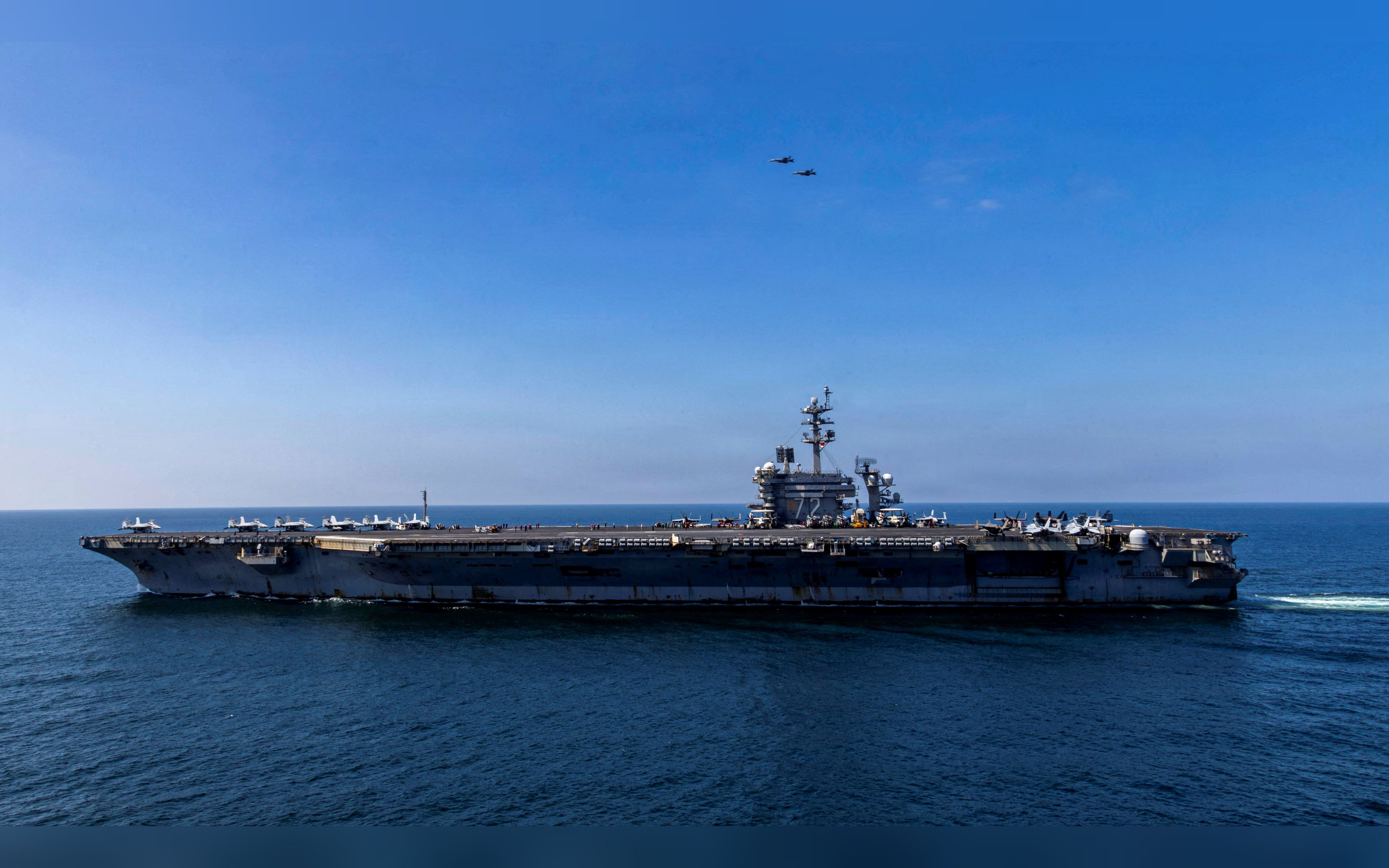
The USS Abraham Lincoln aircraft carrier is being withdrawn from West Asian operations and will be replaced by the USS George Washington, US President Donald Trump announced on Friday. The decision follows mounting concerns from military families and members of Congress about the extended deployment, which has stretched well beyond typical rotation schedules and raised serious questions about sailor welfare during sustained combat operations.
Trump's confirmation came after the acting Navy Secretary Hung Cao released details of the carrier's grueling assignment. Over 266 days of deployment, the Lincoln's air wing conducted more than 10,000 combat sorties and delivered in excess of 1.5 million pounds of ordnance. The most remarkable aspect of this operational tempo was the carrier's isolation in theater, with no port visits in the final 200 days—a grinding commitment that took a documented toll on crew morale and physical wellbeing.
The deployment difficulties gained public attention after Senator Richard Blumenthal addressed concerns directly to Defense Secretary Pete Hegseth and acting Navy Secretary Cao. His correspondence detailed systemic problems aboard the carrier: shortages of basic necessities, contaminated water supplies, plumbing failures, deteriorating mental health conditions among sailors, safety hazards on flight decks, and months-long delays in mail delivery that prevented care packages from reaching personnel. These conditions painted a picture of a ship stretched beyond sustainable operational limits.
Acting Navy Secretary Cao acknowledged the hardships explicitly, recognizing that combat operations inherently complicate already demanding deployment cycles. In his statement, he emphasized that the extended assignment resulted from operational necessity rather than poor planning. The mission's requirements demanded the carrier remain in the theater longer than originally scheduled, a reality he characterized as unavoidable given the circumstances of ongoing military engagement in the region.
Mental health emerged as a particularly significant concern during the deployment. While Cao confirmed that a small number of sailors and marines received psychological treatment, he stressed that no deaths were associated with these cases. This disclosure suggests the Navy was at least monitoring welfare and providing some support mechanisms, though the scale of psychological challenges during such prolonged separation and combat exposure raises broader questions about military readiness and personnel retention in extended operations.
The timing of this rotation holds regional significance for Southeast Asian observers. The extended presence of American carrier strike groups in the Indian Ocean and Arabian Sea reflects shifting strategic priorities and the persistent complications arising from US military commitments in the Middle East. For Malaysia and other regional nations, sustained American naval deployments in these waters underscore Washington's commitment to maintaining freedom of navigation and regional stability, though the operational strains evident in the Lincoln's deployment suggest limits to how long such commitments can be sustained without affecting crew effectiveness and morale.
The USS George Washington will assume the Lincoln's responsibilities as part of the Navy's regular carrier rotation schedule. This predetermined succession underscores the military's efforts to maintain continuous carrier presence in strategically vital waters, a posture considered essential for projecting American influence and responding to regional contingencies. The transition, while addressing immediate welfare concerns, also signals continuity in the broader strategic posture toward West Asia.
Trump's characterization that the deployment had not lasted nearly long enough, made when questioned about crew concerns, drew contrast with the acknowledgment from military leadership that extended deployments create genuine hardships. This rhetorical positioning reflects broader debates within the Trump administration about military commitments and sacrifice. Navy leadership's framing emphasized that the extended deployment represented mission success and appropriate adaptation to operational demands, seeking to balance recognition of hardship with affirmation that the sacrifice proved necessary and worthwhile.
The carrier's operational achievements were substantial by any measure. The 10,000-plus sorties conducted by the Lincoln's air wing and the tonnage of ordnance delivered represented intensive combat support for ongoing operations throughout the region. Yet these impressive statistics also encapsulate the human cost embedded in such sustained military operations. The logistics of maintaining crew readiness, morale, and psychological wellbeing over nearly nine months of continuous deployment present challenges that operational metrics alone cannot capture.
For Malaysian policymakers monitoring regional security dynamics, the Lincoln's rotation illustrates both American determination to maintain military presence in crucial waterways and the practical constraints inherent in sustaining such operations. The extended deployment, while ultimately completed successfully from a military perspective, revealed vulnerabilities in personnel welfare management that may affect recruitment and retention in the long term. As the Indo-Pacific region remains central to American strategic competition with China and other powers, the ability to sustain high-tempo operations while preserving force morale becomes increasingly consequential.
The withdrawal and replacement of the USS Abraham Lincoln also reflects the maturation of carrier rotation practices, with the Navy evidently more responsive to documented welfare concerns than in previous eras. The transparency with which Cao acknowledged deployment challenges and the explicit recognition that sailor and marine safety constitutes a priority signal an institutional acknowledgment that sustainable military power rests on personnel wellbeing. For regional observers, this institutional flexibility suggests American military leadership retains capacity to adapt operational practices when feedback indicates necessary adjustments, though the underlying tensions between mission requirements and personnel welfare remain unresolved.

