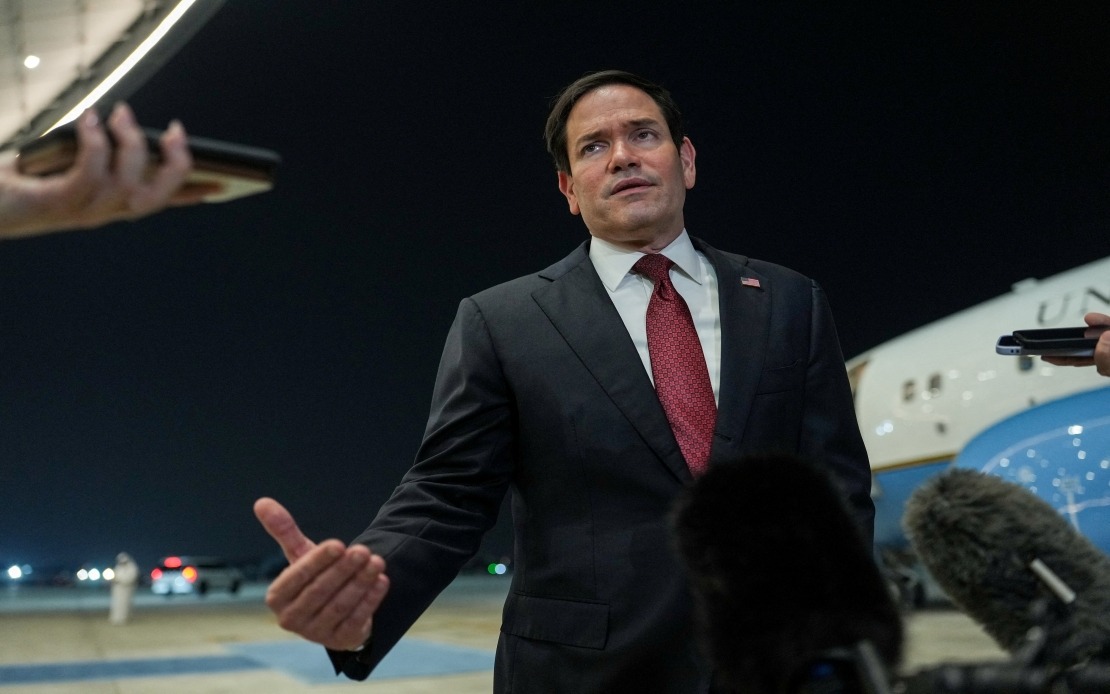
The United States has made clear it will not contribute its own resources to any reconstruction fund for Iran, according to Secretary of State Marco Rubio, as discussions continue regarding how to structure economic arrangements between Tehran and interested parties. Speaking to journalists on Tuesday, Rubio stated that decisions about funding sources for such an initiative remain premature, but emphasized that American government money will definitively not be part of any arrangement. His remarks address recent speculation about a substantial financial commitment tied to improving bilateral relations.
Rubio's position reflects the Trump administration's cautious approach to Iran engagement, despite recent diplomatic progress. While acknowledging that Iran could theoretically benefit from new economic opportunities, the secretary of state indicated that any meaningful advancement would depend on Iran demonstrating compliance across multiple security dimensions. This conditional language suggests that Washington views potential economic incentives as leverage rather than a guaranteed outcome of current negotiations. The qualifier effectively ties financial benefits to behavioural expectations, a strategy familiar to observers of American foreign policy in the Middle East.
The comments directly address Gulf state interest in potentially participating in reconstruction financing. Rather than ruling out regional involvement entirely, Rubio's statement distinguishes between American and other parties' potential roles. This distinction matters significantly for countries like Saudi Arabia and the United Arab Emirates, which have economic interests in regional stability and have previously indicated willingness to engage constructively with Iran under appropriate conditions. Their involvement could provide financial muscle for infrastructure and development projects without requiring Washington to deploy public funds.
Context for Rubio's remarks includes President Donald Trump's earlier dismissal of reports about a reported US$300 billion reconstruction fund. Trump characterized the figure as speculative and rejected the notion that America would commit such resources. Rubio's comments essentially reinforce and elaborate on the president's position, signalling consistency across the administration's messaging. The timing of these clarifications suggests an effort to manage expectations as negotiations proceed and potentially prevent misunderstandings that could derail discussions.
Recent diplomatic momentum has been substantial. Negotiators from both countries met in Burgenstock, Switzerland on Sunday, with Qatar and Pakistan facilitating discussions. The American delegation was headed by Vance, while Iran's parliamentary speaker Mohammad Bagher Ghalibaf led Tehran's team. Both sides subsequently reported progress, indicating that despite geopolitical tensions, channels for substantive engagement remain functional. This development holds implications for the broader Middle East, where US-Iran hostilities have destabilised regional security architecture and economic activity.
A significant breakthrough emerged last week when Iran and the United States remotely signed a memorandum ending the military conflict that had commenced on February 28. This agreement represents a dramatic shift from the escalatory trajectory that characterized recent years. The document establishes concrete timelines for American action to lift its naval blockade and requires Iran to restore normal maritime operations through the strategically vital Strait of Hormuz. For Southeast Asia, particularly maritime trading nations like Malaysia and Singapore, normalisation of shipping through this chokepoint has direct economic implications for regional commerce and energy security.
The memorandum's provisions extend beyond immediate military disengagement. Most significantly, Iran commits to foregoing nuclear weapons development, addressing the issue that has been central to international concern regarding Tehran's ambitions. However, the nuclear question has not been fully resolved through this document. Instead, the parties have established a 60-day window for dedicated negotiations on Iran's nuclear programme, with the expectation of reaching a separate, comprehensive agreement. This sequencing approach—addressing immediate security concerns first, then pivoting to longer-term structural issues—reflects pragmatic diplomacy focused on building confidence before tackling more intractable disputes.
Rubio's emphasis that reconstruction opportunities remain contingent on progress on security matters reflects American scepticism about Iran's intentions. The secretary of state articulated no specific security benchmarks but clearly signalled that economic benefits will not flow automatically or unconditionally. This approach preserves Washington's ability to withhold or threaten to withhold financial inducements if Iran fails to meet expectations regarding military activities, regional proxies, or other concerns. For regional observers, including ASEAN nations concerned about maritime security and terrorism financing, this conditionality provides some reassurance that American negotiators are not pursuing engagement at the expense of security priorities.
The involvement of Qatar and Pakistan as mediators underscores the regional dimensions of these negotiations. Both countries maintain diplomatic relations with Iran and possess influence in Islamabad and Doha respectively, making them valuable intermediaries. Qatar's position as a major financial power and Pakistan's role as a significant military actor give their participation credibility. Their willingness to invest diplomatic capital in facilitating negotiations suggests they perceive genuine movement toward resolution rather than theatre designed to appear productive without substance.
For Malaysia and other Southeast Asian nations, the implications of US-Iran rapprochement merit careful observation. Reduced tensions between these powers could redirect American strategic attention, potentially affecting security commitments in the Indo-Pacific region. Simultaneously, normalisation of Iran's international status could influence regional trade patterns and investment flows. The Strait of Hormuz's restoration to reliable commercial use directly benefits Malaysian shipping and petrochemical industries dependent on Middle Eastern energy imports. Additionally, reduced Iran-US tensions might decrease the likelihood of regional conflagration that could disrupt supply chains affecting Malaysian manufacturing and commerce.
The 60-day nuclear negotiation window establishes a critical juncture for determining whether this diplomatic initiative produces durable outcomes or merely temporary respite. Success in reaching a comprehensive nuclear agreement would significantly enhance regional stability and international confidence in the negotiating process. Failure could reinvigorate tensions and military posturing. For Malaysia, whose geographic position makes it vulnerable to supply chain disruptions from Middle Eastern instability, the outcome of these negotiations carries tangible economic weight. The country's role in ASEAN also positions it to advocate for regional stability considerations as international powers engage in Middle Eastern diplomacy.