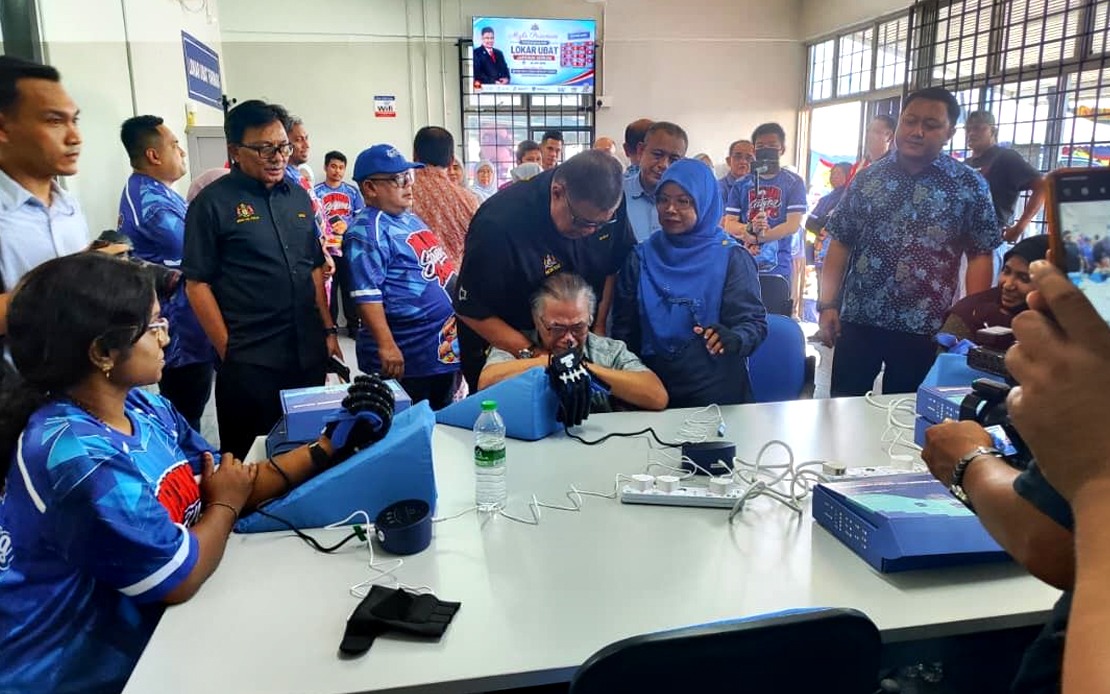
Universiti Teknikal Malaysia Melaka has inaugurated a community-focused rehabilitation facility in Serkam, Jasin, designed to deliver advanced technology-enabled treatment and recovery services to patients struggling with stroke, trauma-induced injuries, and movement disorders. The MADANI Community Rehabilitation Centre and Gymnasium represents a significant bridge between university research and grassroots healthcare delivery, bringing laboratory innovations directly into accessible clinical environments where they can serve the broader population.
Funded through the Finance Ministry's UniMADANI 2024 Grant, the facility leverages proprietary technologies developed within UTeM's research laboratories. These innovations extend beyond traditional physiotherapy methods, incorporating robotics and mechanical systems that standardize treatment protocols and enable consistent, measurable progress tracking. The integration of such technologies addresses a genuine gap in rehabilitation infrastructure across Malaysia, where access to specialized recovery services remains geographically concentrated and often prohibitively expensive for rural and suburban communities.
Three core innovations form the technological backbone of the centre's treatment offerings. The Roboglove system provides targeted hand rehabilitation through controlled mechanical assistance, allowing patients recovering from stroke or nerve damage to undertake structured finger and grip exercises with precision feedback. The Assistive Lower Limb Chair automates lower extremity rehabilitation, enabling individuals with compromised mobility to engage in systematic leg and foot training without requiring constant therapist intervention or manual manipulation. An exoskeleton system complements these offerings by enhancing the biomechanical efficiency of movement training, allowing patients to practice complex motions while the device provides support, resistance, or corrective feedback based on movement patterns.
Chief Minister Datuk Seri Ab Rauf Yusoh officially opened the centre during the Public University Community Empowerment Programme launch, underscoring the state government's commitment to healthcare innovation and university-community partnerships. This political endorsement signals recognition that public health infrastructure can be strengthened through strategic collaboration with tertiary education institutions, a model increasingly relevant as Malaysia's healthcare system confronts rising costs and capacity constraints.
UTeM Vice-Chancellor Prof Datuk Dr Massila Kamalrudin emphasized the centre's broader significance as a catalyst for scaling technology-based rehabilitation across the country. Her remarks highlight a strategic institutional priority: converting academic research into practical community benefit. Rather than remaining confined to university settings and peer-reviewed publications, UTeM's rehabilitation innovations now generate real-world clinical data, patient outcomes, and operational evidence that can inform future policy decisions around healthcare technology adoption.
The facility's establishment involved a complex multi-stakeholder collaboration encompassing UTeM administration, the Serkam State Constituency Development and Coordination Committee, village-level community organizations, the Social Welfare Department, and PERKESO, the national workers' social security institution. This layered partnership structure reflects contemporary understanding that sustainable public health improvements require coordination across administrative levels, government agencies, academic institutions, and community structures. Each partner brings distinct resources: universities provide research and technical expertise, state and local government contribute infrastructure and regulatory support, while community organizations and welfare bodies ensure services reach intended beneficiaries.
The centre's operational model holds particular relevance for Malaysia's ageing demographic profile. As the population ages, stroke incidence and age-related mobility decline will intensify pressure on existing rehabilitation services. Facilities like MADANI demonstrate how technology can amplify therapist productivity and improve treatment outcomes simultaneously. Rather than replacing human practitioners, advanced rehabilitation equipment allows therapists to manage larger patient loads more effectively while maintaining individualized care quality.
From a regional perspective, UTeM's initiative offers a replicable template for other Southeast Asian universities and health systems grappling with similar challenges. Countries across the region face comparable healthcare resource constraints and rising non-communicable disease burdens. The Melaka model shows how mid-tier universities can position themselves as innovation partners for public health improvement, generating institutional prestige while addressing community needs. This approach may prove particularly attractive to governments seeking to enhance healthcare capacity without proportional increases in budget expenditure.
The centre also carries implications for Malaysia's positioning within the global medical technology sector. By developing locally-appropriate rehabilitation technologies and validating their clinical effectiveness within Malaysian healthcare contexts, UTeM contributes to a knowledge base that domestic industry can eventually commercialize. This pathway from university research to clinical implementation to commercial innovation strengthens domestic capacity in medical device development, reducing dependency on imported solutions and building local expertise.
Looking forward, Vice-Chancellor Kamalrudin's statement about expanding the model to additional locations suggests UTeM and government partners envisage replicating this facility structure across Malaysia. Successful expansion would require standardizing operational protocols, training additional therapy staff, and securing sustained funding mechanisms beyond initial grants. The Finance Ministry's UniMADANI framework appears positioned to support such scaling, though long-term viability depends on demonstrating measurable patient outcomes and cost-effectiveness compared to conventional rehabilitation approaches.
The MADANI Centre ultimately represents more than a single facility; it exemplifies a governance approach increasingly central to Malaysian healthcare strategy: leveraging university research capacity, community infrastructure, and multi-agency coordination to distribute specialized services beyond traditional metropolitan centres. As stroke prevalence and age-related mobility disorders accelerate regionally, similar university-led rehabilitation hubs may become standard components of equitable healthcare delivery systems across Southeast Asia.

