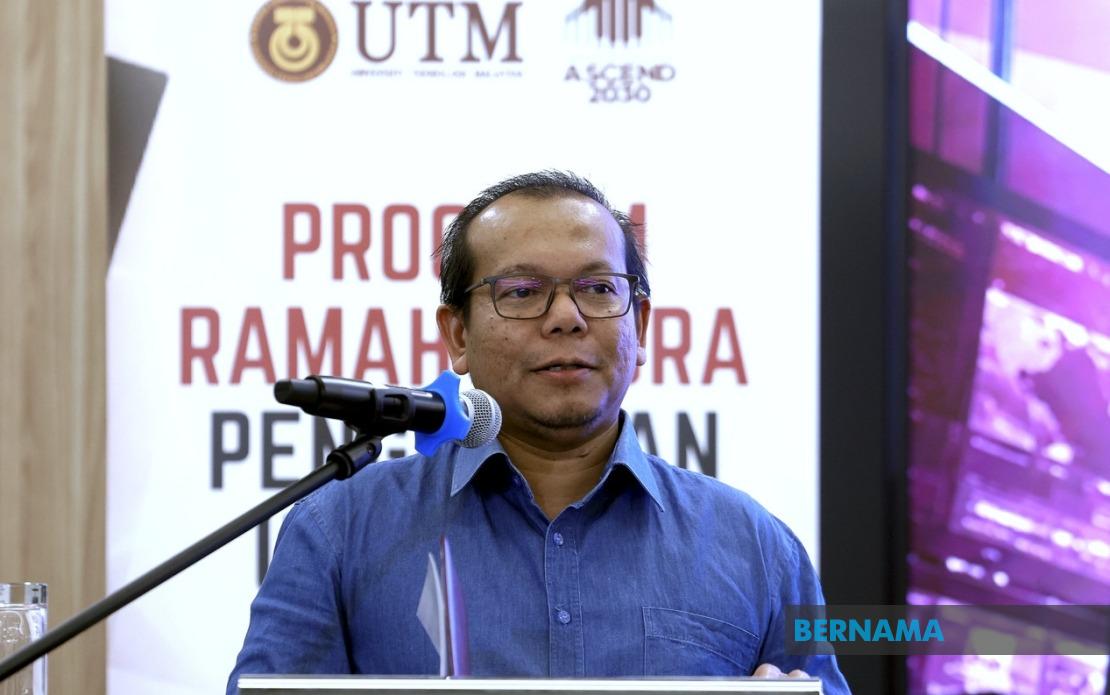
Universiti Teknologi Malaysia is moving to fortify its relationship with news media, recognising that sustained institutional credibility depends on proactive partnership with journalists and editorial teams. Vice-Chancellor Prof Dr Mohd Shafry Mohd Rahim articulated this strategic shift at a University Management's Media Networking Session, emphasising that higher education institutions cannot afford to remain passive when their reputations face attack from unverified claims and distorted narratives. The initiative signals a broader recognition within Malaysia's research sector that universities must take ownership of their public communication strategy rather than hope journalists will get their stories right.
The rationale underpinning UTM's approach touches on a fundamental vulnerability of large institutions. While building a university to world-class standards requires sustained investment across decades—in infrastructure, talent recruitment, research infrastructure, and organisational culture—a single wave of negative reporting, whether accurate or not, can inflict significant reputational damage within weeks. This asymmetry creates a strategic imperative for universities to cultivate relationships with news organisations and to ensure that journalists have ready access to verified information and credible academic sources. Prof Mohd Shafry framed this not as a defensive posture but as a public good, arguing that society benefits when research findings and expert analysis reach audiences through reliable channels rather than through rumour, social media speculation, or partisan commentary.
Utilising data that the media industry itself faces credibility challenges—particularly concerning artificial intelligence, misinformation, and the pressure of rapid news cycles—UTM is positioning itself to help strengthen journalism quality. The university intends to launch training programmes targeting media practitioners on artificial intelligence, a particularly timely intervention given how AI systems are reshaping newsrooms while simultaneously creating new risks of algorithmic bias and inaccuracy. By offering this expertise, UTM creates multiple benefits: journalists gain skills that improve their reporting, the university builds goodwill and access within newsrooms, and the broader information ecosystem becomes more resilient.
The session drew participation from Malaysian National News Agency (Bernama) Chief Executive Officer Datin Paduka Nur-ul Afida Kamaludin and Acting Deputy Editor-in-Chief (Economic News Service) Harlina Samson, indicating that Malaysia's premier state news agency views this collaboration as strategically important. Bernama's involvement signals official backing for closer university-media coordination, suggesting that government also recognises the stakes of maintaining public confidence in research institutions during a period of rapid technological change and social fragmentation. For news organisations, the partnership offers structured access to expert sources—a critical resource as newsrooms globally face budget constraints that limit their capacity to develop deep subject-matter expertise.
Beyond training and immediate source relationships, UTM is engineering institutional mechanisms to systematise the flow of research findings into media channels. Rather than depending on individual journalists discovering university research, the institution is developing formal pathways for research dissemination that present findings to media partners in readily usable form. This includes working with university communications teams to package research in ways that meet journalistic standards—with clear implications, quantified results, and appropriate caveats—while remaining accessible to general-interest publications. The approach acknowledges that academic papers written for peer review require translation into journalism, and that universities themselves have responsibility for enabling this translation.
From a Malaysian perspective, this collaboration addresses growing institutional vulnerabilities within the higher education sector. Malaysian universities compete internationally for research talent, student enrollment, and research funding, all areas where reputation significantly influences outcomes. Negative perceptions about research integrity, institutional governance, or academic freedom—whether stemming from misinformation or legitimate criticism—carry real costs. By establishing partnerships with credible news organisations, Malaysian universities create channels to respond to criticism with evidence, to highlight research achievements that might otherwise go unnoticed, and to maintain stakeholder confidence during periods of institutional challenge or transition.
The initiative also carries implications for the information environment beyond university gates. If Malaysia's research institutions succeed in building stronger relationships with news media, the overall quality of science and technology reporting should improve. Readers gain more reliable explanations of research findings; policymakers receive better information for decisions affecting the knowledge economy; and journalists themselves become more skilled in translating complex academic work. This virtuous cycle strengthens the broader health of democratic discourse, where consequential decisions increasingly turn on technical and scientific questions.
Prof Mohd Shafry's vision extends to global competitiveness. He suggested that strengthening Malaysia's higher education ecosystem through improved information dissemination serves UTM's standing on the international stage. Universities operate within global rankings, international reputation surveys, and comparative assessments where media coverage—particularly international media coverage—influences perceptions. A university that successfully communicates its research achievements and maintains a reputation for integrity gains advantages in recruiting world-class researchers and attracting high-calibre students. Conversely, reputational damage, even if undeserved, creates headwinds in these competitions.
The practical dimensions of this collaboration extend to professorial availability. UTM is positioning its faculty members as accessible sources for journalists covering their areas of expertise—a shift that requires both university support (releasing faculty time for media engagement) and journalist initiative (maintaining contact databases and following up leads). For professors, this represents a legitimate extension of academic responsibility; for newsrooms, it offers a way to strengthen reporting without expensive external consultancy. The reciprocal nature of this arrangement—universities gain visibility for their research, journalists gain credible sources, and public understanding improves—suggests it can sustain over time.
Looking forward, the success of this partnership framework may influence how other Malaysian universities approach their relationship with media. If UTM's efforts demonstrate tangible benefits—improved accuracy in reporting about the university, greater visibility for research, strengthened institutional reputation—other institutions will likely adopt similar strategies. This could gradually reshape Malaysia's research communications landscape, creating a more systematic, professional approach to disseminating knowledge than currently exists. The pathway toward this outcome, however, requires sustained commitment from both university leadership and news organisations, along with working-level relationships between journalists and academics that transcend formal agreements.

