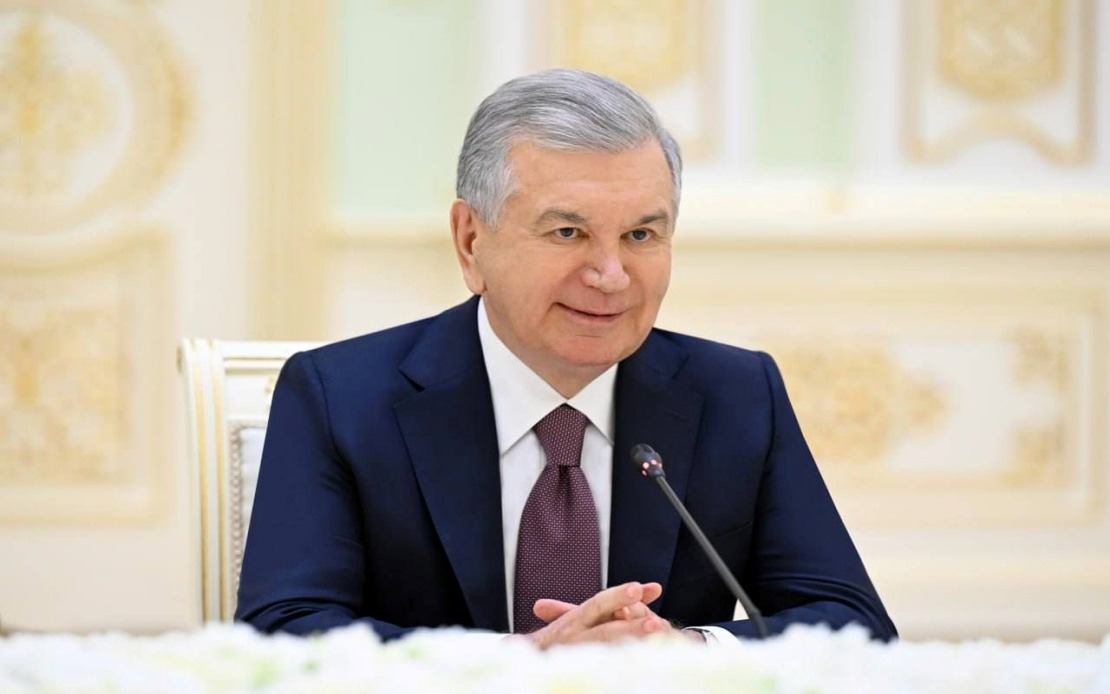
Uzbekistan's President Shavkat Mirziyoyev has called on the world to strengthen cooperation in promoting peace and mutual understanding by drawing on the accumulated wisdom and scientific achievements of Islamic civilisation. Speaking through a presidential representative at the First International Islamic Civilisation Forum in Tashkent, Mirziyoyev positioned education, scientific inquiry and cultural preservation as antidotes to the growing polarisation, extremism and religious intolerance witnessed globally in recent years.
The President articulated a vision of contemporary global challenges as fundamentally rooted in the erosion of shared values and intellectual foundations. In his framing, the world faces a critical juncture where deliberate efforts to fragment cultures, faiths and societies threaten stability. Against this backdrop, he argued that Islamic civilisation's historical commitment to knowledge, rational inquiry and spiritual enlightenment remains profoundly relevant. Rather than viewing Islam as peripheral or adversarial to modern development, Mirziyoyev presented it as a civilisational tradition containing enduring principles applicable to contemporary governance and social cohesion.
Central to Mirziyoyev's address was the elevation of Uzbekistan's "Enlightenment Against Ignorance" initiative, first introduced at the United Nations in 2017. This framework positions science, education, moral development and cultural stewardship as interconnected pillars for building peaceful societies and addressing global challenges. The initiative reflects Tashkent's deliberate strategy to position itself as a custodian and ambassador of Islamic intellectual heritage in contemporary geopolitics, particularly within Central Asia and the broader Muslim-majority world.
The President highlighted Central Asia's outsized contribution to the intellectual foundations of global civilisation, invoking the names of Muhammad al-Khwarizmi, Abu Rayhan Biruni, Abu Ali ibn Sina, Mirzo Ulugh Beg, Imam al-Bukhari, Imam al-Tirmidhi and Imam al-Maturidi as evidence of the region's historical preeminence in mathematics, astronomy, philosophy, medicine and religious scholarship. These figures remain canonical across Islamic educational traditions and their works continue to shape academic discourse. By anchoring Uzbekistan's contemporary policy orientation to this intellectual genealogy, Mirziyoyev positioned his nation as a legitimate heir and custodian of these traditions, resonating with audience members from across the Islamic world.
Mirziyoyev articulated an ambitious vision of a "Third Renaissance" grounded in scientific innovation, modern educational systems, spiritual development and respect for cultural patrimony. This framing suggests a deliberate pivot away from binary narratives that pit traditional Islamic values against technological modernity. Instead, the President proposed a synthetic model in which the preservation of historical knowledge and ethical principles strengthens rather than hinders contemporary progress. This message carries particular resonance for Southeast Asian countries like Malaysia and Indonesia, where nations similarly navigate the challenge of modernisation whilst maintaining Islamic identity and values.
The Islamic Civilisation Centre, which hosts the forum, emerged in Mirziyoyev's address as a pivotal institutional platform bridging past and future, East and West. He framed the Centre as a neutral intellectual commons where scholars, researchers and religious authorities from varied traditions can collaborate on preserving universal values and advancing scientific knowledge. This institutional emphasis reflects broader trends across the Muslim world where governments establish cultural and research centres to amplify soft power and shape global narratives about Islam's relationship to modernity and science.
The five-day forum, titled "The Path of Peace, Tolerance and Enlightenment," assembled approximately 300 participants including scholars, religious leaders, government officials and cultural figures representing over 50 countries. The geographic diversity and institutional breadth of attendance underscores the forum's ambition to position itself as a significant platform in global conversations about interfaith dialogue, cultural preservation and the role of Islamic traditions in addressing contemporary challenges. For Malaysia and other Southeast Asian nations, such forums offer opportunities to shape emerging frameworks around Islamic modernity and international cooperation.
The substantive programme reflects sophisticated engagement with contemporary methodologies and technologies. Beyond traditional scholarly conferences and exhibitions of rare manuscripts, organisers incorporated digital heritage projects and artificial intelligence applications for preserving Islamic texts. This integration of cutting-edge technology with historical preservation demonstrates awareness that authentic engagement with civilisational heritage demands contemporary tools and methodologies, not nostalgic retreat into the past.
Mirziyoyev's framing emphasised science and education as unifying forces capable of transcending the divisions that currently fragment the international community. He advocated for collaborative structures involving governments, universities, research institutions, libraries and museums. This institutional architecture recognises that preserving and promoting civilisational heritage requires sustained investment across multiple sectors and sustained coordination among diverse actors. The proposed cooperation agreements and international partnerships signal Uzbekistan's commitment to embedding these frameworks institutionally rather than treating the forum as a one-off convening.
The anticipated Tashkent Declaration and the Islamic Civilisation Centre's 2027-2030 development roadmap indicate that forum outcomes will shape institutional priorities and policy directions for years ahead. For Southeast Asian nations navigating their own relationships with Islamic identity, scientific advancement and international engagement, the frameworks emerging from Tashkent may influence regional conversations about cultural preservation, educational standards and interfaith cooperation. Malaysia's established position in Islamic intellectual discourse positions it to engage meaningfully with these evolving frameworks.
Underlying Mirziyoyev's rhetoric is a subtle geopolitical assertion of Uzbekistan's centrality to Islamic civilisation and its role as a legitimate interlocutor in global conversations about religion, science and governance. By hosting this forum and anchoring it to Central Asian intellectual traditions, Tashkent positions itself as more than a regional power; it presents itself as custodian of universally significant knowledge traditions. This soft power approach resonates particularly in Southeast Asia, where similar dynamics of cultural pride, Islamic identity and modernisation produce receptive audiences for messages linking historical greatness to contemporary relevance.
The forum's emphasis on tolerance, enlightenment and scientific cooperation, notably distinct from narrower theological or doctrinal emphases, reflects awareness that international legitimacy requires platforms transcending sectarian divisions. By positioning science and education centrally rather than specific interpretations of Islamic law or practice, organisers created space for participation from diverse Muslim and non-Muslim actors. This inclusive framing enhances the forum's capacity to influence international discourse whilst maintaining coherence around Islamic civilisational identity.

