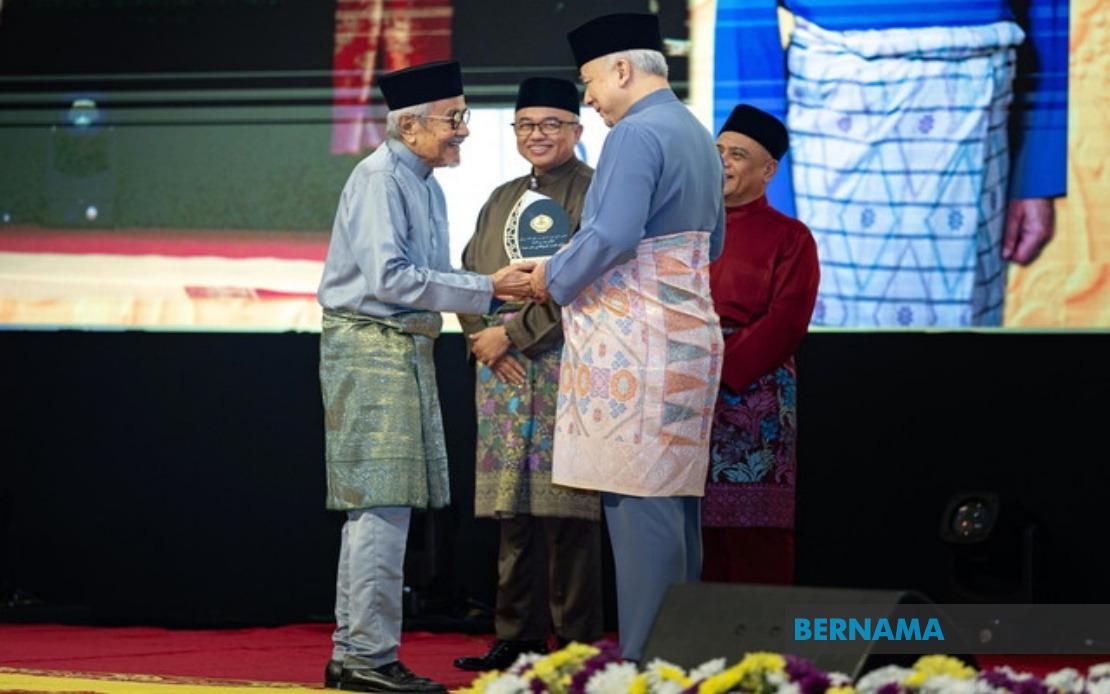
In recognition of his extensive career spanning multiple decades in Malaysian entertainment and media, veteran director and actor Datuk Rahim Razali has been presented with the Tokoh Zaid Bin Thabit Media and Communications Practitioner Icon Award. The honour was bestowed during Perak's state-level celebration of Maulidur Rasul in Ipoh, with Sultan Nazrin Shah presiding over the presentation ceremony. At 87 years old, Razali continues to be celebrated as one of the nation's most influential figures in film, broadcasting and sports commentary.
Abdul Rahim Mohd Razali, as he is formally known, hails from Batu Gajah in Perak, a region that has produced numerous talents in the creative industries. His journey into the media landscape began with humble beginnings as a broadcasting assistant at Radiotelевision Malaysia (RTM), the national broadcaster that remains a cornerstone of Malaysian media infrastructure. Rather than remaining confined to institutional work, Razali demonstrated entrepreneurial initiative by establishing his own production company, Angkatan Seniman Abad XX Sdn Bhd, in 1981—a decision that proved pivotal in transforming his career trajectory and enabling him to pursue more ambitious creative projects.
The breadth of Razali's professional accomplishments underscores his status as a genuine institution-builder within Malaysian cinema. Throughout his career, he has produced an impressive portfolio consisting of 50 dramas for RTM and 15 feature films, demonstrating consistent output across both television and cinema mediums. His work has garnered international recognition, with eight of his feature films selected for screening at the prestigious Tokyo Film Festival, one of Asia's most significant cinema events. This level of international exposure has positioned Malaysian filmmaking on the global stage and showcased the creative capacity of local talent to international audiences.
Among Razali's notable film credits are Abang and Abang 92, titles that have become emblematic of a particular era in Malaysian cinema. These films reflect the thematic concerns and aesthetic sensibilities of their respective periods, contributing to the historical record of how Malaysian audiences and creators have engaged with storytelling through film. Beyond his directorial work, Razali has maintained a presence in front of the camera and established himself as a respected voice in sports commentary, demonstrating versatility across multiple dimensions of media work that few practitioners achieve.
The recognition Razali has received today carries particular significance given the context of the Maulidur Rasul celebration, which emphasises values of community contribution and ethical practice. The Tokoh Zaid Bin Thabit award specifically honours media and communications practitioners who have exemplified professional excellence and meaningful contribution to their field. In presenting this award, the Perak state government acknowledges that media professionals play crucial roles in shaping cultural discourse and preserving national narrative alongside their entertainment functions.
As part of the award presentation, Razali received RM5,000 in monetary recognition alongside a commemorative plaque, tangible acknowledgements of his standing within the professional community. This award joins a broader suite of honours distributed during the Maulidur Rasul ceremony, reflecting the state's commitment to recognising excellence and exemplary conduct across diverse segments of society. The multi-category awards demonstrate how Malaysian institutions seek to celebrate contributions spanning religious leadership, family values, community service, and professional practice.
Razali's career arc represents a particular model of Malaysian professional development that emerged in the post-independence era, when many individuals leveraged opportunities in state institutions to build independent creative enterprises. His transition from RTM employment to founding his own production company occurred during a period when Malaysian cinema was establishing itself as a distinct industry, and his contributions helped facilitate the infrastructure and precedents upon which later filmmakers would build. For contemporary Malaysian creatives, Razali's trajectory offers instructive lessons about the possibilities available through combining institutional experience with entrepreneurial vision.
The recognition of Razali's work assumes added importance within the broader Southeast Asian context, where Malaysian cinema has competed for regional and international attention alongside industries in Thailand, Indonesia, and the Philippines. His films' acceptance at international festivals has contributed to establishing Malaysia's creative credentials in the region and globally. As Malaysian audiences increasingly consume content from multiple sources and as the industry faces new competitive pressures from streaming platforms and global entertainment corporations, the achievements of foundational figures like Razali take on renewed significance as markers of local industry capacity and artistic merit.
Beyond the specific details of Razali's award, the ceremony illustrates how Malaysian state governments continue to employ public recognition and honour systems to reinforce professional values and community contributions. The Maulidur Rasul awards recognise figures across religious leadership, family sustenance, community work, and institutional practice, suggesting a comprehensive vision of societal contribution. For media professionals specifically, such recognition serves to legitimise their work as socially valuable beyond mere entertainment provision, positioning them as ethical practitioners engaged in culturally significant labour.
As Razali reaches his ninth decade, his continued prominence in public recognition reflects both the enduring legacy of his work and Malaysia's capacity to honour elder statespeople in creative fields. Unlike certain societies where retirement marks a transition to irrelevance, Malaysian cultural practice maintains space for recognising the accumulated wisdom and historical significance of senior practitioners. For a filmmaker whose career has spanned multiple technological eras—from film stock to digital production—and whose output predates the internet age, such recognition acknowledges the transition from one media epoch to another while honouring those who built institutions and practices that younger generations now navigate.

