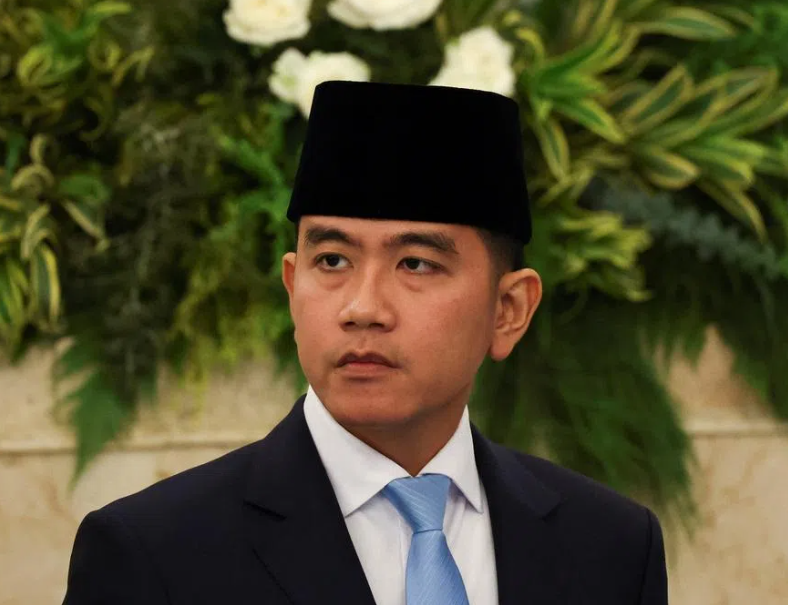
Vice-President Gibran Rakabuming Raka has positioned himself at the forefront of Indonesia's response to student-led protests through direct engagement with young activists, inviting representatives from major universities to the palace and subsequently taking them on working visits to eastern regions. The strategy has intensified scrutiny of his actual influence within the Prabowo Subianto administration, raising questions about whether such outreach represents genuine policy dialogue or calculated political positioning ahead of the nation's next presidential elections in 2029.
Just three days after a group of university students demonstrated against the government's free meals programme and the Red and White Cooperative initiative—both flagship projects of the current administration—Gibran convened a closed-door meeting with student representatives to hear their concerns. The gathering appeared designed to demonstrate receptiveness to public criticism, with the Vice-President's Office subsequently issuing a statement in which Bung Karno University student leader Muhammad Abdi Maludin praised Gibran's openness and willingness to escalate their research findings to President Prabowo Subianto himself.
Yet the meeting generated immediate skepticism among observers and social media commentators who questioned the orchestration of the encounter. Critics noted that the students invited to the palace did not represent Indonesia's most prominent universities, with commentators suggesting that inclusion of representatives from larger institutions would have lent greater credibility to the engagement. Some dismissed the entire episode as performative, describing it as carefully staged rather than organic dialogue. These doubts intensified when reporting emerged that participating students had received monetary payments following the meeting, with sums ranging from 2 million to 20 million rupiah, raising further questions about the authenticity of the exchange.
Researchers at the Jakarta-based Center for Strategic and International Studies characterise Gibran's recent activism as part of a broader political strategy rather than a genuine effort to influence government policy. Nicky Fahrizal, a CSIS analyst, describes the persona being cultivated as that of a communicative and approachable leader willing to engage with ordinary citizens—a carefully constructed image with clear electoral implications. The analyst argues that Gibran is explicitly positioning himself for potential candidacy in 2029, despite the Vice-President's public silence on such intentions. By appearing responsive to public concerns during a period of heightened student activism, Gibran seeks to establish himself as a figure capable of bridging societal grievances and government priorities.
Gibran's relatively marginal role within the current administration has created an apparent need for such visibility-building exercises. Since taking office alongside President Prabowo in October 2024, the eldest son of former president Joko Widodo has struggled to carve out a meaningful position within the executive structure. Although he has been nominally linked to high-profile assignments including Papua's development and the planning of the new capital Nusantara, he has remained largely peripheral to major policy decisions. Unlike some predecessors, he has not received a significant policy portfolio, with most flagship government initiatives overseen directly by ministerial structures and agencies that report to the president rather than to the vice-president.
The free meals programme and Red and White Cooperative initiatives, which have drawn the most intense student criticism, exemplify Gibran's limited actual authority. The National Nutrition Agency overseeing the free meals scheme reports directly to the president, whilst the Cooperative programme operates as a presidential priority project coordinated across multiple ministries and agencies. Edbert Gani Suryahudaya, a researcher at CSIS's Department of Politics and Social Change, observes that Gibran's recent visibility around these initiatives does not indicate substantive involvement in their formulation or implementation. Rather, the Vice-President appears to be attempting to demonstrate relevance by aligning himself with public concerns that have gained considerable attention through weeks of student demonstrations.
The timing of Gibran's engagement with protesters acquired additional significance following corruption allegations that emerged within the free meals programme itself. In June, the chief of the National Nutrition Agency, Dadan Hindayana, was replaced and subsequently arrested alongside two former deputies as part of an investigation into alleged procurement irregularities. During a June 18 visit to a primary school in East Nusa Tenggara as part of a four-day working trip, Gibran acknowledged deficiencies in programme governance and called for improvements, whilst instructing officials to accelerate implementation in areas with completed supporting infrastructure. Such actions appeared designed to demonstrate responsiveness to the scandal without acknowledging his own limited involvement in the programme's administration.
Academics attribute Gibran's strategy to a necessity to remain politically visible during a period when public criticism has intensified across government. Irman Lanti of Padjadjaran University argues that the Vice-President is attempting to prove his value by capitalising on student momentum rather than substantively shaping policy. Lanti notes that all available evidence suggests Gibran has not been meaningfully involved in either the free meals or Cooperative initiatives, which appear to fall more substantially under military and police influence. The analyst characterises the student engagement as an effort by Gibran to demonstrate relevance through association with contemporary political concerns rather than through exercise of executive authority.
The broader implications of Gibran's approach extend beyond immediate policy considerations. His efforts to position himself as a bridge between public grievances and government action reflect deeper structural questions about the Vice-President's role within Indonesia's presidential system. Traditional vice-presidential positions have often served as either heir-apparent slots or positions of limited consequence, and Gibran appears caught between these poles—insufficiently empowered to effect meaningful policy change yet compelled to justify his prominence within the administration. His resort to relatively low-cost visibility strategies, as characterised by Edbert Gani Suryahudaya, suggests recognition that he must compete for political relevance in a system where actual executive power flows through presidential-aligned ministerial structures rather than the Vice-President's office.
The student engagement initiative also reflects broader anxieties within the Prabowo administration regarding public dissatisfaction with its flagship programmes. The free meals scheme, intended to address childhood malnutrition and support domestic agricultural production, has faced implementation challenges and corruption allegations that have undermined its credibility. The Red and White Cooperative initiative, designed to establish thousands of village-run businesses as engines of grassroots economic development, has similarly attracted criticism regarding its design and execution. Rather than fundamentally addressing these underlying policy concerns, Gibran's strategy of direct student engagement appears designed to mollify criticism through demonstrations of accessibility and receptiveness.
Looking toward the 2029 presidential election, Gibran's current positioning as a vice-president seeking to establish independent political credibility may prove consequential. His efforts to build relationships with student activists and young Indonesians, combined with his attempt to appear responsive to public concerns, establish groundwork for potential future electoral campaigns. However, analysts suggest that his limited actual influence over major government programmes constrains the substantive achievements he can claim to the electorate. The Vice-President must therefore rely on persona-building and strategic visibility rather than policy accomplishments to maintain political relevance during the remainder of his current term.