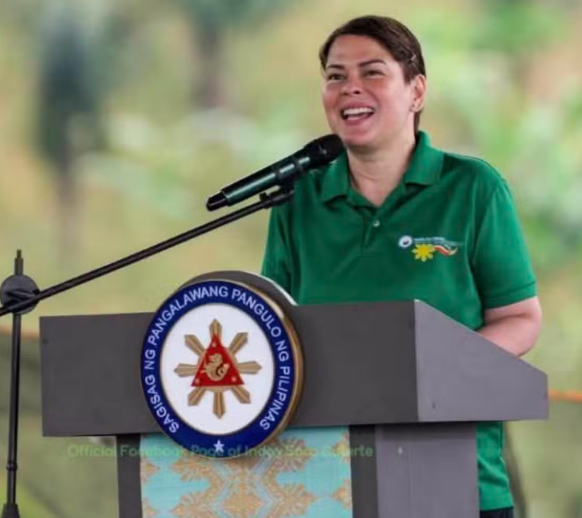
Vice President Sara Duterte has firmly rejected widespread speculation about her potential resignation, declaring in a public statement that stepping aside would constitute a fundamental betrayal of the electorate that placed her in office. Speaking to media sources, the vice president emphasised her commitment to serving out her term, dismissing what has become persistent rumour and conjecture surrounding her political future as the Senate moves forward with impeachment proceedings against her.
The timing of Duterte's emphatic denial comes as the impeachment trial advances through its procedural phases, with the Senate impeachment court recently concluding examination of evidence related to one of the articles of impeachment brought against her. The charges she faces encompass allegations of misuse of confidential funds, unexplained accumulation of wealth, and accusations of making grave threats—serious constitutional matters that have fuelled ongoing speculation about whether she might choose to exit rather than weather the trial.
In her statement, Duterte explicitly referenced the mandate she received from voters, citing the 32.2 million Filipinos who cast their ballots in her favour during the presidential election. She framed any resignation as a repudiation of that democratic endorsement, suggesting that her accountability lies primarily with those who invested their trust in her candidacy. This rhetorical positioning transforms the resignation question from a purely political calculation into a matter of democratic principle and honour, placing the onus on supporters to view her continued service as fulfilling a fundamental obligation.
Perhaps most strikingly, Duterte directly challenged President Ferdinand Marcos Jr to take action if he wished to remove her from office, suggesting she would not voluntarily vacate her position regardless of political pressure or institutional obstacles. Her willingness to confront the sitting president on this matter reflects the considerable independence she maintains within the administration, or alternatively, a calculation that her political base remains sufficiently strong to withstand such action. The challenge implicitly acknowledges that while mechanisms exist for her removal, she believes deploying them would prove politically costly.
Duterte's legal team has corroborated her public stance by denying that resignation has ever been discussed between counsel and client, reinforcing the appearance of unwavering resolve. This coordination between her defence strategy and public messaging suggests a determined approach to the trial, one that eschews any appearance of wavering commitment or contingency planning. Rather than treating resignation as an option under consideration, her representatives present it as a course of action categorically rejected from the outset.
The impeachment proceedings themselves carry significant constitutional weight, as they represent one of the most serious challenges any Philippine vice president has faced in recent decades. The articles of impeachment have been meticulously constructed and presented by House prosecutors, with the Senate taking its deliberative role seriously through structured examination of evidence. The process remains ongoing, meaning Duterte faces an extended period of legal jeopardy and public scrutiny before any potential resolution.
For Malaysian observers, the Philippine constitutional drama offers instructive parallels regarding separation of powers and the mechanisms through which democracies hold high officials accountable. The impeachment process, rooted in the Philippine Constitution and reflecting American legal traditions, demonstrates both the robustness and the vulnerabilities of systems designed to check executive and vice-executive power. Duterte's defiant posture against resignation reflects broader patterns seen across Southeast Asia, where political figures often resist institutional pressure by appealing to electoral mandates and public support bases.
The vice president's firm stance also underscores the increasingly fractious relationship between her office and the Marcos administration, suggesting deeper conflicts beneath the surface of the administration's governance. While Duterte initially aligned with Marcos during the campaign and transition period, the relationship has visibly deteriorated, with the impeachment trial now crystallising longstanding tensions. This deterioration mirrors broader patterns in Philippine politics where coalitions of convenience frequently fracture into open conflict.
The resignation speculation itself warrants examination as a political phenomenon, often representing wishful thinking by opponents or premature analysis by observers seeking to predict outcomes before legal processes conclude. In Duterte's case, persistent rumours may reflect genuine uncertainty about her political durability or alternatively, represent efforts by political opponents to signal weakness or divisions within her camp. Her categorical refusal to engage seriously with resignation scenarios represents a deliberate strategy of projecting strength and resolve, regardless of the trial's actual trajectory.
Looking forward, the impeachment trial will likely consume Philippine political attention for months, with the Senate gradually building its institutional record through examination of allegations. Duterte's declaration that she will remain in office sets expectations that she believes she can survive the process, either through Senate votes favouring acquittal or through sustaining public support sufficient to discourage further institutional proceedings. Whether her confidence reflects genuine political strength or represents a high-stakes gamble remains a central question animating Philippine politics.

