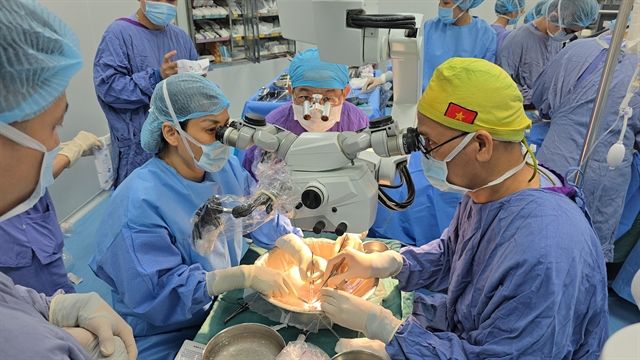
In a significant development for Southeast Asian medical science, Viet Duc Friendship Hospital in Hanoi has successfully performed Vietnam's inaugural penis transplant using tissue from a brain-dead donor. The achievement underscores the region's growing capacity in complex surgical procedures and composite tissue transplantation, an area that has only recently begun to mature globally.
The recipient was a 43-year-old man who had previously undergone partial penectomy treatment at the hospital's Andrology Centre. Despite spending four years in treatment and achieving stable health with preserved urinary function, the severity of his condition—characterised by the extremely limited remaining penile length—created profound obstacles to normal sexual activity. This functional impairment had cascading effects on his overall quality of life and psychological stability, prompting consideration of more radical interventions.
The decision to proceed with transplantation involved extensive preparatory work that extended far beyond conventional surgical planning. Specialists from multiple disciplines conducted rigorous multidisciplinary consultations, with clinical assessments running in parallel to immunological evaluations and psychological screening. Ethical considerations also featured prominently in determining the patient's suitability, reflecting the sensitive nature of the procedure and its life-altering implications. Only after satisfying all these demanding criteria did the medical team determine the patient was appropriate for the operation.
Associate Professor Dr Nguyen Quang, who directs the Andrology Centre, outlined the technical complexity involved in reconstructing the organ's architecture. The surgical team had to painstakingly restore multiple anatomical components—the urethra, corpus spongiosum, and corpora cavernosa—while simultaneously performing microsurgical anastomosis of extremely small arterial and venous vessels alongside delicate nerve connections. The integration of reconstructive and microsurgical methodologies throughout the operation demanded exceptional technical skill to maintain graft viability and enable subsequent functional restoration.
In the immediate post-operative period, developments have been encouraging. The surgical site is demonstrating appropriate healing characteristics, and no early-stage complications have emerged during the initial monitoring window. Urinary function remains under close observation, while the patient has tolerated the anti-rejection medication regimen and ongoing post-transplant care without apparent difficulties. These positive early indicators suggest the transplant has taken hold and is not experiencing immediate rejection episodes.
However, the medical team has appropriately tempered expectations by noting that genuine assessment of the transplant's ultimate success cannot occur until considerably more time has elapsed. Penile transplantation qualifies as composite tissue transplantation, a category that presents distinct challenges compared to solid organ transplants like kidneys or hearts. Recovery of sensation, restoration of erectile function, and healing of the urethra all require extended periods for evaluation. The risk of rejection—whether acute rejection occurring weeks after surgery or chronic rejection developing over months and years—demands sustained monitoring that extends well beyond the initial recovery phase.
Viet Duc Friendship Hospital Director Dr Duong Duc Hung characterised the accomplishment as a watershed moment in Vietnamese surgical history. The surgical team undertook meticulous professional preparations, establishing detailed protocols while systematically studying international experiences and best practices. Coordination across numerous specialties—organ transplantation, andrology, microsurgery, anaesthesiology, resuscitation, immunology, and pathology—proved essential to orchestrating such a complex procedure successfully.
This capability breakthrough carries implications extending well beyond the individual patient's treatment. It validates the maturity of the hospital's organ transplantation infrastructure and demonstrates that Vietnamese surgical teams have now mastered the intricate techniques required for complex composite tissue transplantation. The success opens therapeutic pathways for additional patient populations who have sustained penile loss through cancer, traumatic injury, or accidental causes—conditions that previously offered limited treatment options within the region.
Globally, penile transplantation remains an exceptionally rare procedure. International medical literature has documented only five cases to date, with the most recent published report emerging in 2018. This scarcity underscores how Vietnam's achievement positions the country among a very limited number of medical systems worldwide capable of performing such sophisticated interventions. For Southeast Asia more broadly, where several nations aspire to expand their advanced surgical capabilities, Vietnam's success provides a template and demonstrates the feasibility of developing such expertise within the region rather than relegating patients to overseas treatment.
The transplant's success also reflects broader improvements in Vietnam's donation infrastructure and organ procurement systems. The availability of a suitable brain-dead donor with compatible tissue characteristics was itself a prerequisite for the operation. This suggests that the ecosystem supporting organ donation and transplantation has matured sufficiently to enable complex procedures that require precisely matched donors. As more Vietnamese patients become aware of these emerging capabilities, demand for transplantation services will likely increase, placing further emphasis on strengthening donation protocols and public awareness campaigns.
The patient's ongoing recovery will provide crucial data for the global medical community. The case will eventually be documented in international medical literature, contributing to the still-limited body of knowledge surrounding penile transplantation outcomes, immunological management, and functional recovery trajectories. Findings from Vietnam's experience will inform best practices at other institutions considering similar procedures and may accelerate the pace at which composite tissue transplantation becomes more widely available internationally.

