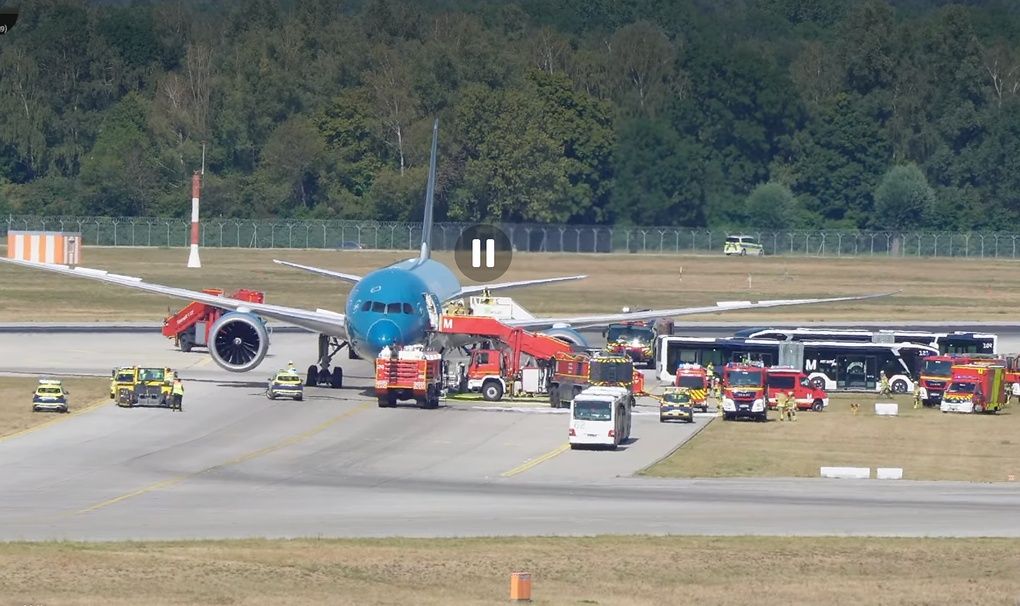
A Vietnam Airlines flight bound for Hanoi experienced a serious technical emergency on August 15, forcing the Boeing 787-9 aircraft to abort its journey and return to Munich Airport in Germany just hours into the flight. The incident highlighted both the effectiveness of modern aircraft safety systems and the operational challenges faced by Southeast Asian carriers on long-haul European routes.
The aircraft, which had lifted off from Munich Airport carrying passengers and crew destined for Vietnam's capital, encountered difficulties during the initial climb phase of what should have been a ten-hour transpacific service. Vietnam Airlines' flight crew immediately detected the problem and executed emergency procedures, choosing to circle back to the German airport rather than continue towards their destination. The decision to return rather than divert to an alternative European hub reflected the crew's assessment that Munich offered the safest and most expedient resolution for the situation.
According to aviation incident tracking services, the aircraft's takeoff itself was notably abnormal. Video footage captured from near the runway showed the Boeing 787 accelerating along the tarmac before rotating—the moment when the nose lifts skyward—extremely close to the runway's end. Visible dust clouds erupted as the landing gear cleared the surface, indicating the aircraft had maintained ground contact unusually late into the takeoff sequence. The Aviation Herald, a respected source for commercial aviation incidents, reported that the aircraft experienced what is technically termed a "late rotation, tailstrike and runway overrun," with the tail section of the fuselage making contact with the runway surface. This contact subsequently damaged the aircraft's tyres.
The pilots' response to the technical anomaly demonstrated professional crisis management. Rather than attempting an immediate landing that might have aggravated damage or endangered the aircraft, the crew climbed to approximately 9,000 feet and entered a holding pattern—a circling procedure that allowed the aircraft to remain airborne in a controlled manner. This tactical decision served multiple purposes: it permitted fuel to be burned off, reducing the aircraft's weight for a safer landing, and gave ground personnel at Munich Airport time to assess the situation and prepare emergency response capabilities. Emergency services were placed on standby throughout the two-hour period between the incident and the return approach.
When the Boeing 787-9 finally touched down at Munich approximately two hours after takeoff, the landing itself generated additional complications. Contact between the damaged tyres and the runway surface produced visible smoke, suggesting the structural integrity of the wheels had been compromised during the earlier incident. Despite these dramatic circumstances, the landing was executed without further incident, and all passengers and crew members disembarked safely into the terminal building. The airline coordinated with airport authorities to ensure orderly evacuation and passenger care.
Vietnam Airlines moved quickly to manage the operational fallout and passenger relations. The carrier immediately began arranging alternative transportation for the affected travellers and coordinated with Munich Airport authorities and relevant civil aviation bodies to determine the root cause of the technical failure. The airline indicated that comprehensive inspections would precede any resumption of service for the aircraft, and that detailed operational plans would be finalised before releasing further public statements. This methodical approach aligns with international aviation safety protocols and demonstrates the airline's commitment to investigating the incident thoroughly.
The incident carries particular significance for Vietnam Airlines' European operations, which represent a strategic expansion of the carrier's long-haul capabilities. Vietnam Airlines operates year-round direct services connecting both Hanoi and Ho Chi Minh City to Munich and Frankfurt, utilising a fleet of modern wide-body aircraft including the Boeing 787 Dreamliner and Airbus A350 XWB. These routes position Vietnam as an increasingly competitive aviation hub for European travellers seeking connections to Southeast Asia, as well as offering Vietnamese and regional passengers direct access to Central European markets. Any disruption to these services carries broader implications for the airline's competitive positioning on these lucrative international routes.
For Malaysian aviation authorities and carriers, the incident underscores the operational complexities inherent in long-haul European services. Malaysia Airlines, Malindo Airways, and AirAsia X similarly operate extended-range services to Europe, and incidents such as this remind the region's aviation community of the importance of rigorous maintenance protocols, comprehensive crew training, and adherence to international safety standards. The Boeing 787 Dreamliner, despite this incident, remains one of the world's most advanced commercial aircraft, and isolated technical failures do not reflect broader fleet reliability issues.
The investigation into the Munich incident will likely focus on the aircraft's automated systems, potential hydraulic or structural anomalies that may have contributed to the late rotation, and any maintenance or pre-flight inspection procedures that might have identified vulnerabilities before departure. The tyres and landing gear systems will receive particular scrutiny, as will the tail section that experienced the tailstrike. European aviation authorities, working alongside Vietnam's Civil Aviation Authority, will examine whether this was an isolated mechanical failure or whether systemic issues require broader fleet oversight.
For passengers aboard the affected flight, the incident represented a deeply unsettling experience, though the professional response by Vietnam Airlines crews and ground staff ensured that what could have been a catastrophic situation was contained and resolved without injury. The airline's commitment to arranging alternative travel and supporting affected passengers reflects industry standards for passenger care in emergency situations. As investigations continue over the coming weeks, the incident will add to the global database of commercial aviation safety data, helping engineers and regulators refine procedures and technologies that protect the millions of passengers flying internationally each year.

