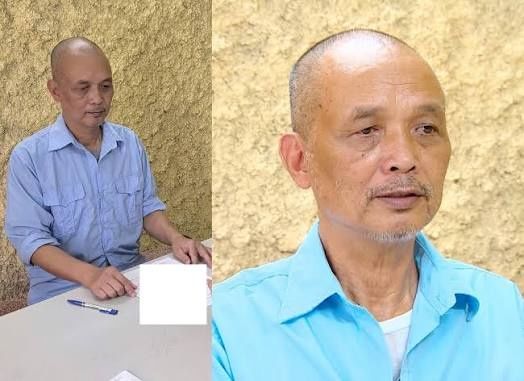
Vietnam's government has intensified its crackdown on dissent by arresting Nguyen Thanh Nam, a prominent technology entrepreneur and former chief executive of FPT Corporation, on charges of spreading anti-state propaganda through a biography of Ho Chi Minh, the Communist Party's founding figure. The arrest, announced by Hanoi police on Tuesday, 7 July, has drawn fresh scrutiny to the country's restrictions on freedom of expression and its intolerance towards criticism of the ruling regime.
Nguyen Thanh Nam, 64, is a widely recognised figure in Vietnam's entrepreneurial ecosystem who co-founded and led FPT Corporation, one of the nation's largest telecommunications and information technology conglomerates. His detention follows the May publication of "Stories with Thanh -- A New Account of Light", a biographical work examining Ho Chi Minh's formative years abroad and his pursuit of strategies to catalyse the country's independence movement. The book sparked immediate controversy within official circles, prompting its publisher to withdraw it from circulation under state pressure within weeks of release.
The charges levelled against Nam are sweeping in scope. Police accused him of "distorting the history of revolutions, the policies and guidelines of the party and state, insulting President Ho Chi Minh... and many other party and state leaders." Such formulations are standard in Vietnam's legal arsenal against perceived challenges to party authority and the sanctity of the nation's revolutionary narrative. The arrest reflects a broader pattern whereby the state jealously guards interpretations of history and biographical accounts of founding leaders, treating alternative narratives as inherently subversive.
Beyond Nam, authorities have also detained Tran Viet Anh, a 33-year-old digital influencer with substantial reach among Vietnam's younger, educated demographics. Anh co-founded Spiderum, an online community platform designed for intellectuals that boasts approximately ten million members. His offence involved discussing and sharing content about Nam's book across his social media channels, demonstrating how the government extends liability to those who amplify or propagate content deemed problematic. Police charged Anh with "producing, possessing, distributing, or disseminating information, documents, or items aimed at opposing the Socialist Republic of Vietnam", language that encompasses mere discussion of contested historical matters.
The simultaneity of these arrests underscores a deliberate strategy: authorities are moving against both the creator of the controversial material and the influential individual who gave it wider circulation. By targeting Anh, the state sends a warning to content creators and digital influencers that amplifying or endorsing certain narratives carries legal risk. This approach is particularly significant in a country where social media and digital platforms have become primary channels for information dissemination among younger audiences who may harbour scepticism towards official historical accounts.
Nam's public response, delivered in a nationally televised statement, provides insight into the immense pressure exerted by Vietnamese authorities on detainees and the expectation of submission. He declared his acknowledgement of "factual errors and false assertions that run counter to the guidelines and policies of the party and state, tarnishing the image of President Ho Chi Minh, causing confusion among the public." Such televised confessions are characteristic of Vietnam's judicial system and serve a dual purpose: they reinforce state narratives while demonstrating to the broader public the consequences of crossing ideological boundaries.
The detention of these two individuals must be understood within Vietnam's documented pattern of suppressing dissent. Human Rights Watch reports that over 160 critics and dissenters currently languish in Vietnamese prisons, a figure that underscores systematic rather than sporadic repression. The Communist Party leadership in Hanoi has consistently demonstrated its unwillingness to tolerate public discourse that deviates from officially sanctioned interpretations of history, party ideology, or the behaviour of state figures. This intolerance extends across sectors—from academia to publishing to digital media—creating a chilling effect on intellectual inquiry and public debate.
For Malaysia and the broader Southeast Asian region, Vietnam's actions serve as a cautionary illustration of how state control over information and historical narrative can be weaponised against citizens exercising expression rights. Malaysia itself has grappled with comparable tensions between free expression and state sensitivity regarding historical narratives and political figures, making Vietnam's case instructive rather than foreign. The arrest of Nam and Anh demonstrates how even commercially successful, ostensibly apolitical figures remain vulnerable if they venture into territory the state deems ideologically hazardous.
The affair also highlights generational fault lines within Vietnamese society. The targeting of Anh, whose platform Spiderum reaches millions of young, educated Vietnamese, suggests official anxiety about younger cohorts engaging with alternative narratives or questioning established accounts. As digital literacy and internet access expand across Southeast Asia, authoritarian regimes face mounting challenges in controlling historical discourse and shaping public consciousness in the manner their predecessors once could. Vietnam's response—swift arrest and prosecution—represents one approach to this challenge, though its long-term effectiveness remains questionable.
Moreover, the commercial context cannot be overlooked. Nam's prominence as a technology entrepreneur meant his book carried particular weight and credibility among Vietnam's educated middle classes and business communities. By moving against both Nam and the influencer Anh, the state has signalled that no amount of commercial success or social standing insulates figures from prosecution if they stray into forbidden ideological territory. This calculus inevitably discourages other potential authors, publishers, and thought leaders from engaging with sensitive historical subjects, further constraining the intellectual space available within Vietnamese society.

