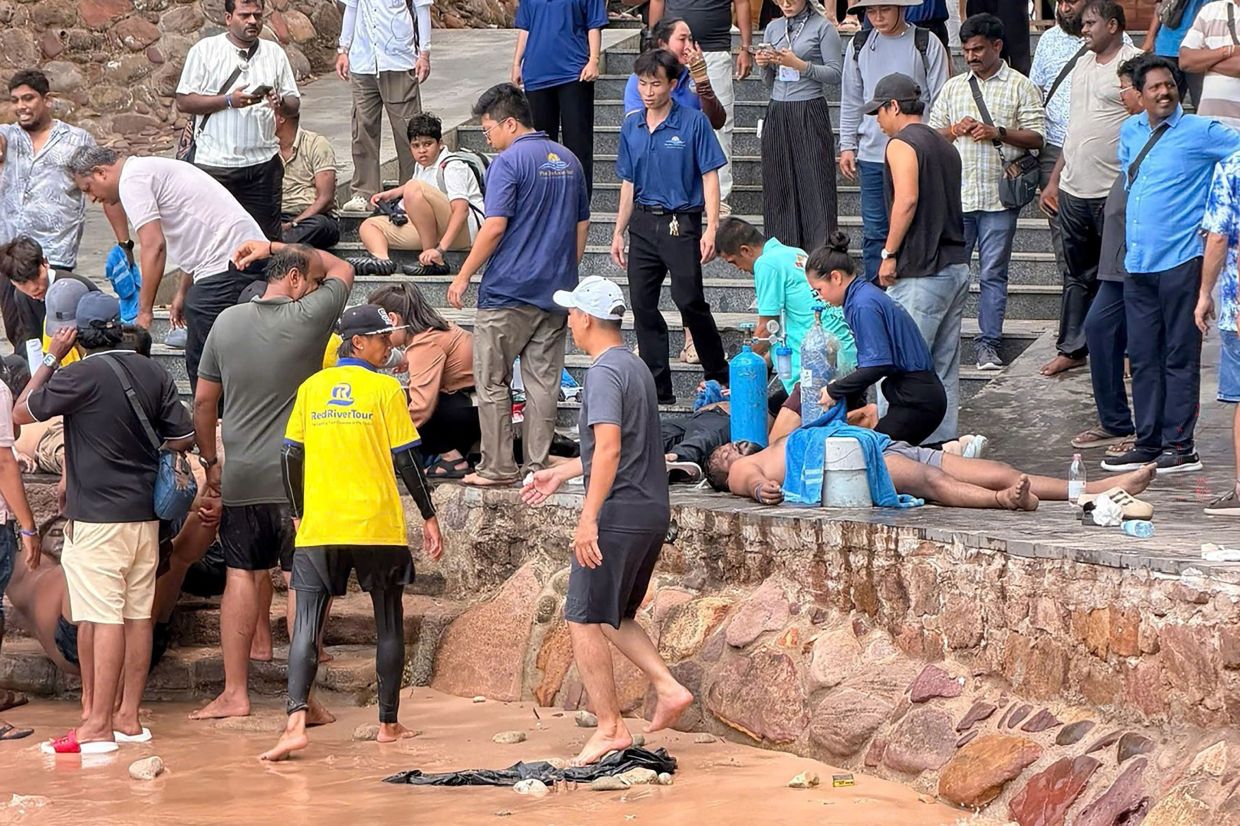
Vietnam's government moved swiftly to respond to one of the country's deadliest maritime accidents involving foreign nationals in recent years, with the Prime Minister issuing an immediate directive on July 11 following the tragic capsizing of a speedboat off Phu Quoc Island. The incident, which claimed the lives of 15 Indian tourists, has prompted a comprehensive government response involving multiple ministries and agencies tasked with investigating the disaster, treating survivors and addressing the broader safety implications across Vietnam's waterways.
The speedboat carrying 32 Indian tourists, along with four crew members and guides, capsized near Hon May Rut Ngoai within the Phu Quoc Special Zone. Among those killed were 13 men and two women, while rescue teams managed to save 21 people from the waters. The Indian Embassy subsequently confirmed the identities of all 32 citizens aboard and immediately established support mechanisms, opening contact points in Ho Chi Minh City and Hanoi to assist affected nationals and their families grappling with the sudden loss.
In his official directive, the Prime Minister extended formal condolences to the bereaved families and emphasised the gravity of the situation by instructing all relevant ministries and provincial authorities to mobilise their full complement of medical resources and pharmaceutical supplies. The overarching goal was not merely to treat the injured survivors but to prevent further loss of life and minimise property damage. This comprehensive approach signals that Vietnamese authorities view the incident not as an isolated event but as a symptom of potential systemic vulnerabilities in the country's maritime safety infrastructure.
An Giang Province, which administers Phu Quoc Island, received primary responsibility for coordinating the investigation efforts. Local authorities were tasked with leading multiple agencies and emergency forces in determining the precise cause of the accident and identifying any operational or regulatory shortcomings that may have contributed to the tragedy. This assignment reflects the government's expectation that provincial-level coordination would be essential in unravelling what went wrong and preventing similar incidents.
The Ministry of Public Security received explicit instructions to launch an urgent investigation to establish the accident's cause and to pursue strict legal action against any organisations or individuals found to have violated relevant regulations. This directive opens the possibility that criminal charges could be filed depending on what the investigation uncovers, whether related to inadequate boat maintenance, operator negligence, insufficient safety protocols or other violations of maritime law. For the Malaysian context, where regional tourism relies heavily on similar boat operations across Southeast Asia, the investigation's findings may carry implications for safety standards across the region.
Parallel to the criminal inquiry, the Ministry of Construction was assigned the responsibility of conducting a broader review and inspection of safety measures governing inland waterway and maritime traffic. This task extends beyond the immediate accident location to encompass areas with similar operational conditions and risk profiles. Such a systematic review could identify vulnerabilities in safety protocols, equipment standards, crew training requirements and emergency response procedures that might affect not only Phu Quoc but other tourist destinations throughout Vietnam and potentially inform maritime safety practices across Southeast Asia.
Diplomatic coordination emerged as another critical priority, with the Ministry of Foreign Affairs directed to maintain close cooperation with the Indian Embassy in Hanoi. This collaboration encompasses consular affairs, protection of Indian nationals and other matters directly relating to the victims and survivors. Given the scale of the tragedy and the number of Indian citizens affected, robust diplomatic engagement becomes essential for maintaining bilateral relations and ensuring that families receive appropriate support and that proper repatriation procedures are established.
The incident carries broader implications for Southeast Asia's tourism sector, which has become increasingly dependent on water-based activities and excursions. Vietnam attracts hundreds of thousands of international visitors annually, with many choosing island destinations and boat tours as key components of their itineraries. An accident of this magnitude raises questions about safety oversight, equipment standards and operator training across the region's tourism industry. Countries including Malaysia, Thailand and Indonesia, which similarly rely on maritime tourism, may face pressure to reassess their own regulatory frameworks.
The tragic loss of 15 lives underscores the inherent risks associated with maritime tourism in developing economies where regulatory enforcement and safety infrastructure may not always match international standards. While boat accidents do occur globally, the scale of this particular incident and the concentration of victims from a single nationality suggests potential systematic issues rather than random misfortune. The government's multi-agency response indicates recognition of this severity and commitment to transparency and accountability.
For Indian nationals considering travel to Vietnam and other Southeast Asian destinations, the incident may prompt renewed scrutiny of safety practices and operator credentials. Tour operators and travel agencies throughout the region will likely face increased pressure from both customers and regulatory bodies to demonstrate robust safety protocols. This extends to insurance coverage, emergency response capabilities and crew training standards, potentially raising operational costs for legitimate tourism businesses while encouraging industry-wide improvements.
The weeks and months ahead will be crucial in determining whether Vietnam's government response translates into meaningful reforms. The investigation's findings, the legal consequences for those found responsible, and the subsequently implemented safety improvements will collectively demonstrate whether this tragedy catalyses systemic change. For Malaysia and other regional nations, Vietnam's response will provide important benchmarks for evaluating the adequacy of their own maritime safety oversight and tourism industry regulations.

