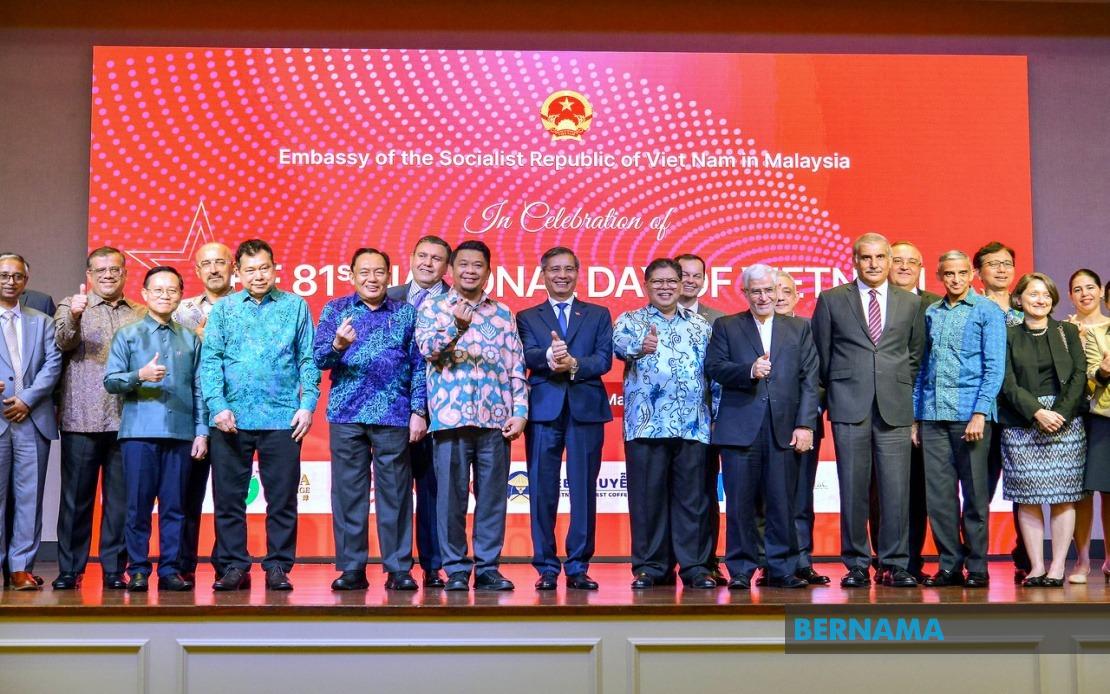
Vietnam and Malaysia are entering a fresh phase of diplomatic and economic cooperation, with Vietnam's Ambassador to Malaysia Dinh Ngoc Linh underscoring the significance of their newly elevated Comprehensive Strategic Partnership during the country's 81st National Day celebrations in Kuala Lumpur. The ambassador framed Malaysia as an indispensable ally for Vietnam amid a geopolitical landscape marked by unpredictability and rapid shifts in the balance of power, signalling Hanoi's commitment to deepening ties with a key Southeast Asian neighbour.
The elevation of bilateral relations to a Comprehensive Strategic Partnership in November 2024 represents a milestone in a relationship stretching back five decades. Since establishing formal diplomatic ties in 1973, Vietnam and Malaysia have progressively expanded their engagement across multiple sectors, yet the latest framework upgrade signals a qualitative shift towards closer political alignment and strategic coordination. This development carries particular significance for Malaysia, which maintains delicate balancing relationships across the region while managing complex territorial and maritime interests that intersect with Vietnam's own strategic calculations in the South China Sea.
Across the economic spectrum, the two nations have recorded tangible growth in their partnership. Ambassador Dinh highlighted robust performance in trade and investment flows, while simultaneously noting expansion into agricultural commerce, educational exchanges, cultural initiatives, and tourism. For Malaysian businesses and investors, Vietnam represents a rapidly expanding market with over 100 million consumers and an increasingly integrated position within regional supply chains. The bilateral economic relationship benefits from proximity, shared ASEAN membership, and complementary economic structures, though language barriers and limited awareness among Malaysian firms present untapped opportunities for further commercial expansion.
Defence and security cooperation has emerged as a cornerstone of the partnership, with the ambassador emphasizing how military-to-military engagement builds mutual confidence and reinforces regional stability. This dimension reflects broader shifts in Southeast Asian security dynamics, where smaller nations seek to strengthen bilateral relationships as a counterweight to great power competition. For Malaysia, Vietnam's growing military modernization and its central role in regional security discussions make defence ties increasingly consequential, particularly regarding maritime security, naval coordination, and intelligence sharing in areas of mutual concern.
Parliamentary and people-to-people exchanges constitute another pillar of strengthening relations. The ambassador stressed the importance of legislative engagement in fostering mutual understanding beyond government-to-government interactions, recognizing that sustainable bilateral relationships require deep societal foundations. Educational programmes, cultural festivals, and tourism flows all contribute to generational bonds that transcend political cycles and leadership transitions. For Malaysian universities and cultural organizations, Vietnam represents both a source of student enrolments and a venue for promoting Malaysian culture within a large, increasingly affluent population.
Regionally, the partnership serves as a mechanism for advancing ASEAN unity and centrality at a time when the bloc faces external pressures and internal divisions. Ambassador Dinh articulated Vietnam's commitment to working with Malaysia and other ASEAN members to reinforce the organization's resilience and its role as the focal point for regional architecture. This messaging carries weight in Malaysian policy circles, where policymakers debate ASEAN's effectiveness and relevance amid competing visions from major powers seeking to reshape regional order. The Vietnamese emphasis on building a people-centred ASEAN community reflects shared concerns about balancing economic development with social stability and cultural preservation.
The timing of these remarks acquires additional significance given Ambassador Dinh's imminent departure from his posting after three years of service. His reflections on the bilateral relationship and his personal commitment to Vietnam-Malaysia friendship underscore the human dimension of diplomacy, yet they also signal continuity in Hanoi's regional strategy. The incoming ambassador will inherit a framework for engagement that has proven productive across multiple dimensions, though new bilateral challenges and regional developments will invariably shape the trajectory of relations.
Deputy Foreign Minister Datuk Lukanisman Awang Sauni's attendance as guest of honour reflected Malaysia's official recognition of the partnership's importance. The presence of heads of missions from other countries at the National Day celebration underscored the multilateral dimensions of Vietnam-Malaysia ties and their resonance within the broader diplomatic community. Such high-level participation also serves as a subtle affirmation of Malaysia's balanced approach to regional relationships and its cultivation of partnerships across ideological and geopolitical divides.
Looking forward, the Comprehensive Strategic Partnership framework provides both nations with an institutional mechanism for addressing emerging challenges and capitalizing on new opportunities. Climate change, maritime security, pandemic preparedness, and technological cooperation represent areas where Vietnam and Malaysia possess complementary interests and capacities. Educational partnerships, particularly in vocational training and technical fields, could help both economies navigate transitions towards higher value-added production. Furthermore, cultural and tourism initiatives might position Southeast Asia more competitively within global creative and experiential economies.
The strategic partnership also reflects shifting patterns of alignment within ASEAN, where Vietnam's assertiveness regarding the South China Sea and its concerns about larger neighbours' intentions create natural affinities with maritime nations like Malaysia that harbour similar preoccupations. At the same time, the partnership remains non-exclusive and non-confrontational, avoiding the appearance of coalition-building against external powers while still facilitating closer coordination on matters of mutual concern. This calibrated approach aligns with Malaysia's traditional diplomacy of maintaining maximum flexibility and avoiding formal alignments that might constrain future policy options.
For Malaysian policymakers and business leaders, the Comprehensive Strategic Partnership with Vietnam signals an opportunity to deepen engagement with a nation of growing economic and strategic importance. Vietnam's integration into global supply chains, its demographic advantages, and its central position within Southeast Asian geopolitics make the country an increasingly significant factor in Malaysia's economic and security calculations. The partnership framework, endorsed by both capitals, provides a platform for expanding concrete cooperation while building the political trust necessary for managing inevitable disagreements or differing priorities.
The ambassador's confident projection that Vietnam-Malaysia friendship will flourish across generations reflects a diplomatic vision extending beyond immediate tactical concerns towards enduring structural ties. This long-term perspective proves essential in regions where historical grievances, competing territorial claims, and shifting power balances can rapidly destabilize bilateral relationships. By anchoring cooperation in institutional frameworks, parliamentary exchanges, and people-to-people connections, both nations are constructing redundancy and resilience into their partnership, reducing vulnerability to political cycles or temporary setbacks in any single sector.

