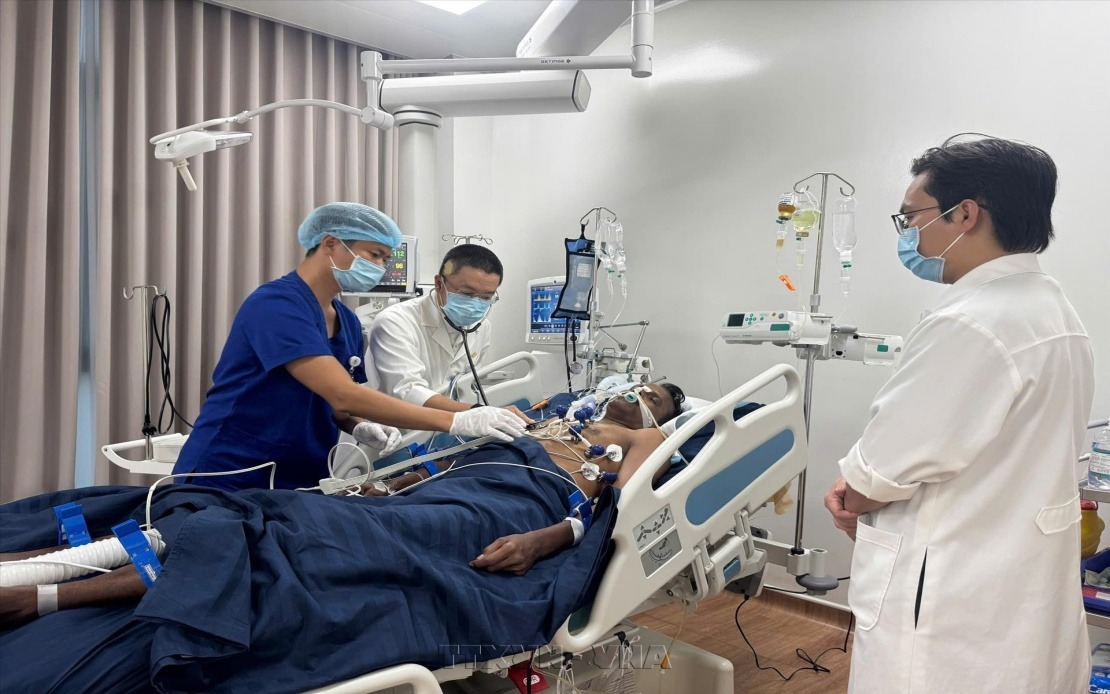
Vietnam's Phu Quoc Special Zone in the Mekong Delta province of An Giang has mobilised its full complement of medical and rescue resources following a catastrophic speedboat accident on July 11 that claimed the lives of Indian tourists. In coordinated action with provincial authorities, the Special Zone administration and emergency services deployed personnel and specialised equipment to conduct search-and-rescue operations and provide critical medical intervention to the survivors, according to the Vietnam News Agency.
Sun Group International Hospital, located within the Phu Quoc Special Zone, triggered a comprehensive hospital-wide "code red" emergency alert immediately upon receiving notification of the incident. The facility dispatched ambulances and trauma response teams to the accident scene while simultaneously placing its entire medical workforce on standby to support rescue and treatment efforts. This multi-layered activation protocol reflects established crisis management procedures designed to maximise response capacity during mass casualty events, a critical consideration for a popular tourist destination handling thousands of visitors daily.
The intensity of medical intervention required became apparent as two patients arrived at the hospital with life-threatening conditions. Emergency physicians conducted nearly two hours of continuous resuscitation efforts on these critically injured survivors. Their sustained intervention proved successful, with both patients eventually stabilising and transferred to the intensive care unit where they subsequently regained consciousness. Medical staff monitoring the pair reported their conditions remained stable as the initial crisis phase subsided, though continued observation in the ICU environment remained necessary given the severity of their injuries.
By 6:15 p.m. on the day of the accident, the hospital's casualty department had processed and admitted fifteen additional victims. All were conscious and alert upon admission, undergoing comprehensive medical examinations, trauma assessments, and receiving treatment protocols tailored to their specific injuries. The staggered admission pattern and varying injury severity across survivors reflected the chaotic nature of the emergency and the hospital's capacity to triage and manage multiple patients simultaneously, a challenge that demands experienced coordination during crisis situations.
Dr. Nguyen Quang Thang, Director of Sun Group International Hospital, disclosed that among the admitted patients, two individuals presented with severe respiratory failure requiring intensive intervention. One patient's respiratory function improved substantially and the individual was progressing toward possible discharge pending final medical clearance. The second respiratory case, however, remained hospitalised due to pre-existing medical conditions that complicated recovery, necessitating extended intensive care monitoring. The hospital established coordination protocols with Cho Ray Hospital in Ho Chi Minh City, a leading medical institution, to provide additional intensive treatment expertise and resources, with attending physicians expressing cautious optimism regarding the patient's trajectory.
Beyond immediate medical response, Vietnamese authorities at multiple administrative levels implemented financial assistance measures to support survivors and bereaved families. The speedboat operator agreed to provide immediate compensation of 1,000 USD to each family who lost a relative and 500 USD to each injured passenger, representing the vessel operator's acknowledgment of responsibility and commitment to assisting affected individuals during their difficult period.
The Phu Quoc Special Zone administration complemented this private sector contribution with government support. Tran Minh Khoa, Chairman of the People's Committee of the Phu Quoc Special Zone, confirmed that local authorities prioritised comprehensive victim assistance, with the provincial government allocating 26 million Vietnamese dong—approximately 1,000 USD—for each deceased individual. This dual-layer compensation approach, combining private and public resources, reflects Vietnam's determination to address the financial hardship created by the tragedy.
Parallel to rescue and medical operations, Vietnamese authorities initiated legal and administrative procedures required by domestic law. Investigations into the accident's cause proceeded under standard protocols, whilst civil registration and formal documentation processes advanced to enable timely settlement of fatalities and legal matters. The administrative machinery operated with acknowledged urgency, recognising the needs of international families seeking clarity and closure.
Diplomatic coordination emerged as a parallel priority, with local authorities engaging with relevant diplomatic missions to facilitate repatriation of deceased victims and ensure proper consular support for surviving Indian nationals. This international dimension transformed a regional emergency into a cross-border incident requiring sensitive handling and cooperation between Vietnamese government agencies and Indian diplomatic representatives. The efficient coordination of repatriation logistics demonstrated recognition that foreign nationals involved in accidents require expedited diplomatic channels and specific procedural accommodations to respect cultural practices and family wishes regarding deceased individuals.
For Southeast Asian readers, the Phu Quoc incident underscores the vulnerability of tourism infrastructure in the region's burgeoning holiday destinations. The rapid deployment of emergency response highlighted Vietnam's established crisis management capabilities, yet the accident's occurrence raises questions about safety standards on commercial speedboat operations throughout the Mekong Delta and similar tourist zones across the region. The comprehensive medical response and compensation measures set a benchmarking standard for regional tourism safety protocols, suggesting that destinations hosting significant international visitor populations face mounting responsibility to maintain rigorous operational safety and emergency preparedness systems.

