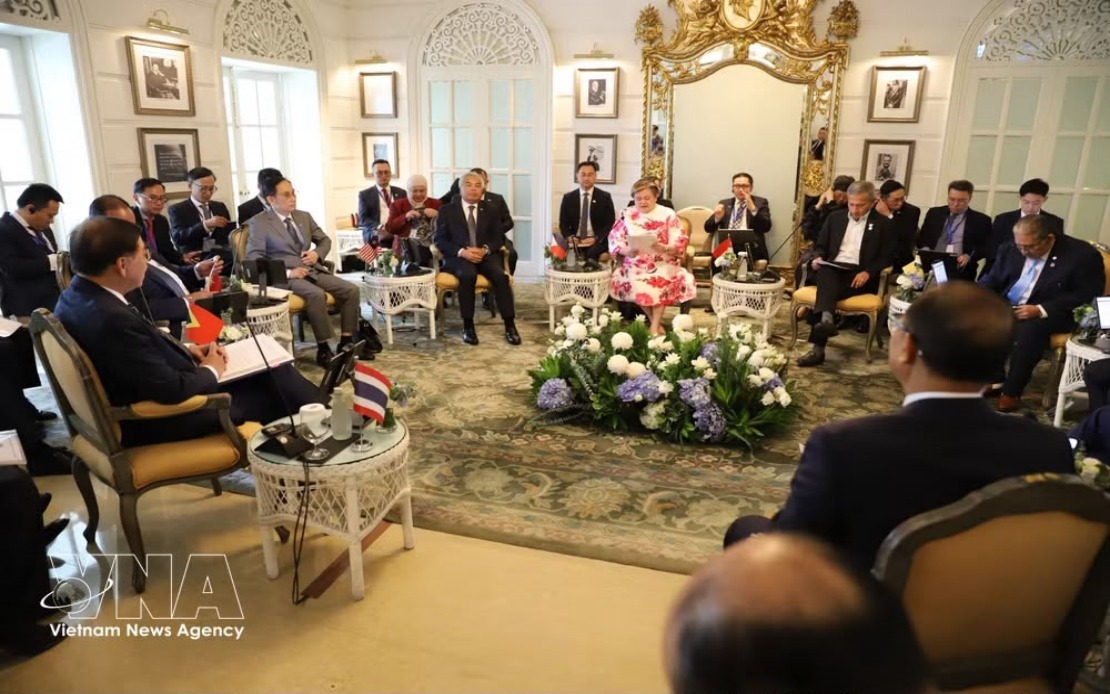
Vietnam has signalled its willingness to work alongside ASEAN partners in bolstering Myanmar's economic and political recovery, with Foreign Minister Le Hoai Trung reaffirming his country's commitment at a significant Bangkok gathering. The statement underscores Hanoi's determination to maintain Myanmar within the regional fold while supporting the nation through its ongoing transition, an approach that carries implications for broader Southeast Asian stability and ASEAN's credibility as a cohesive diplomatic actor.
The informal meeting of ASEAN foreign ministers with Myanmar's counterpart on July 12 represented a watershed moment in the bloc's engagement with the military-aligned administration. Convened by Philippine Secretary of Foreign Affairs Maria Theresa P. Lazaro—whose nation assumed the ASEAN Chairmanship in 2026—the gathering was the highest-level direct contact between the grouping and Myanmar's current government since the 2021 coup, signalling a deliberate recalibration of regional diplomacy following years of tension and fractious debate over how to handle the crisis.
Trung's remarks centred on the Five-Point Consensus, ASEAN's foundational framework for Myanmar engagement adopted in 2021 following the military takeover. He emphasized that this accord remains the essential mechanism through which the bloc can meaningfully support Myanmar's path toward stability and reconstruction. The minister's framing is significant: rather than viewing the framework as having failed, he positioned it as requiring deeper, more practical implementation—a subtle but important distinction that suggests Vietnam believes the consensus retains utility if member states commit greater effort and resources.
The Vietnamese minister acknowledged recent initiatives undertaken by Myanmar's authorities to consolidate political control, revitalize economic activity, strengthen institutional governance, and tackle transnational criminal networks including drug trafficking and cybercrime. These acknowledgements are carefully calibrated endorsements that recognize incremental progress without endorsing the military administration unconditionally. For regional observers, particularly those concerned about governance standards, Vietnam's selective praise suggests a willingness to engage pragmatically while maintaining some diplomatic distance from contentious domestic political questions.
Vietnam's specific proposal involves ASEAN shifting toward concrete, hands-on steps that prioritize sustained direct communication with Myanmar. This reflects a growing consensus within the bloc that isolation and condemnation have yielded limited results, while sustained dialogue and capacity-building might prove more effective in influencing Myanmar's trajectory. The emphasis on maintaining "regular engagement" suggests Vietnam sees ongoing contact as essential to monitoring developments and gently steering Myanmar toward international norms, an approach that appeals to pragmatists across Southeast Asia who worry that estrangement could push the country further from democratic principles.
Hanoi has specifically positioned itself as ready to collaborate with the Philippine ASEAN Chair and other member states on several fronts: economic recovery support, addressing social challenges, combating transnational crime, and strengthening bilateral and subregional cooperation. This multi-faceted approach reflects the understanding that Myanmar's stability depends not solely on political arrangements but on tangible improvements in living standards, employment, and security for ordinary citizens. For Malaysia and other regional economies concerned about border security and drug trafficking, Vietnam's emphasis on tackling transnational crime is particularly pertinent, as Myanmar remains a key transit point for illicit substances destined for Southeast Asian markets.
The meeting itself carried symbolic weight that extended beyond formal statements. Gathering in-person in Bangkok, many ASEAN foreign ministers engaged directly with Myanmar's Foreign Minister Tin Maung Swe for the first time since the political rupture began. This physical presence and face-to-face dialogue represents a deliberate signal that ASEAN has chosen engagement over exclusion, a position that distinguishes the bloc's approach from Western governments pursuing stricter diplomatic isolation and sanctions regimes. For Myanmar's administration, the gathering offers validation of its continued ASEAN membership and hints that international rehabilitation remains possible if sufficient progress is demonstrated.
Tin Maung Swe's presentation of a 100-day plan and specific measures aimed at promoting peace and reconciliation provided ASEAN ministers with concrete reference points for assessment. The plan's existence suggests Myanmar's military leadership recognizes the need to address regional and international concerns systematically. Whether implementation matches rhetoric remains an open question, but the presentation itself indicates willingness to engage with ASEAN's agenda for reform, creating space for incremental progress that both Myanmar and ASEAN can present as evidence of the bloc's influence.
The ministers' shared assessment emphasized frank yet constructive dialogue, language that suggests some disagreement exists within ASEAN itself about how to proceed with Myanmar. Not all member states view the military administration with equal acceptance, and differences in approach reflect broader philosophical divides about pragmatism versus principle. Vietnam's positioning as a bridge-builder willing to work collaboratively reflects its own experience as a communist nation that has navigated Western isolation while maintaining regional ties, a historical perspective that shapes its contemporary Myanmar diplomacy.
Crucially, ASEAN's collective reaffirmation that Myanmar must chart its own course toward "Myanmar-owned and Myanmar-led" solutions signals respect for sovereignty while maintaining pressure for movement toward stated goals of peace, national reconciliation, and development. This formulation permits continued regional engagement without requiring ASEAN to formally endorse the military government's legitimacy, a delicate balance that protects the bloc's cohesion while allowing individual members like Vietnam to deepen bilateral ties as strategic interests dictate.
For Malaysia and other Southeast Asian nations, Vietnam's initiative carries multiple implications. First, it suggests ASEAN's fundamental unwillingness to expel or permanently marginalize Myanmar, indicating that the bloc's future depends on continued regional integration regardless of governance questions. Second, Vietnam's emphasis on combating transnational crime touches directly on Malaysian security concerns, positioning Myanmar engagement as integral to regional stability and prosperity. Third, the approach reflects a broader Asian pragmatism that prioritizes gradual influence through dialogue over confrontational isolation, a methodology increasingly contested in Western capitals but deeply rooted in Southeast Asian diplomatic tradition.
The Five-Point Consensus, while criticized by observers who view it as insufficient, remains ASEAN's chosen instrument for Myanmar engagement. Vietnam's commitment to its substantive implementation—coupled with calls for expanded practical measures—suggests the consensus will likely remain the bloc's framework for the foreseeable future. Whether this approach ultimately contributes to Myanmar's democratic recovery or simply legitimizes a military status quo remains uncertain, but Vietnam's positioning indicates confidence that sustained engagement offers better prospects than alternative strategies.

