Vietnam's Deputy Prime Minister Nguyen Van Thang has travelled to Washington to signal the country's willingness to engage in substantive dialogue on trade matters with the Trump administration, reassuring US Trade Representative Jamieson Greer of Hanoi's commitment to "open, constructive" negotiations. The overture comes as months of discussions on finalising a reciprocal trade agreement have lost momentum following initial progress in October, leaving both sides searching for pathways to resume momentum on issues that have proven contentious and complex.
Thang's visit reflects Vietnam's acute awareness that its position as a trade-dependent economy requires careful diplomacy with the world's largest market. The Deputy Prime Minister combined his Washington meetings with efforts to attract fresh American investment, signalling that Hanoi views deeper commercial ties as essential to smoothing over current friction. According to Vietnam's government statement, Thang indicated readiness to address longstanding American concerns regarding trade fraud and the transshipment of goods—particularly the routing of exports through Vietnam to circumvent tariffs and regulations.
The underlying contention centres on what Washington perceives as Vietnam's inadequate controls over goods flowing through its territory. US trade officials have grown increasingly frustrated by what they view as Chinese products being repackaged or minimally processed in Vietnam before entering the American market, a practice that effectively circumvents existing tariffs on Chinese goods and undermines the intent of US trade policy. This issue has become a focal point of recent bilateral tensions and represents a critical test of Vietnam's capacity or willingness to tighten border enforcement and supply chain oversight.
Currently, the US administration is pursuing three separate Section 301 investigations into Vietnam's trade practices, an unusually aggressive posture that underscores the seriousness with which American officials view the problem. These investigations specifically examine transshipment practices, non-tariff barriers, and other trade impediments that Washington believes distort competition and advantage Vietnamese exporters unfairly. The investigations remain ongoing, with findings scheduled for November, and their conclusions could trigger substantial additional tariffs that would reshape Vietnam's export landscape and impose significant costs on American consumers reliant on Vietnamese manufactures.
In April, US Trade Representative Greer's office formally designated Vietnam a "priority foreign country" in an intellectual property assessment, citing inadequate efforts to combat online piracy, counterfeit merchandise, and border controls insufficient to prevent illicit goods trafficking. This designation carries considerable diplomatic weight and signals American frustration with what Washington views as Vietnamese complacency on enforcement matters. The timing and framing of this designation appear calculated to apply pressure on Hanoi to demonstrate concrete improvements before the November deadline for investigation conclusions.
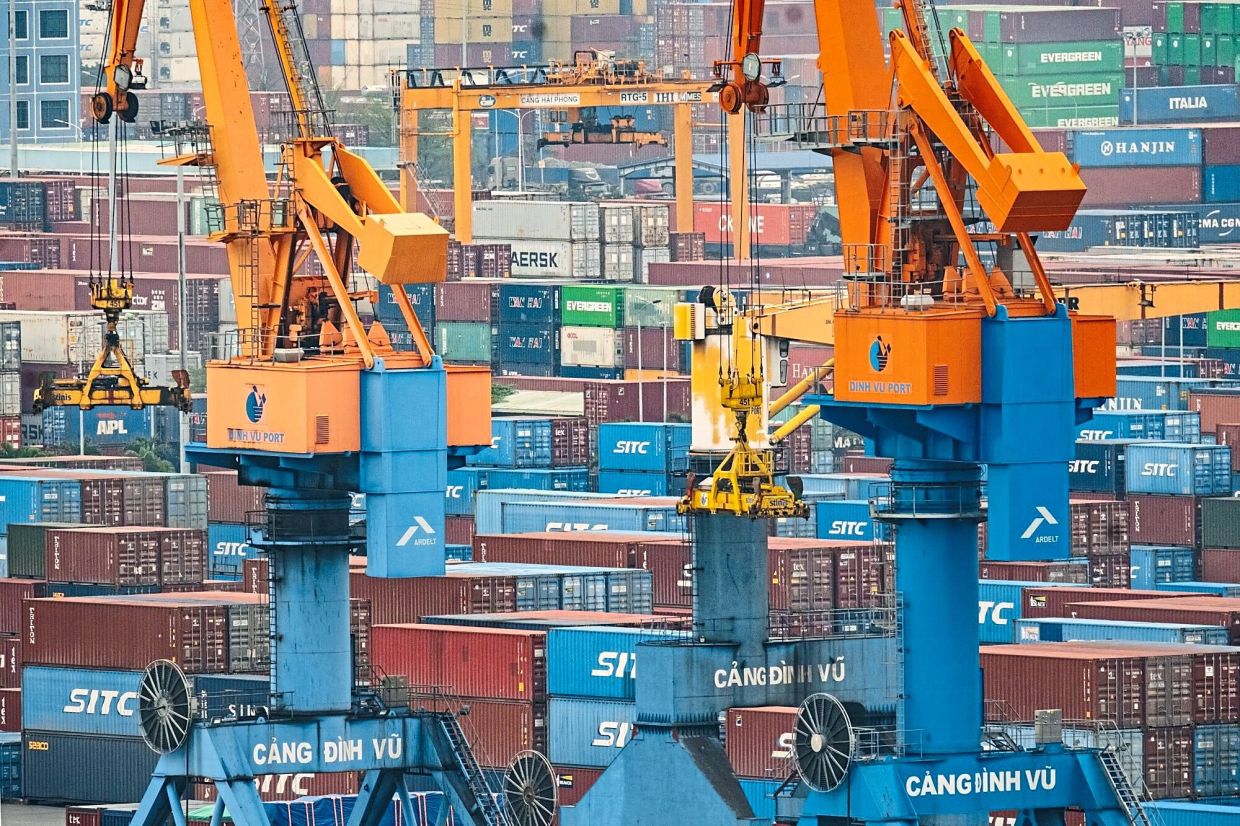
Vietnam's trade position with the United States has grown remarkably asymmetric and increasingly difficult to sustain. In the first half of 2026, Vietnam ran a trade surplus of US$114 billion with America—the largest bilateral surplus Washington maintains with any single trading partner, exceeding even China, Mexico and Taiwan. This extraordinary imbalance reflects Vietnam's emergence as a manufacturing hub for consumer electronics and other goods destined for American markets, a development that has made the country vulnerable to pressure from a US administration focused on reducing deficits and reshoring production.
Underlying Vietnam's surging exports is a troubling dynamic that complicates the bilateral relationship. Vietnamese manufacturers have dramatically increased their imports from China as they ramp up production of goods for re-export, particularly electronic components destined for American consumers. This pattern suggests that Vietnam may be functioning partly as a processing and transshipment point rather than as a source of genuinely value-added production, a concern that resonates with American policymakers questioning whether Vietnam's growth represents authentic industrial development or merely tariff arbitrage.
Thang's concurrent meetings with executives from technology and industrial firms including Qualcomm, Visa, Axon Enterprise and Caterpillar demonstrates Vietnam's broader strategy of cementing economic relationships with American corporate interests. By cultivating investment from influential US companies with substantial operations in Vietnam, Hanoi hopes to build a domestic constituency within America that will advocate for continued market access and favour Vietnam in trade disputes. These firms employ Vietnamese workers, source components locally, and generate revenue that benefits the broader economy, creating stakeholders invested in maintaining smooth bilateral commercial relations.
For Southeast Asia more broadly, the Vietnam-US trade tensions carry significant implications. Vietnam's experience illustrates how even countries with close security partnerships and strategic alignment with Washington remain vulnerable to trade pressure when bilateral balances grow sufficiently lopsided. The region's smaller economies, dependent on preferential market access to sustain growth, must navigate an increasingly assertive American trade posture that prioritises deficit reduction and enforcement of intellectual property standards. The precedent being set through Vietnam's negotiations will likely influence how other Southeast Asian nations approach their own trade relationships with the United States.
The resolution of these disputes will ultimately hinge on whether Hanoi can implement meaningful reforms that satisfy American concerns whilst maintaining the export-oriented growth model that has driven Vietnamese prosperity. Any significant restrictions on Vietnamese exports or tightening of trade terms would reverberate through regional supply chains and potentially constrain broader Southeast Asian growth. Conversely, successful negotiation of an agreement that addresses American concerns whilst preserving Vietnam's market access could establish a template for more balanced trade relationships in the region and demonstrate that middle-power countries can negotiate effectively with Washington without sacrificing core economic interests.

