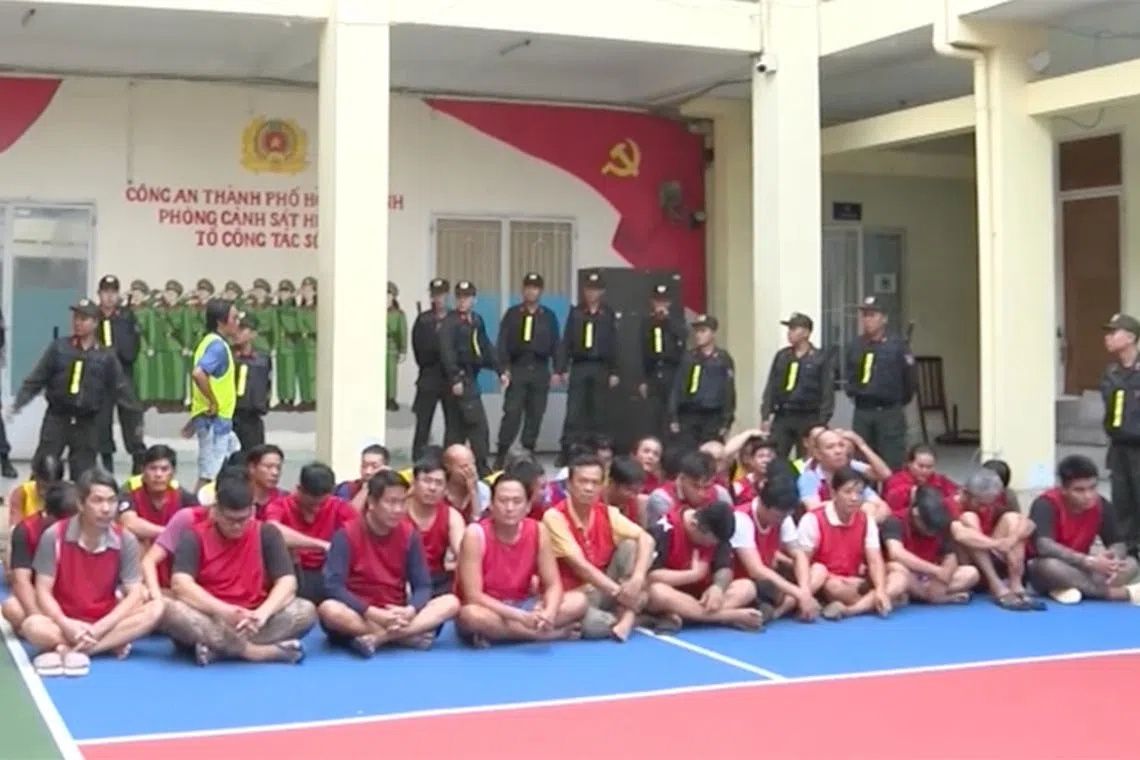
Vietnamese police have moved decisively against organised illegal gambling, announcing the arrest of 85 suspects linked to two vast underground betting networks that generated an estimated US$133 million in illicit transactions. The operations, dismantled in late June raids by Ho Chi Minh City police, represented what authorities characterised as "exceptionally large-scale" syndicates with sophisticated hierarchical structures and tight operational security. The crackdown underscores Hanoi's determination to suppress the underground gambling economy that flourishes during major international sporting events, particularly football tournaments that captivate audiences across Southeast Asia.
The two betting rings that came under police scrutiny had accumulated their staggering transaction volumes since October 2025, demonstrating the scale and speed at which illegal wagering operations can grow when left unchecked. Investigators discovered that the network leaders had established their operations through an intricate supply chain, obtaining what they termed "master-level betting accounts" from facilitators based in Cambodia. These primary accounts were then subdivided into multiple layers of secondary and tertiary accounts, each distributed to agents and ultimately to individual gamblers participating through online platforms. This tiered structure not only obscured the true ownership and control of the networks but also created multiple profit-extraction points as funds moved through the system.
The involvement of external actors, particularly intermediaries operating from Cambodia, reveals how regional cross-border networks enable illegal gambling operations to evade detection. Cambodia's reputation as a hub for online gaming operations has made it a natural conduit for providing account infrastructure to Vietnamese syndicates. The ease with which betting accounts can be routed across borders, combined with the anonymity afforded by digital transactions, creates persistent enforcement challenges for Vietnamese authorities. This transnational dimension suggests that Vietnam's efforts to combat illegal gambling cannot succeed through domestic measures alone and may require enhanced regional cooperation and information-sharing agreements with neighbouring countries.
Vietnam's approach to tackling organised gambling has intensified significantly in recent months. Beyond the two major operations exposed in late June, the public security ministry reported that police had dismantled 73 separate gambling networks across the country during the first 20 days of the World Cup period alone. This broader enforcement sweep resulted in the arrest of 346 suspects involved in various forms of illegal gambling and unauthorised football betting. The sheer volume of operations being uncovered suggests that underground wagering represents a far more extensive problem than official figures might initially indicate, with transaction volumes described as reaching "thousands of billions of dong," equivalent to hundreds of millions of dollars by Colonel Bui Tuan Anh of the public security ministry.
The official prohibition on online gambling in Vietnam creates a paradoxical enforcement environment. While the communist government maintains a blanket ban on licenced online betting, the demand for such services remains substantial among Vietnamese bettors. This prohibition without regulated alternatives inevitably drives participation towards unregulated platforms, which typically operate with minimal consumer protection and maximum profit extraction. The illegality of online gambling also means that the enormous sums flowing through these networks generate no tax revenue for the state, representing not merely a social order problem but a significant fiscal loss. The prohibition strategy, whatever its original intent, has effectively created conditions favourable to the emergence of sophisticated criminal syndicates rather than displacing gambling activity.
The timing of these enforcement operations reflects a strategic decision by Vietnamese authorities to concentrate resources during major sporting events. The World Cup, with its global appeal and concentrated betting activity across a defined period, provides enforcement agencies with predictable opportunities to disrupt networks. However, the periodic nature of these clampdowns means that many operations simply suspend activities temporarily, allowing them to resume operations once public attention fades. The sustainability of Vietnam's anti-gambling efforts therefore depends on whether the government can transition from event-driven enforcement to continuous monitoring and disruption of network infrastructure throughout the year.
For regional observers, Vietnam's battle against illegal gambling highlights challenges facing multiple Southeast Asian nations attempting to maintain prohibition regimes in an era of digital financial flows and cross-border connectivity. Malaysia, like Vietnam, faces persistent problems with unlicensed gambling operations, though approaches to enforcement differ. The sophistication and scale of the operations Vietnam's police are now discovering suggest that organised crime groups have invested substantially in developing technical and logistical capabilities to sustain these networks. The involvement of Cambodian-based account providers indicates that the problem extends across multiple countries, with each nation's enforcement efforts potentially displacing rather than eliminating the underlying networks.
The international context provided by the upcoming 2026 World Cup, hosted across Canada, Mexico and the United States, underscores how major sporting events create peak demand periods for wagering globally. Vietnamese bettors' interest in World Cup matches reflects broader Southeast Asian engagement with international football, creating genuine betting demand that illegal operators can readily supply. The scheduled conclusion of the tournament in July 2026 marks a natural endpoint for enforcement intensity, after which authorities will likely reduce surveillance and interdiction efforts. This cyclical pattern of enforcement creates predictable windows where operators can resume activities with reduced risk of detection, suggesting that sustainable reform would require fundamentally rethinking Vietnam's policy approach to gambling rather than relying on intensified periodic crackdowns.

