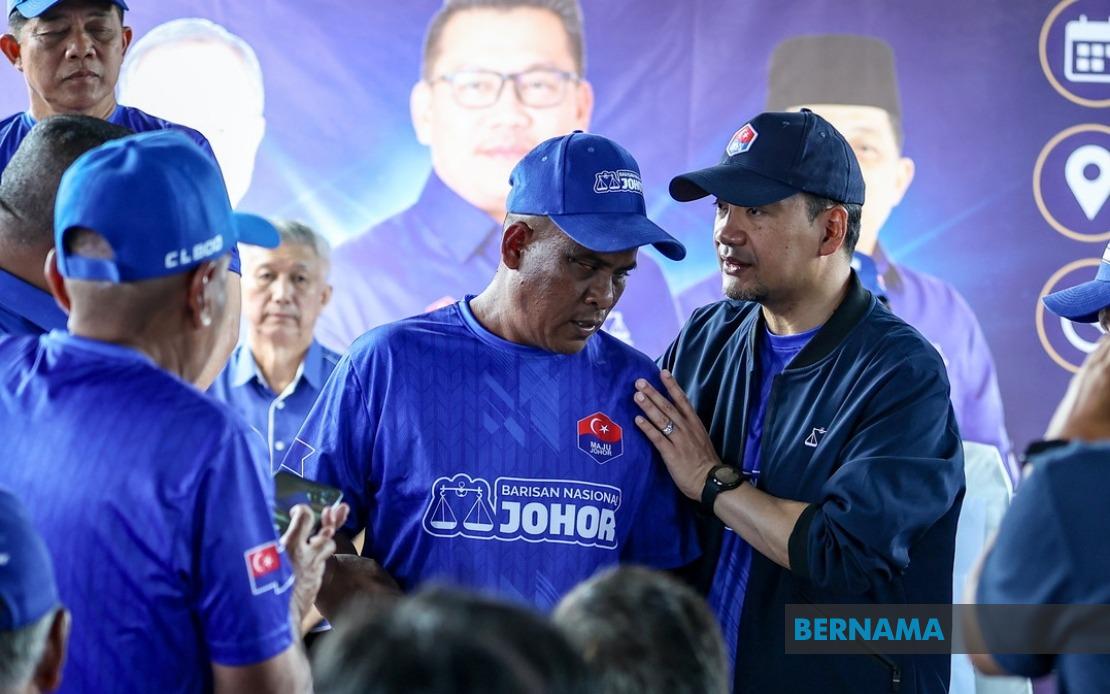
A 46-year-old blind voter in Batu Pahat, Johor, is exemplifying civic commitment by preparing to cast his ballot in the forthcoming state election scheduled for July 11, demonstrating that physical disability need not prevent meaningful participation in democratic processes. Mohd Hairol Leman, who has lived without sight since birth, has maintained an unwavering dedication to exercising his franchise across multiple electoral cycles, using support mechanisms provided by election authorities to translate his political choices into actual votes.
The forthcoming Johor State Election—the sixteenth in the state's history—will present Mohd Hairol with his sixth opportunity to participate in electoral voting. Living in Kampung Sri Pantai, Senggarang, he has developed a consistent pattern of engagement with the electoral system, having first voted during the 12th General Election in 2008 and subsequently casting ballots whenever elections have occurred, whether at federal or state level. This track record reflects a principled approach to citizenship that transcends the practical barriers that might reasonably deter participation.
For Mohd Hairol, voting represents far more than a constitutional entitlement exercised at periodic intervals. He articulates participation in elections as a fundamental obligation that carries moral weight for all citizens, regardless of their circumstances. In discussing his motivations, he emphasizes that the choice of which individuals will hold political office fundamentally shapes the trajectory of state development and influences the welfare provisions available to society's most vulnerable members. This perspective connects his personal voting behaviour to broader questions about governance and social responsibility.
The assistance provided by the Election Commission has proven instrumental in enabling Mohd Hairol's participation. Rather than treating his visual impairment as disqualifying him from voting, the electoral machinery has adapted procedures to accommodate his needs, allowing him to cast informed votes with official support. This approach demonstrates how institutional frameworks can facilitate inclusion when designed with accessibility as a core principle rather than an afterthought. The availability of such support mechanisms reflects growing recognition that democracy functions most effectively when all eligible citizens can participate meaningfully.
Mohd Hairol's economic circumstances add another dimension to his electoral engagement. As a recipient of assistance from the Department of Social Welfare and the Johor State Islamic Religious Council's Baitulmal scheme, he exists within networks of government support and charitable provision. Rather than viewing such assistance as diminishing his stake in political outcomes, he regards it as creating an additional obligation to participate thoughtfully in selecting leaders who will sustain and expand welfare provisions for vulnerable populations. His voting pattern thus reflects gratitude combined with a pragmatic understanding that electoral choices directly affect the sustainability of programmes upon which he depends.
The composition of candidates vying for influence in this election reflects the competitive intensity of state-level politics in Malaysia's southern corridor. A total of 172 candidates are contesting 56 State Legislative Assembly seats, creating significant choice within the electoral system. This level of competition means that individual votes carry heightened significance in determining which representatives will occupy legislative positions, a reality that appears to motivate Mohd Hairol's consistent participation. He expresses conviction that choosing capable leaders capable of protecting community interests constitutes genuinely significant work rather than merely ceremonial participation in democratic rituals.
The election calendar provides opportunities for both early and standard voting, with early polling scheduled for July 7 and primary voting day on July 11. These multiple voting windows address practical accessibility concerns, allowing voters with various constraints—whether arising from disability, employment obligations, or geographic distance—to participate without undue hardship. For someone like Mohd Hairol, such flexibility in voting arrangements removes potential obstacles that might otherwise complicate his exercise of democratic rights, though his expressed determination suggests that he would likely overcome such barriers regardless.
Mohd Hairol's commitment to voting patterns since 2008 encompasses an entire generation of electoral cycles in Malaysia, spanning periods of significant political change and constitutional development. His participation across multiple election types—general elections and state elections at different times—demonstrates an understanding that political change operates through diverse institutional channels, requiring engagement at multiple governance levels. This sophisticated grasp of democratic mechanics, combined with consistent action despite physical challenges, suggests that disability status and electoral participation should not be conflated as inherently incompatible categories.
The broader implications of Mohd Hairol's example extend beyond individual voter behaviour to encompass questions about inclusive institutional design in Malaysian democracy. His reliance on Election Commission support to cast votes raises considerations about how comprehensively electoral accessibility is embedded within standard procedures. As Malaysia's political system continues developing in response to changing citizen demographics and expectations, the experience of voters managing disabilities offers valuable data about which accommodations prove genuinely effective and which require refinement or expansion.
Mohd Hairol's expressed gratitude toward past political leaders who have extended welfare support to vulnerable communities reflects a reciprocal relationship between beneficiaries of government programmes and the political system that delivers such benefits. Rather than treating voting as a transaction where he simply demands continued assistance, he frames it as responsible citizenship—an acknowledgment that political communities function most equitably when all members, including those supported through welfare mechanisms, actively shape the leadership that determines resource allocation and policy priorities.
The personal narrative Mohd Hairol presents—of blind since birth but not blind to political responsibility—offers a counternarrative to assumptions that disability necessarily creates passivity regarding civic participation. His presentation at a Barisan Nasional briefing session and his willingness to discuss his voting behaviour publicly suggest that he views his participation not as exceptional or noteworthy primarily for overcoming obstacles, but rather as normal democratic engagement that happens to involve specific accommodations. This normalisation of disability-related accessibility as a routine election administration function represents meaningful progress toward genuinely inclusive democratic systems.
As the Johor State Election approaches, Mohd Hairol's readiness to participate serves as a practical reminder that electoral systems function optimally when they enable broad-based participation across diverse populations. His six elections of consistent voting, undertaken with assistance from official channels, demonstrate that democratic engagement need not require perfect physical capacity—only access to appropriate support mechanisms and a sustained commitment to translating political will into electoral action.

