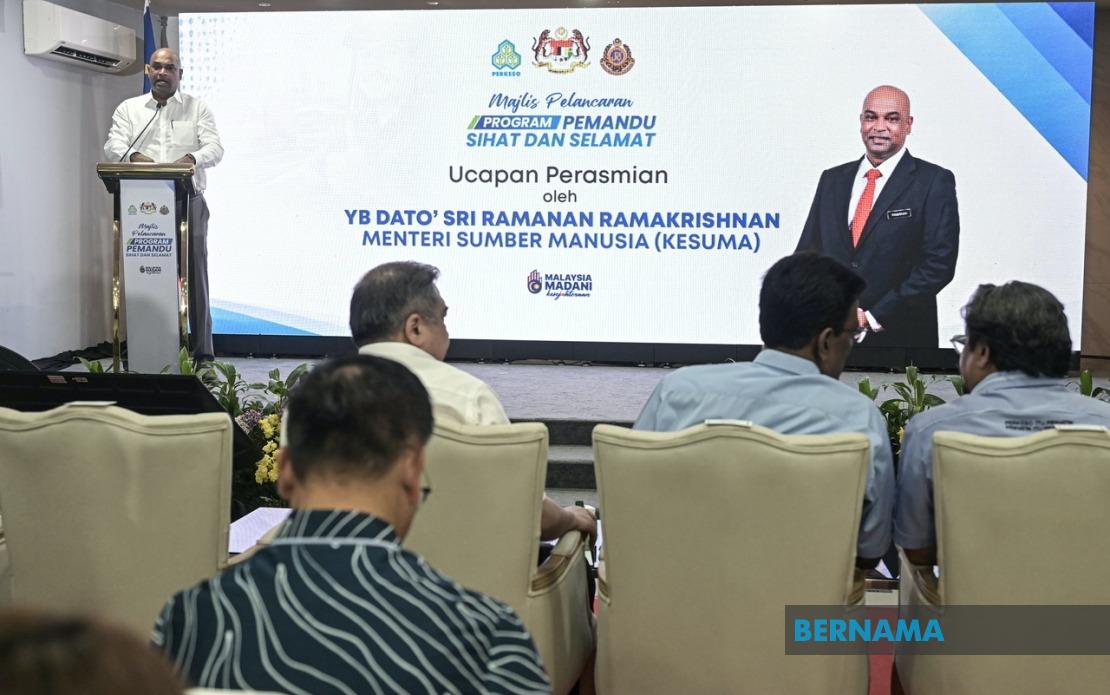
Professional drivers in Malaysia will now face a mandatory health screening requirement whenever they seek to renew their vocational driving licences, marking a significant shift in the country's approach to road safety. Human Resources Minister Datuk Seri R. Ramanan announced the rollout of the Healthy and Safe Driver Programme (PSS) on June 30, establishing what officials describe as a comprehensive framework to identify health issues that could compromise driver safety before they endanger others on the road.
The health screening represents an expansive diagnostic initiative far beyond simple vision and hearing tests. Participants will undergo full physical examinations designed to assess overall fitness, with particular attention to vision and auditory function. The programme also screens specifically for sleep disorders, particularly obstructive sleep apnea, a condition increasingly recognised as a significant contributor to driving impairment and accidents. Beyond these baseline checks, the screening evaluates critical bodily systems including cardiovascular health, respiratory capacity, and neurological function, ensuring that drivers possess the physiological capability to handle extended periods behind the wheel safely.
The cost structure reflects a deliberate government subsidy designed to minimise financial barriers to participation. While the total screening cost stands at RM85, drivers will only be required to pay RM30 directly, with the remaining RM55 covered by the government through the Social Security Organisation, known locally as Socso. This arrangement effectively transfers two-thirds of the financial burden to public coffers, signalling strong government commitment to embedding health considerations into professional driving standards rather than treating such oversight as a private expense.
Initially, the screening infrastructure will operate through 500 panel clinics distributed across the country, providing reasonable geographic accessibility for most professional drivers. However, Minister Ramanan indicated ambitions to expand this network substantially, targeting 3,000 panel clinics nationwide. Such expansion would represent a six-fold increase in screening capacity and would position the programme as a significant undertaking within Malaysia's healthcare infrastructure, requiring coordinated efforts between the Human Resources and Transport ministries alongside the broader healthcare system.
The rationale behind this mandatory screening appears directly connected to alarming fatality trends among professional drivers. In 2025, Malaysian roads saw 115 worker fatalities, representing a troubling 22 percent increase from the 94 deaths recorded the previous year. These figures encompass various professional categories reliant on road transportation for income, including lorry drivers, bus operators, van drivers, and motorcyclists. The data reveals particular vulnerability among heavy vehicle operators, with lorry drivers accounting for 62 of the 115 deaths, representing 21 percent of all workplace fatalities. This concentration suggests that fatigue, health complications, and undetected medical conditions may play disproportionate roles in accidents involving commercial vehicles.
The programme's architects explicitly frame it as preventive rather than punitive, emphasising that health screening aims to facilitate early intervention rather than inconvenience drivers. Officials stress that identifying health problems before they manifest as roadside emergencies enables prompt medical treatment and lifestyle adjustment, potentially averting tragedy. This framing addresses potential industry resistance by positioning the requirement as beneficial to drivers themselves, protecting their health and livelihoods rather than imposing bureaucratic burdens.
For Malaysian motorists and road users more broadly, this initiative carries significant implications. The concentration of fatalities among professional drivers suggests that improving their health status could meaningfully reduce overall road accident rates. Malaysia's transport sector relies heavily on professional drivers as the backbone of logistics, public transit, and commercial operations, making their safety and fitness directly relevant to economic productivity and public welfare. A healthier, better-screened professional driving workforce potentially translates to reduced accident rates, lower insurance costs, and improved safety for all road users.
The PSS programme also reflects broader Southeast Asian and international trends recognising driver health as a critical yet often-overlooked road safety component. Many developed nations now incorporate mandatory health checks into commercial driving licensing, recognising that medical conditions including sleep disorders, cardiovascular disease, and diabetes substantially impair driving ability. Malaysia's adoption of similar standards positions the country alongside international best practices, potentially influencing regional approaches to professional driver regulation across ASEAN nations.
Implementation challenges will likely emerge as the programme scales. Training clinic staff to conduct standardised screening, ensuring consistent quality across 3,000 future clinics, and managing driver scheduling around renewal deadlines will require careful coordination. The government's substantial financial commitment, subsidising two-thirds of screening costs nationwide, represents a significant public health investment that will require sustained budgetary allocation and inter-ministerial cooperation between Human Resources and Transport portfolios.
The screening requirement also raises questions about data privacy and medical record management. Information gathered through health assessments will require secure storage and controlled access to prevent misuse while remaining available for transport authorities making licensing decisions. The criteria for failing health assessment and the appeals process for drivers deemed unfit remain important details requiring transparent communication.
Longer term, this programme may establish a template for broader occupational health screening in Malaysia. If the PSS demonstrates effectiveness in reducing professional driver accident rates, similar mandatory screening might extend to other high-risk occupational groups or forms of transport. The programme's success will depend on genuine implementation quality, driver compliance, and whether health improvements actually translate into measurable reductions in road fatalities among the professional driving community.

