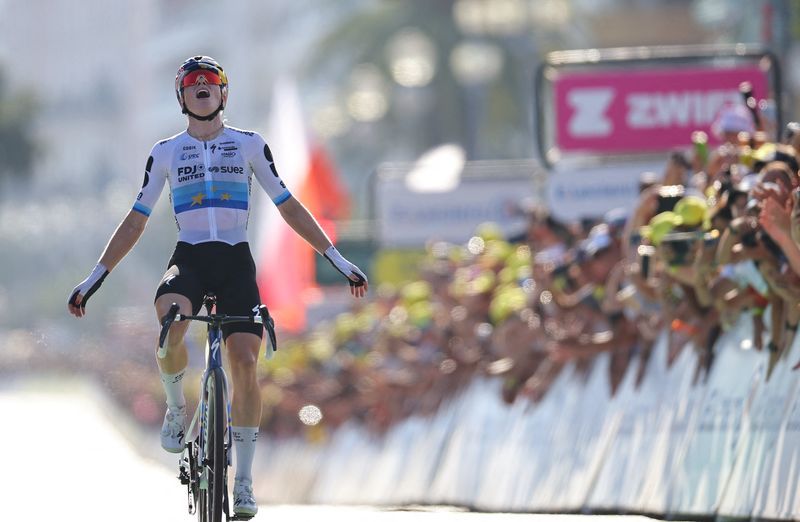
Demi Vollering of the Netherlands has seized control of the Tour de France Femmes, capturing the coveted yellow jersey following a decisive victory on the race's gruelling eighth stage on Saturday. The FDJ United-Suez rider's triumph on the 171.9-kilometre mountain route from Sisteron to Nice represents a dramatic reversal of fortune, coming just 24 hours after she had surrendered nearly a minute and a half to her main rival, Kasia Niewiadoma-Phinney, on Mont Ventoux. The momentum shift underscores the volatile nature of stage racing, where fortunes can pivot rapidly across consecutive days of competition.
The eighth stage proved consequential from the moment the peloton gathered at the starting line. Defending champion Pauline Ferrand-Prevot of Visma-Lease a Bike was forced to withdraw before the stage began due to illness, removing the previous year's dominant performer from contention. This development reshuffled the leadership dynamics and handed opportunity to the remaining contenders who had been chasing the title throughout the week. Ferrand-Prevot's absence marked a significant plot turn in what had already been a fiercely competitive edition of cycling's premier women's stage race.
Vollering's decisive move came on the steep Chemin de l'Arieta climb with approximately six kilometres remaining in the stage. The Dutch rider accelerated clear of Niewiadoma-Phinney and Italy's Elisa Longo Borghini, establishing a gap that she methodically extended during the technical descent into Nice. The tactical execution demonstrated both her climbing prowess and descending skills, qualities essential for succeeding in mountainous terrain. Her ability to time the attack precisely and then manage the advantage on the technical sections showcased the multifaceted skill set required of elite female cyclists competing at this level.
Longo Borghini of UAE Team ADQ crossed the finish line in second place after a closely contested sprint with Niewiadoma-Phinney, who secured third position and lost her grip on the yellow jersey. The Italian's strong closing effort highlighted the quality of competition within the elite group, with the podium places separated by mere seconds. This compressed result at the summit suggested that the concluding stage on Sunday would likely remain competitive, with multiple riders still harbouring realistic podium ambitions.
Vollering's victory represented her fifth spell wearing the yellow jersey throughout this year's edition, making her the fifth different rider to lead the race at some point during the competition. This rotation of leadership reflected the balanced field of strong competitors, each capable of excelling under different terrain and weather conditions. The statistic underscored how the 2026 edition had developed as a truly open competition, contrasting sharply with races that have been dominated by a single rider from early stages.
When discussing her dramatic reversal, Vollering highlighted the mental resilience required in stage racing. She emphasised the importance of compartmentalising disappointment and approaching each day with renewed focus and determination. Her comment about beginning Sunday in yellow acknowledged the significance of holding the jersey heading into the final stage, though she carefully avoided overconfidence about securing overall victory. The cautious optimism reflected her understanding that mountainous terrain could still produce surprises on the finale around Nice, where attacks could still emerge from unexpected quarters.
However, the stage finish was not without controversy. Niewiadoma-Phinney publicly criticised FDJ United-Suez's tactical approach, specifically alleging that teammate Celia Gery had deliberately blocked her into the barriers near the base of the crucial climb. The Polish rider characterised the move as unsportsmanlike, suggesting that aggressive defensive tactics had undermined what should have been a competition decided purely on individual merit and climbing prowess. Such complaints highlight the ongoing tension between aggressive tactical racing and the sporting etiquette that many athletes believe should govern elite competition.
The complaint raises broader questions about how tactical support should function within professional cycling. While teams are permitted to employ various tactical manoeuvres to support their designated leaders, deliberate physical obstruction crosses into territory that many consider beyond acceptable bounds. Niewiadoma-Phinney's decision to publicly air her grievance indicated her frustration with how the stage had unfolded, though the result stood regardless of her objections. Such incidents occasionally surface in major stage races, generating debate among cycling commentators about where the line should be drawn between clever tactics and poor sportsmanship.
With the stage win and associated time bonuses, Vollering extended her advantage to eight seconds over Niewiadoma-Phinney heading into Sunday's finale. This narrow margin meant that the outcome remained genuinely uncertain, with both riders possessing realistic chances of claiming the overall title depending on how the final stage developed. The compressed gap ensured continued intensity and unpredictability as the race approached its conclusion, maintaining spectator interest through to the final kilometres.
For Malaysian and Southeast Asian cycling enthusiasts, the Tour de France Femmes represents the pinnacle of women's professional cycling, attracting global attention and showcasing exceptional athletic talent. The dramatic swings in fortune observed across these closing stages demonstrate why stage racing remains among sport's most compelling formats. Vollering's remarkable comeback from yesterday's setback to today's triumph embodies the resilience and tactical acumen that separates elite performers, offering compelling narrative threads that transcend geographical boundaries and captivate audiences worldwide.

