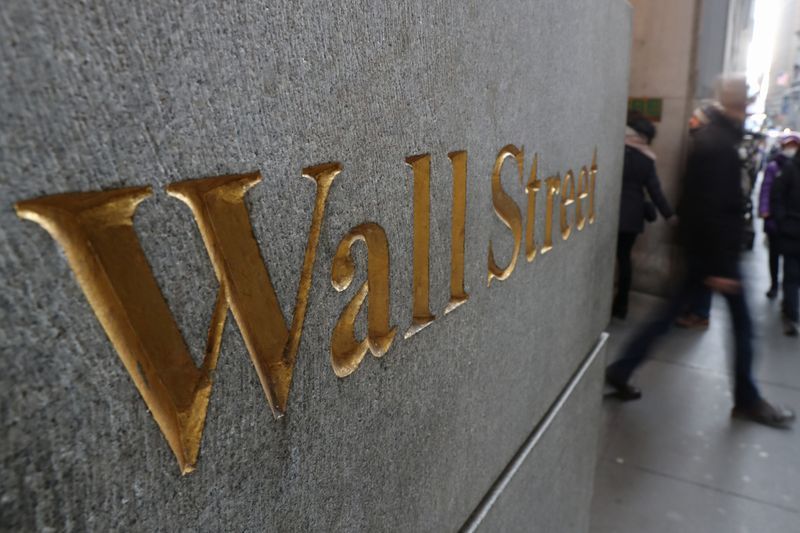
Wall Street charged into August with conviction, propelling the Dow Jones Industrial Average to an all-time closing high as investors seized on signs that tensions between the United States and Iran may be cooling. The broad market enthusiasm reflected relief across multiple asset classes, with crude oil retreating roughly 5% following U.S. President Donald Trump's Sunday announcement of planned negotiations to reopen the Strait of Hormuz—a critical maritime chokepoint for global energy supplies. Though Iran subsequently disputed whether such talks were actually scheduled, the mere possibility of diplomatic resolution was sufficient to lift market sentiment considerably.
The three major indices all advanced smartly during what proved to be a consequential trading session. The Dow Jones Industrial Average rose 693.38 points, equivalent to 1.32%, settling at 53,178.41, while the S&P 500 climbed 110.78 points or 1.48% to reach 7,600.50. The Nasdaq Composite outperformed, gaining 540.04 points to close at 25,913.90, a 2.13% jump that underscored technology investors' particular enthusiasm about the softer geopolitical backdrop. Breadth of the market advance was reassuring for participants, with advancing stocks outnumbering decliners by 2.62-to-1 on the New York Stock Exchange and 3.01-to-1 on the Nasdaq, indicating strength beyond a handful of mega-cap names.
The relationship between oil prices and market psychology proved critical to understanding the day's trajectory. Falling crude costs rippled through fixed-income markets, pulling U.S. Treasury yields lower as investors reconsidered the inflation implications of a potential prolonged regional conflict. This dynamic proved especially significant because market observers have grappled throughout recent weeks with questions about whether an escalated Iran situation could eventually force the Federal Reserve into unexpected policy decisions. Tension between geopolitical risk and monetary policy remains acute for Malaysian and Asian investors, given the region's heavy dependence on Middle Eastern petroleum and its exposure to global supply-chain disruptions that military confrontation could trigger. Art Hogan, chief market strategist at B. Riley Wealth in Boston, captured the market's preoccupation succinctly, noting that participants now wake each morning fixated on crude's direction and the 10-year Treasury yield as primary drivers of equity market movement.
Communications services emerged as the strongest performing sector, advancing 4.3% thanks to substantial contributions from Meta Platforms and Alphabet, both major beneficiaries of the day's risk-on sentiment. Conversely, the energy sector retreated 1.2%, becoming the session's worst performer as lower oil prices weighed on exploration and production companies. This sectoral divergence reflects the complex positioning that energy producers maintain—while lower oil prices are negative for their near-term cash flows, they welcome geopolitical de-escalation and the possibility of sustained stability that permits long-term planning.
Earnings season continues to provide important anchoring for equity valuations even as macro concerns occupy centre stage. Through Friday, 304 companies within the S&P 500 had reported their quarterly results, demonstrating an impressive 29.3% earnings growth rate with an exceptional 85.2% of reporters topping consensus analyst forecasts. This strong performance suggests that corporate management teams have so far navigated economic headwinds and inflation pressures with reasonable success, providing fundamental support for equity valuations. However, observers note that the current earnings cycle has been overshadowed by macro concerns in a way that previous quarters have avoided, complicating efforts to derive pure equity signals from the data.
Mega-cap technology names continued to dominate market leadership, with Amazon's shares jumping 4.6% as the e-commerce and cloud computing giant's market capitalization exceeded $3 trillion for the first time, underscoring the extraordinary concentration of value creation in a handful of artificial intelligence beneficiaries. SpaceX advanced 5.6% in its first full week of trading since going public in mid-June, though the aerospace manufacturer's stock price remains below its $135 initial offering price after nearly three weeks of trading. The company's upcoming inaugural quarterly earnings report on Tuesday may provide insight into investor concerns about its business trajectory post-IPO. Advanced Micro Devices, SanDisk, and Western Digital are among other artificial intelligence-linked companies scheduled to report this week, with markets scrutinizing their results for evidence that the enterprise technology upgrade cycle remains robust.
The labor market remains a critical focal point for both investors and policymakers heading into the crucial September Federal Reserve meeting. Several employment indicators will be released during the coming week, with Friday's official government jobs report representing the headline data point that may influence market pricing of future rate decisions. Current market expectations, derived from CME FedWatch analysis, suggest a 64.5% probability that the Federal Reserve will implement at least a 25-basis-point rate increase at its September meeting, though recent commentary from officials has introduced some uncertainty about the central bank's precise path forward. New York Federal Reserve President John Williams attempted to reassure markets by expressing confidence that inflation pressures would gradually diminish, but separate reporting that Fed Chair Kevin Warsh has contemplated scheduling fewer policy meetings has created additional ambiguity about procedural transparency.
Mergers and acquisitions activity continues to generate significant market movements despite macro uncertainty. Bristol Myers Squibb shares edged up just 0.2% following preliminary reports that the pharmaceutical company is exploring a potential merger with AstraZeneca, a combination that would create one of the world's largest drug manufacturers with an implied valuation near $400 billion. The modest stock reaction may reflect investor skepticism about execution risk or regulatory approval odds. Meanwhile, hotel operator Marriott International delivered a sharp 7% decline after issuing third-quarter profit guidance that disappointed analysts' consensus expectations, suggesting that certain industry sectors remain vulnerable to economic deceleration or demand pressures.
The implications for Southeast Asian investors and Malaysian market participants warrant careful consideration. Regional economies maintain deep exposure to geopolitical disruptions affecting Middle Eastern energy supplies, with implications for refining costs, transportation expenses, and ultimately inflation across consumer and industrial sectors. The recent easing of Iran tensions may provide modest breathing room for regional central banks' monetary policy deliberations, though underlying inflation pressures and global interest rate trajectories remain constraining factors. Malaysian institutional investors holding significant US equity allocations benefited from the market's strong performance, though the concentration of gains in mega-cap technology names raises ongoing questions about portfolio concentration risks that many regional managers have sought to address. Looking ahead, the interaction between US labor market data, Federal Reserve communication, and evolving geopolitical circumstances will likely dominate trading dynamics, with each week's economic calendar potentially generating meaningful portfolio adjustments.

