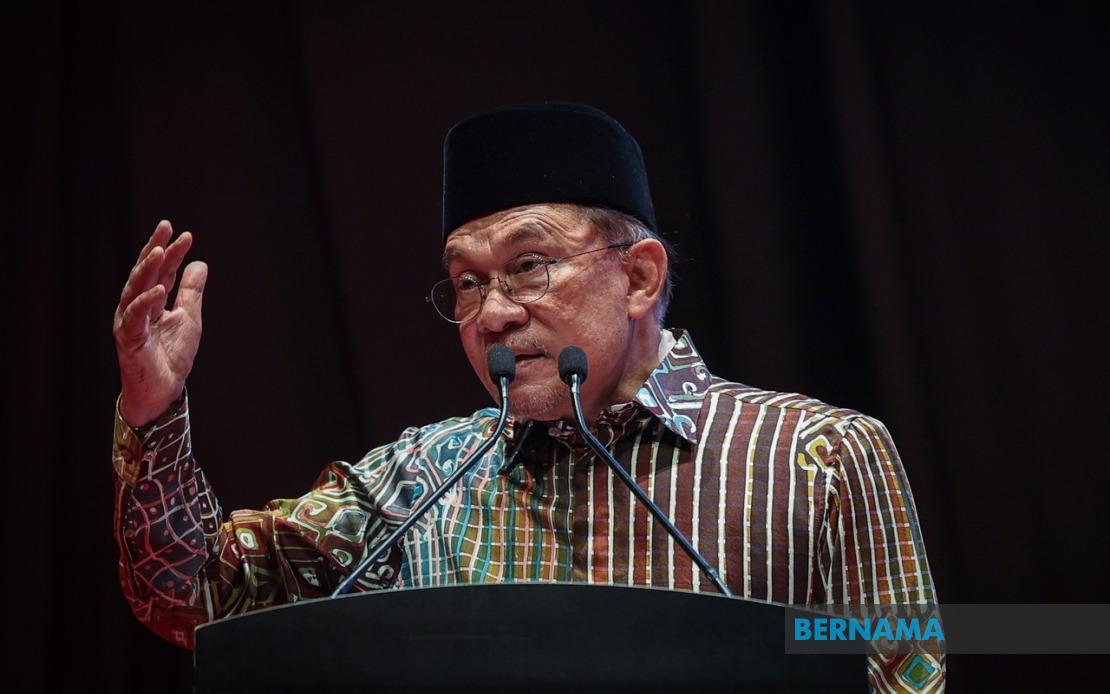
Prime Minister Datuk Seri Anwar Ibrahim has delivered a nuanced call for Malaysia's waqf institutions and Islamic dakwah movements to embrace technological advancement without abandoning the ethical and spiritual foundations that define their mission. Speaking at the closing ceremony of the 2026 International Waqf Dakwah Convention at the Kuala Lumpur Convention Centre, Anwar emphasised that mastering modern tools such as artificial intelligence and digitalisation represents not merely a strategic choice but an operational necessity for these organisations to maintain their relevance in an increasingly interconnected world.
The Prime Minister articulated a central tension facing contemporary Islamic institutions: the imperative to innovate while preserving identity. He characterised the challenge as one of simultaneous modernisation and rootedness, invoking a metaphor of reaching skyward while remaining anchored to solid ground. This framing acknowledges the real pressures confronting waqf bodies and dakwah movements, which operate in societies where digital transformation has become inevitable, yet where losing connection to foundational values risks compromising their legitimacy and social purpose.
Anwar specifically cautioned against what he termed the dangers of technological adoption divorced from ethical moorings. The integration of quantum computing, artificial intelligence and information technology without corresponding emphasis on values and moral character carries genuine risks, he suggested, pointing to potential erosion of human dignity, ethical conduct and the social cohesion that religious institutions traditionally foster. This warning reflects growing global concerns about uncontrolled AI deployment and speaks to anxieties particular to the Muslim world about cultural and spiritual degradation accompanying uncritical modernisation.
To ground this abstract concern in concrete terms, the Prime Minister outlined what remaining rooted means: the deliberate strengthening of faith and belief systems, cultivation of moral character and personality, preservation of language proficiency and cultural knowledge, and sustained engagement with both national and local historical narratives. For waqf institutions managing charitable endowments and dakwah bodies engaged in Islamic teaching and outreach, this translates into ensuring that technological systems serve these deeper purposes rather than displacing them.
The convention itself produced three substantive resolutions that operationalise Anwar's vision. The first calls for establishing a working consortium to fortify waqf institutions, recognising that isolated efforts lack the collective power necessary for systemic transformation. The second directly addresses technological integration by endorsing the deployment of digitalisation and technology platforms in waqf management systems. The third emphasises governance improvements and strategic collaboration among stakeholders, tacitly acknowledging that technology adoption without institutional reform and coordination will prove ineffective.
Anwar specifically commended two organisations for demonstrating progressive yet measured approaches to Islamic outreach. The Malaysian Islamic Welfare Organisation (PERKIM) and the Regional Islamic Da'wah Council of Southeast Asia and the Pacific (RISEAP), led by Sarawak Premier Tan Sri Abang Johari Tun Openg, have earned his praise for balancing contemporary dakwah methods with commitment to ummah unity and countering Islamophobia. These examples provide practical models for how institutions can innovate without abandoning core principles.
The government's response to these convention resolutions signals receptiveness to reform within Malaysia's Islamic sector. Anwar indicated that proposals emerging from the convention will undergo Cabinet-level scrutiny before proceeding to the Conference of Rulers, ensuring that any structural changes to waqf governance or dakwah frameworks receive appropriate political and traditional authorisation. This hierarchical review process reflects the constitutional importance of Islamic affairs within Malaysia's federal structure and the significant role of state rulers in religious governance.
The timing of this convention and the Prime Minister's address carries particular significance for Southeast Asia's Islamic institutions. As the region experiences rapid digitalisation and urbanisation, waqf bodies and dakwah organisations face mounting pressure to adopt contemporary communication channels, data management systems and financial technologies. Yet the region also contains diverse Muslim populations with varying attachments to traditional practice, creating complex dynamics around modernisation. Malaysia's positioning of itself as demonstrating how this balance can be achieved offers leadership within ASEAN.
For Malaysian waqf practitioners specifically, the convention's emphasis on strengthening the waqf ecosystem through technology addresses longstanding operational challenges. Waqf management historically suffers from fragmentation, poor documentation, inadequate asset tracking and limited accessibility for beneficiaries. Digitalisation can address these problems through blockchain-based asset registries, mobile applications enabling beneficiary access, and centralised databases improving transparency and accountability. Yet implementing such systems requires precisely the kind of institutional coordination and stakeholder collaboration the third resolution emphasises.
The challenge of balancing modernisation with value preservation extends beyond administrative efficiency to the existential question of purpose. Waqf institutions exist fundamentally to serve charitable and religious objectives rooted in Islamic jurisprudence. Dakwah movements exist to transmit Islamic knowledge and values. Technology is instrumental to these ends, not an end itself. Anwar's framework insists that institutions maintain clear clarity about ultimate purposes before allowing tools to reshape them. This represents a conservative wisdom often lost in technology adoption discussions that become enchanted by capability rather than grounded in mission.
Looking forward, the convention resolutions and Anwar's supporting remarks provide Malaysian Islamic institutions a roadmap for navigating technological adoption without losing themselves. The establishment of the working consortium can facilitate knowledge-sharing about best practices in waqf digitalisation across the country and region. Government commitment to studying and potentially implementing these resolutions signals that Malaysia intends to position itself as a laboratory for Islamic institutional modernisation in Southeast Asia, balancing efficiency gains with spiritual and ethical integrity.

