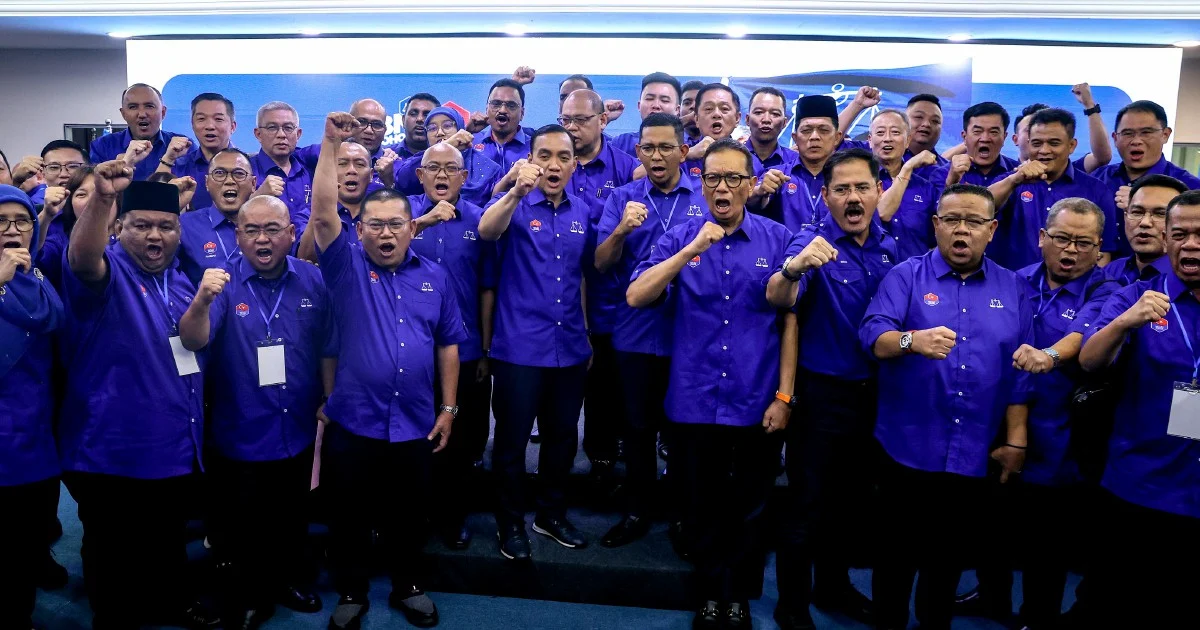
The prospect of a broad political alliance in Johor has dimmed considerably following Barisan Nasional's formal unveiling of its candidate roster for the state election, notably through the absence of any representatives from Parti Wawasan Negara on the slate. The omission marks a significant moment in the coalition's pre-election strategy, foreclosing what had been an intriguing possibility that circulated within political circles: a three-cornered cooperative arrangement encompassing BN, PAS, and Wawasan.
Preliminary reports had suggested that Barisan Nasional might explore an electoral pact with both PAS and Wawasan as part of a calculated bid to consolidate opposition to other political groupings contesting the Johor election. Such an arrangement would have represented an unusual alignment, bringing together historically distinct political entities to maximise electoral prospects in Malaysia's southern state. The circulation of these rumours reflected the fluid nature of Malaysian coalition politics, where pre-election negotiations and alliance-building frequently generate speculation about possible partnerships that may or may not materialise.
The decision to exclude Wawasan from BN's candidate slate suggests that internal discussions within Barisan Nasional did not progress toward formalising any cooperative understanding with the newer political party. Parti Wawasan Negara, which has sought to position itself as an independent voice in Malaysian politics, appears not to have secured meaningful representation within the coalition's framework for this particular electoral contest. This outcome indicates that BN's leadership weighted other strategic considerations more heavily than the prospect of incorporating Wawasan into its election campaign in Johor.
The timing of candidate announcements carries particular significance in Malaysian electoral politics, as they typically represent the culmination of prolonged behind-the-scenes negotiations. By formally releasing its lineup without Wawasan representatives, BN has essentially closed the door on the earlier speculation while simultaneously providing clarity to voters, party members, and rival political forces about its intended composition for the upcoming contest. Such transparency, while potentially disappointing to those who anticipated a broader alliance, allows stakeholders to assess the electoral landscape with greater precision.
For Parti Wawasan Negara, the exclusion from BN's candidate list raises questions about the party's trajectory and influence within Malaysia's political establishment. As a relatively younger entrant to the multi-party system, Wawasan's ability to secure meaningful representation and electoral success depends heavily on either developing substantial grassroots support independently or negotiating credible positioning within larger political coalitions. The failure to secure BN candidacies may necessitate a recalibration of the party's electoral strategy in Johor, whether through contested seats running against both BN and other opposition groupings, or through reassessment of its partnership approach more broadly.
Barisan Nasional's approach reflects the coalition's assessment of its competitive position in Johor and its strategic priorities for the state. The coalition, which has traditionally dominated Johor politics, faces a complex electoral environment encompassing challenges from multiple quarters. By finalising its candidate selection without formal integration of Wawasan, BN appears confident in its capacity to contest effectively under its own organisational structure and traditional party membership, particularly through its constituent parties UMNO, MIC, and MCA which continue to form the coalition's electoral backbone in the state.
The relationship between BN and PAS presents a separate dimension to Johor's political dynamics. While PAS has increasingly operated independently in recent years, particularly following its formal exit from the BN framework, preliminary reports had suggested possible cooperative arrangements in the forthcoming election. The final candidate composition will illuminate whether any such understandings have been formalised or whether these entities will contest in direct competition with one another across various constituencies.
Johor's electoral significance for national politics cannot be overstated, given the state's considerable parliamentary representation and its status as one of Malaysia's most populous and economically dynamic regions. The composition of BN's candidate slate thus carries implications extending well beyond state-level administration, potentially influencing national political dynamics and the internal balance of power within the coalition itself. Senior UMNO figures contesting in Johor constituencies frequently occupy influential roles in federal government, making state-level electoral outcomes consequential for national governance structures.
Voters in Johor will face a ballot reflecting the absence of an expanded BN-PAS-Wawasan coalition, instead navigating a more traditional electoral landscape dominated by established political entities. This configuration may facilitate clearer ideological and policy differentiation between competing camps, even as it forecloses the possibility of a broader consensus-building arrangement that might have altered the contest's character and outcome. The electoral outcome will demonstrate whether BN's assessment of its competitive position without Wawasan integration proves accurate, or whether the coalition's refusal to accommodate Wawasan's participation constrains its overall effectiveness in the state contest.