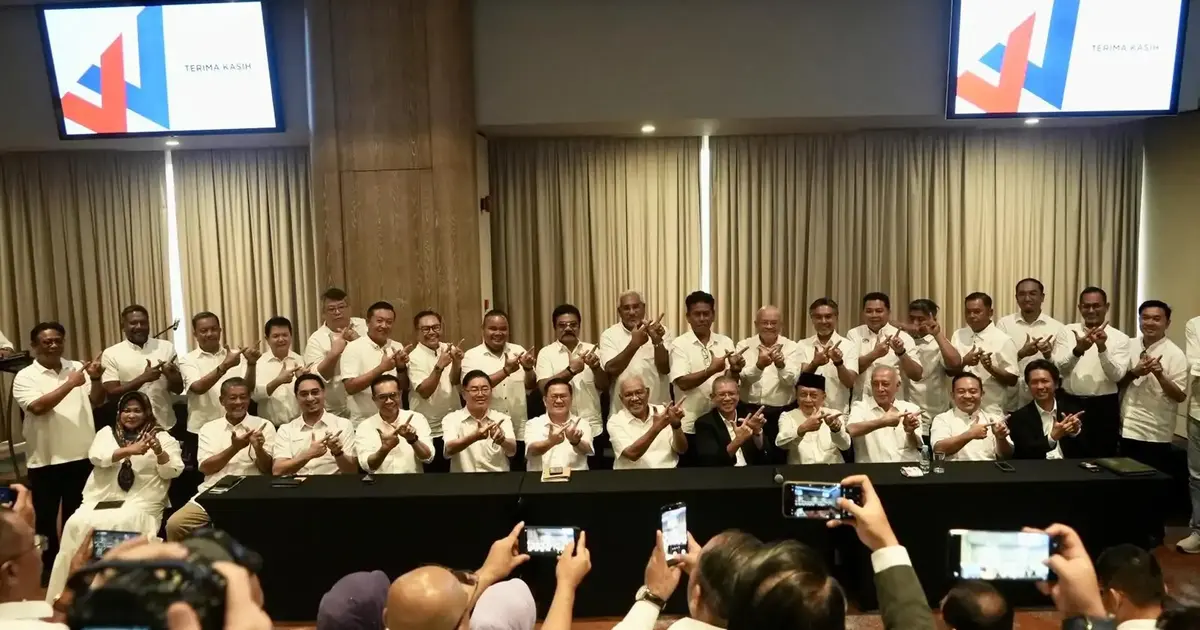
The Perikatan Nasional coalition has formally settled the question of Wawasan's entry through a decisive majority vote within its Supreme Council, according to the electoral director of the bloc. While the decision carries clear implications for the opposition coalition's internal dynamics and potential electoral strategy, it also underscores the continuing tensions that simmer beneath PN's ostensible unity.
Sanusi's confirmation of the voting procedure came as the coalition faces mounting questions about its direction ahead of the next general election. The admission of Wawasan, a relatively new political entity in Malaysia's fragmented opposition landscape, marks a significant repositioning of PN's ideological and organisational reach. For Malaysian political observers, this development signals how larger coalitions must navigate the competing interests of member parties while maintaining forward momentum on shared electoral objectives.
Bersatu's formal objections to Wawasan's membership, though acknowledged by party officials, did not prevent the coalition from proceeding with the admission. This outcome reveals the mathematical realities of coalition governance in Malaysia, where voting strength and negotiating position ultimately determine policy outcomes. The experience reflects broader lessons about how multi-party blocs balance member autonomy with collective decision-making authority, a challenge familiar to Malaysian political architects across the spectrum.
The Supreme Council's majority-vote mechanism provides the formal apparatus through which such disputes reach resolution, though it also exposes underlying fault lines that coalition partners must manage carefully. Bersatu's discomfort with the Wawasan admission likely stems from competition for the same electoral space and voter constituencies that both parties are seeking to capture. Understanding this tension requires recognising how opposition parties in Malaysia often compete fiercely with one another even while maintaining nominal coalition membership.
Wawasan's background and organisational structure remain relevant to assessing why Bersatu found the admission objectionable. The political landscape in Malaysia continues evolving, with newer entities attempting to carve out meaningful roles alongside established players. PN's willingness to incorporate Wawasan suggests the coalition seeks to broaden its appeal and reach into demographics or geographic areas where Wawasan possesses particular strength or organisational capacity.
For regional observers watching Malaysian politics, this episode demonstrates how opposition coalitions function pragmatically despite public expressions of unity. The decision-making process itself—whereby a Supreme Council majority overrides individual member concerns—reflects institutional design choices that favour decisive action over consensus-building. Such arrangements carry trade-offs: they enable coalitions to move forward decisively, but they can also generate lingering resentment among outvoted members.
Bersatu's position within PN carries distinctive weight given its historical role and the seniority of its leadership figures. The party's objections, even if formally overruled, signal that internal negotiations around Wawasan's admission involved serious discussions about coalition composition and strategic fit. This suggests the admission did not proceed unopposed internally, but rather represented a contested outcome where proponents ultimately commanded sufficient votes to prevail.
The timing of this decision carries implications for PN's electoral preparation and campaign coordination. Incorporating new members requires developing coordinated messaging, clarifying portfolios and candidate nominations, and ensuring that member parties understand their respective roles in the coalition's overall architecture. Managing these practical logistics while maintaining member satisfaction represents an ongoing management challenge for coalition leadership.
Looking ahead, how Bersatu and Wawasan navigate their relationship within PN will influence the coalition's operational effectiveness. Coalitions function most effectively when member parties accept outcomes of internal democratic processes and redirect their energies toward shared external objectives. Should Bersatu allow the admission decision to fester into sustained friction, it could undermine PN's ability to present unified electoral positioning to voters.
For Malaysian voters and political analysts seeking to understand opposition dynamics, Sanusi's clarification provides transparency into how PN resolves internal disputes through formal voting procedures. This contrasts with other coalition models that might rely on consensus-seeking or hierarchical decision-making by senior figures. The Supreme Council majority vote, while decisive, represents one particular governance approach with specific strengths and limitations.
The broader significance of Wawasan's admission extends beyond immediate coalition mechanics. It reflects ongoing realignment and consolidation within Malaysia's opposition ecosystem, where parties continuously evaluate their positions, alignments, and electoral prospects. PN's openness to new members suggests confidence in its ability to absorb and integrate additional entities while maintaining coherence around shared policy platforms and electoral objectives.
As PN prepares for future electoral contests, the integration of Wawasan will require sustained attention from coalition management structures. Member parties must understand how new entrants affect resource allocation, candidate selection processes, and seat divisions. The admission decision, while formally settled, initiates a longer process of practical coalition-building that will test both leadership effectiveness and member commitment to collective success.
The episode ultimately illustrates fundamental truths about coalition politics in Malaysia. Electoral blocs must balance member autonomy against collective decision-making; they must incorporate new voices while maintaining existing relationships; and they must translate formal decisions into effective operational coordination. Sanusi's confirmation that majority voting settled the Wawasan question demonstrates PN's institutional capacity to reach decisions, though the harder work of making those decisions produce effective coalition governance remains ongoing.