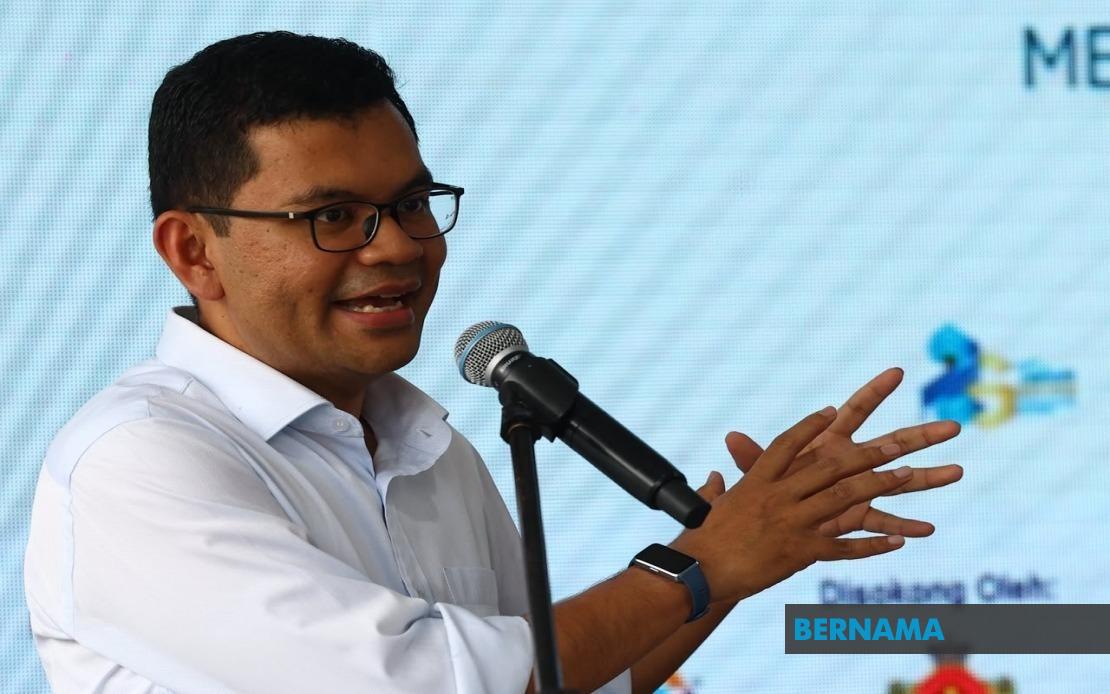
Economy Minister Akmal Nasrullah has sounded an alarm over the chronic mismanagement of government projects, describing how systemic failures in oversight and accountability drain public resources despite Malaysia's near seven decades of independence. Speaking in Alor Setar on August 6, Akmal Nasrullah attributed the ongoing waste to a combination of complacency, absent responsibility, and inadequate accountability mechanisms that plague project execution across government agencies. He stressed that these weaknesses transcend political cycles and administrations, suggesting the problem lies deeper in institutional culture than in any single party's governance approach.
The Economy Minister's intervention was prompted by his scrutiny of the water treatment plant project in Kedah, which he has monitored closely through its transition from oversight by the Energy Transition and Water Transformation Ministry (PETRA) to coordination under his own Economy Ministry. Rather than wielding criticism as a political weapon, Akmal Nasrullah framed his comments as a principled push to expose and remedy systemic deficiencies that undermine public confidence in government expenditure. This positioning is significant because it distances the critique from partisan attacks and anchors it instead to fundamental questions of fiscal responsibility and project delivery standards that should concern all Malaysians.
What distinguishes Akmal Nasrullah's intervention is his willingness to name specific problems despite knowing it has generated controversy. He acknowledged that some have questioned whether pointing out project failures falls within his ministerial remit, with critics arguing his role should focus narrowly on policy formulation rather than operational accountability. His response—that he refuses to accept business as usual—signals a deliberate effort to elevate the conversation beyond traditional silos of ministerial responsibility. This reflects a broader tension in Malaysian governance between ministers who view their roles as confined to their portfolio's technical scope and those who see themselves as custodians of public interest across all domains.
The Kedah water treatment plant serves as a concrete case study illuminating how warnings about management failures often go unheeded until projects deteriorate. Akmal Nasrullah detailed his long engagement with the project, noting that he raised multiple concerns but observed no meaningful corrective action until the very problems he had predicted eventually materialised. This pattern—early warning signs ignored, followed by eventual project complications—suggests not merely individual negligence but structural gaps in how government departments receive, process, and act on feedback about implementation challenges. Such institutional blindness compounds financial waste and erodes public trust in development initiatives.
Accounting for why such weaknesses persist despite Malaysia's extensive experience with capital projects requires examining attitudes and mindsets, Akmal Nasrullah argued, rather than attributing failures solely to policy frameworks. Government policies do evolve, he noted, but evolving policy without shifting underlying organisational cultures produces hollow improvements. This insight points to a deeper governance challenge: technical policy solutions cannot overcome behavioural inertia, turf-consciousness between agencies, or the absence of consequence for poor performance. Without addressing these attitudinal dimensions, new procedures and oversight mechanisms risk becoming bureaucratic layers rather than genuine improvements.
The implications of persistent project mismanagement extend beyond wasted funds to the credibility of government as a development partner. When infrastructure and service delivery projects fail due to management failures, citizens question the competence of public institutions and may lose faith in development priorities. For a nation seeking to accelerate growth and modernise infrastructure—particularly in water security and energy transition—chronic project execution failures represent a strategic vulnerability. Each botched or delayed project sends signals to both domestic stakeholders and international investors about governance quality and institutional reliability.
Akmal Nasrullah's emphasis on accountability resonates particularly with Malaysian taxpayers, who have grown increasingly vocal about fiscal waste. In a context where public resources are finite and competing demands for education, healthcare, and infrastructure are pressing, the perception that government projects routinely squander money fuels cynicism about taxation and public spending. When ministers themselves publicly acknowledge and highlight such failures, they risk further eroding confidence unless accompanied by concrete remedial measures and visible accountability for those responsible for mismanagement.
The water treatment plant project in Kedah carries particular significance because water security remains a critical issue across Malaysia, from urban supply challenges in the Klang Valley to rural communities struggling with access to clean water. When projects intended to enhance water availability and quality encounter management problems, the impact extends beyond budgetary concerns to basic service delivery that affects public health and quality of life. This context makes Akmal Nasrullah's intervention more than a technical governance debate; it touches on essential infrastructure that shapes citizens' daily experiences.
Addressing the accountability gap requires mechanisms that span multiple levels. These include clearer project governance frameworks that define roles and responsibility boundaries between agencies, earlier and more structured escalation procedures for implementation concerns, and performance metrics tied to tangible outcomes rather than budget expenditure alone. Performance-based accountability also demands that individuals and entities responsible for project failures face consequences proportionate to the damage caused, whether through professional repercussions, financial penalties, or recovery of losses. Without such mechanisms, warnings by conscientious ministers like Akmal Nasrullah will continue to arrive too late to prevent costly mistakes.
For Malaysian readers and policymakers, Akmal Nasrullah's message carries a broader lesson about governance maturity. Nearly 70 years after independence, continuing to encounter the same management failures suggests that institutional evolution has lagged behind economic and social development. Addressing this gap requires not just identifying problems but catalysing genuine change in how government agencies operate, communicate across boundaries, and respond to early warning signals. Whether such transformation occurs depends on whether his intervention sparks systemic reform or remains a solitary voice questioning established patterns.

